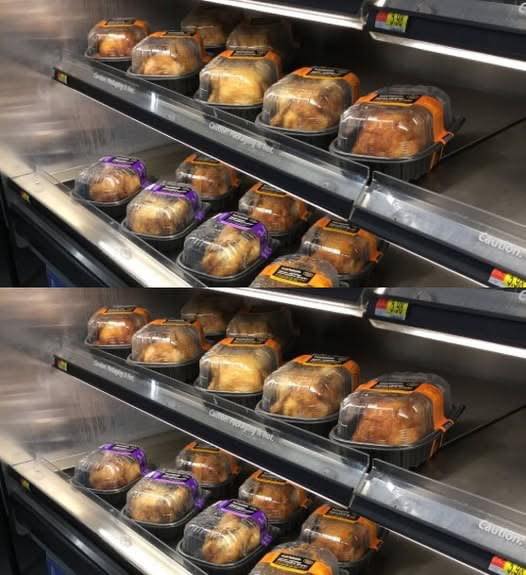
Unveiling the Truth About Walmart’s Famous Rotisserie Chicken
What looks like a budget win at Walmart often unravels once you take a closer look. On the surface, the store’s rotisserie chicken seems like an unbeatable deal. It is hot, ready to eat, and priced to appeal to shoppers trying to stretch every dollar. But when you compare it side by side with competitors, the value story quickly shifts. Walmart’s chicken is noticeably smaller than the nearly three pound birds at Costco and Sam’s Club. You are paying less at the register, but you are also taking home significantly less meat. When cost is measured per pound instead of per item, the supposed bargain starts to lose its shine.
Size is only part of the issue. Many shoppers consistently report problems with flavor and texture. Complaints of bland seasoning, dry breast meat, and uneven cooking appear again and again in customer reviews. Some birds are overcooked and stringy. Others are underseasoned to the point of tasting boiled rather than roasted. Rotisserie chicken is meant to be a simple comfort food that delivers juicy meat and savory skin without much thought. When that experience becomes unpredictable, the convenience factor weakens.
The health trade off deepens the concern. Walmart’s rotisserie chicken contains about 690 milligrams of sodium per three ounce serving. That is far more than what you will find at Costco or Sam’s Club and dramatically higher than Whole Foods’ lower sodium version. To put that into perspective, many health guidelines suggest keeping daily sodium intake under 2300 milligrams. A modest portion of Walmart’s chicken can easily consume a third of that limit before you add sides, sauces, or leftovers turned into sandwiches and soups.
This sodium difference matters far more than many shoppers realize. High sodium intake is directly linked to elevated blood pressure and increased risk of heart disease. For anyone managing hypertension, kidney concerns, or general dietary cleanup, those extra milligrams quietly add up over time. It is easy to think of rotisserie chicken as a healthy shortcut, lean protein without cooking. But the nutrition label reveals that not all shortcuts are created equal.
Texture and taste also affect how much value you truly get. A smaller bird that is dry or bland often leads to more waste. Leftovers go untouched. Skin is peeled off and discarded. Meat gets shredded into recipes that require extra sauces just to make it palatable. A larger, juicier, better seasoned chicken from a warehouse club can feed a family for multiple meals with far less effort and far more enjoyment.
Cost comparison further reshapes the picture. Costco and Sam’s Club both sell larger birds at a similar price point, often around five dollars. When size and quality are factored in, their chickens frequently deliver more meat per dollar, better moisture retention, and more consistent flavor. Whole Foods, while more expensive, offers a lower sodium alternative for shoppers who prioritize nutrition over price.
In the end, the easy choice is not automatically the smartest one. Walmart’s rotisserie chicken may save a little money up front, but the smaller portions, frequent quality complaints, and high sodium content turn that savings into a compromise. With better value, taste, and nutrition available elsewhere, it is worth walking a little farther past the Walmart hot case. Sometimes the real bargain is not the lowest sticker price, but the option that gives you more food, better health, and a meal you actually look forward to eating.