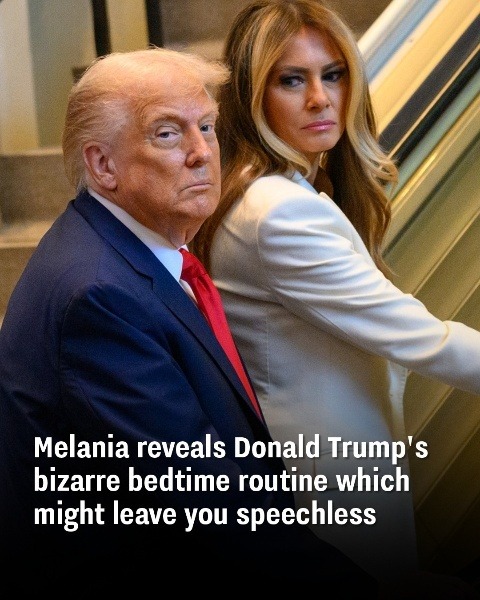
Melania Reveals Donald Trumps Strange Nighttime Routines, and Its Shocking
Melania Trump has always been careful about how much of her private life she lets the public see. Her calm, composed demeanor during her years in the White House became one of her trademarks. She rarely strayed from measured statements, elegant appearances, and quiet diplomacy. So when she began revealing pieces of Donald Trump’s bedtime habits, people paid attention — not because the details were scandalous, but because they finally cracked open a window into a part of Donald Trump’s life that had always remained firmly off-limits.
Most Americans already knew Trump barely slept. He bragged about it for years — claiming he could function on four hours, sometimes even less, because his mind “simply didn’t turn off.” Supporters saw it as evidence of discipline and relentless drive. Critics thought it explained his midnight tweets. But those were broad strokes. What Melania shared painted a stranger, more intimate picture of the man who once held the most demanding job in the world.
It happened during a promotional interview for her memoir, Melania: A Memoir, on Fox News’ The Five. The conversation had been predictable at first — book tours always are. But then host Greg Gutfeld asked a question most political spouses never answer honestly:
“So, what’s his bedtime routine like?”
Melania smiled, not the polite, practiced smile she wore for state dinners and cameras, but the kind that slips out before the brain decides whether it’s appropriate. “He doesn’t sleep much,” she said. Then, as if catching herself, she corrected: “He does, of course.” It was a soft backpedal, the kind someone makes instinctively when they realize they’ve said more than they planned.
The hosts pushed further, teasing, curious. “Does he wear pajamas?”
“No,” she said immediately.
“What does he wear then?”
Melania didn’t answer. Instead, she pinched her fingers together, drew an imaginary zipper across her lips, and leaned back with a mischievous glint that shocked the panel into laughter.
The moment went viral within hours. Viewers joked. Critics dissected it. Fans turned it into memes. But beneath the internet chaos was something more telling: Melania had revealed just enough about Donald Trump’s nights to raise questions without offering the satisfaction of full answers. It was her signature style — say little, imply plenty, control the narrative.
Journalists who had traveled with Trump during his presidency didn’t seem surprised. Several reporters described him the same way Melania did: restless, wired, and often awake long after everyone else had crashed.
CNN’s Kaitlan Collins, speaking on the Trading Secrets podcast, recounted trips on Air Force One that felt more like marathons than flights. “He doesn’t sleep on these trips,” she said. “You could be flying to Asia — fourteen, fifteen hours — and instead of resting, he’s awake the entire time, talking, pacing, reacting to news.”
It wasn’t just harmless chatter. Collins said Trump would sometimes press aides into service in the middle of the night, summoning them to his cabin with last-minute questions, stray thoughts, or a desire to fire off an immediate response to something he had seen on TV. According to Collins and her colleague Kevin Liptak, it was common for exhausted staffers to be jolted out of their shallow airplane sleep because Trump wanted to role-play an upcoming negotiation or complain about media coverage.
Sleep, to him, seemed optional — an inconvenience more than a biological need.
White House staffers often joked half-seriously that working for Trump meant learning to operate on “Trump Time,” a schedule that stretched well past midnight and resumed before dawn. Some said he thrived on perpetual motion. Others thought he used activity as a way to avoid the stillness that comes with rest — a stillness that forces reflection, something he never appeared eager to indulge.