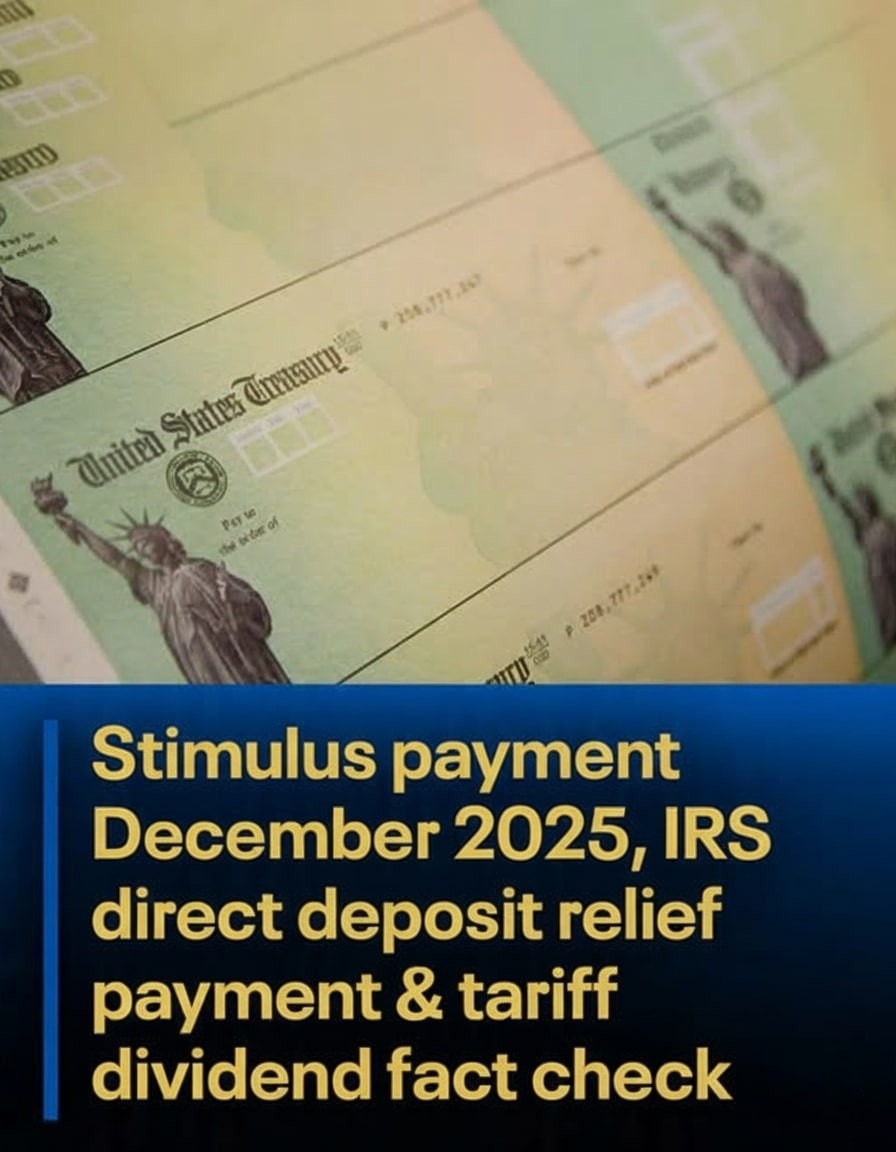
Fact Check: What’s Accurate Regarding Stimulus Payments, IRS Deposit Changes, and Tariff Dividend Rumors
Confusing headlines and viral posts have sparked a wave of misinformation about new payments supposedly coming from the federal government. Here’s a fast, clear breakdown of what’s true, what’s misleading, and what’s still just a political idea.
December 2025 Stimulus Check
Claim: A brand-new federal stimulus payment is scheduled for December 2025.
Verdict:  False.
There is no federal stimulus program approved by Congress for December 2025. Nothing similar to the COVID-era checks is active or authorized.
So why the confusion? Three things are being mistaken for a “new stimulus”:
- Regular tax refunds — These happen every year after people file taxes. Not stimulus.
- Unclaimed past credits — The IRS has been finishing payments for people who never claimed earlier credits, like the 2021 Recovery Rebate Credit. These are late payments, not new ones.
- State-level relief — Some states offer their own rebates or refunds. These apply only within those states and are not federal stimulus checks.
The $2,000 IRS Direct Deposit “Relief Payment”
Claim: The IRS is sending out a $2,000 relief payment via direct deposit in December 2025.
Verdict: Misleading / False.
There is no official IRS announcement about a $2,000 nationwide relief payment.
What is happening:
The IRS is encouraging more people to use direct deposit for tax refunds, and they plan to begin phasing out paper refund checks starting September 2025. This is simply a change in how refunds are delivered — not a new payment program.
Most articles claiming otherwise are mixing up proposals, speculation, or outright clickbait.
“Tariff Dividends” or Tariff Rebate Checks
Claim: Americans will receive a $2,000 “tariff dividend” funded by tariff revenue.
Verdict:  Proposal Only — Not Law.
The idea of “tariff dividends” comes from political proposals, particularly tied to former President Donald Trump. But:
- Congress has not passed anything into law.
- Economists note that tariffs typically raise consumer prices, reducing any potential benefit.
- Analysts doubt tariff revenue would be enough to fund large payments without adding to the national debt.
In short: It exists as a talking point — not as a real payment.
Quick Summary
- December 2025 stimulus check? Not real.
- $2,000 IRS direct deposit relief? Not an actual program.
- Tariff dividends? A political proposal, not approved or funded.
Staying informed is the best way to avoid falling for viral misinformation.
Want more fast, reliable breakdowns like this?
Drop a comment, share your thoughts, or ask about any financial rumor you want fact-checked next!