
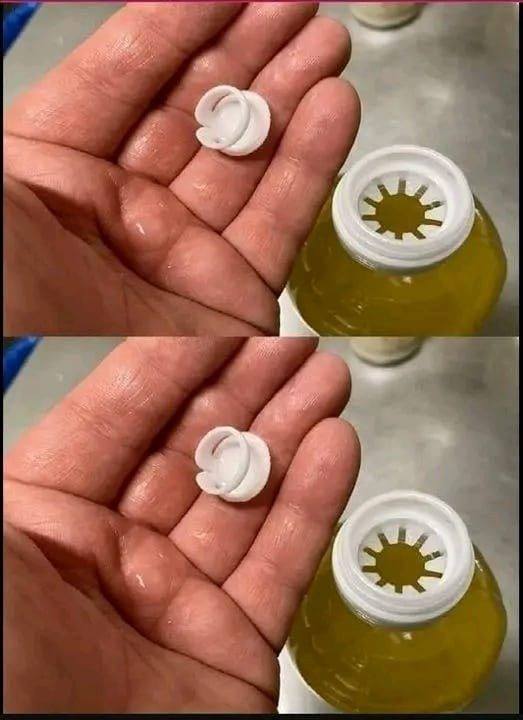
I’ve always thrown away the oil cap – a colleague explained to me what it was actually used for
Most of us have developed the same automatic habit over the years. We open a new bottle of cooking oil, notice the small plastic insert sitting inside the opening, remove it immediately, and throw it straight into the trash. The cap seems awkward, unnecessary, and even annoying. It appears to block the flow of the oil and makes pouring feel more difficult, so getting rid of it feels like the natural solution.
However, what many people do not realize is that this small plastic piece was designed for a very specific purpose. Far from being useless, it is actually one of the most practical features of the bottle. A colleague recently explained this simple trick, and once you understand how the cap works, you may never throw it away again.
The cap’s main function is to act as a flow regulator. Oil pours quickly and smoothly, which makes it very easy to use far more than intended. This leads not only to wasted oil but also to overly greasy dishes, slippery work surfaces, and unnecessary mess. The small plastic insert solves all of these problems when used correctly.
When you first open a new bottle of oil, remove the cap carefully instead of discarding it. You will notice that its shape is not random. It is designed so that it can be placed back onto the bottle in an inverted position. Turn the cap upside down and gently press it back into the opening. It should fit snugly and securely, forming a narrow pouring spout.
Once positioned this way, the cap becomes a built in dispenser. The narrow opening slows the flow of oil and gives you much greater control. Instead of a sudden heavy stream, the oil comes out in a thin, steady line. This allows you to measure more accurately, especially when adding oil to a pan, drizzling over salads, or coating vegetables before roasting. Over time, this small adjustment can significantly reduce how much oil you use and how often you need to replace your bottles.
There are also practical benefits beyond portion control. A regulated pour means less oil dripping down the sides of the bottle. This keeps your hands, countertops, and cabinets cleaner. It also reduces the amount of air that enters the bottle after each use, which helps preserve the quality and flavor of the oil for a longer period of time.
Keeping the cap clean is essential. After each use, wipe the top of the bottle and the cap with a paper towel or cloth. This prevents buildup, keeps dust away, and ensures the cap continues to function smoothly. With minimal effort, the bottle remains tidy and easy to handle.
This simple habit improves your cooking routine in several ways. It encourages healthier portions, reduces waste, minimizes mess, and helps maintain the freshness of your oil. It also makes cooking feel more precise and controlled, which can be especially useful for people who enjoy following recipes closely or refining their techniques.
It is remarkable that such a small object can make such a noticeable difference. Many of us unknowingly discard a tool that the manufacturer included to improve the user experience. The next time you open a new bottle of olive oil, vegetable oil, or any similar product, take a moment before throwing anything away. That little plastic cap may quickly become one of the most useful tools in your kitchen.