Donald Trump Approves Law Making Tips Exempt from Taxes
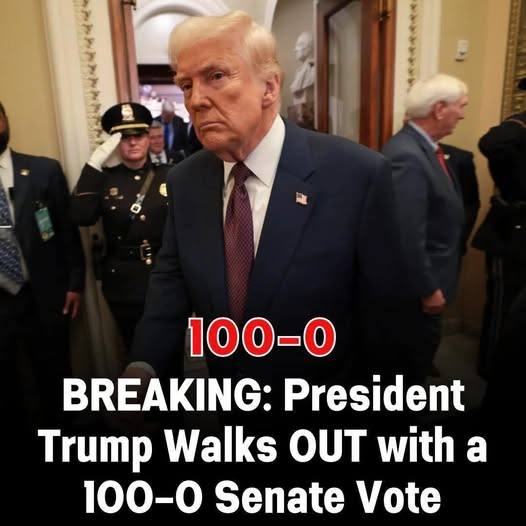
On July 4, 2025, against a backdrop of holiday celebrations, President Donald Trump signed the “One Big Beautiful Bill” (OBBB) Act into law. Spanning over 1,200 pages, the legislation marks the most aggressive restructuring of the federal tax code in nearly a generation. While the administration frames the law as a “financial liberation” for the American worker, its passage has ignited a fierce debate over fiscal solvency, with the nonpartisan projections warning of a staggering $3.4 trillion increase to the federal deficit over the next decade. The OBBB Act is not merely a collection of minor adjustments; it is a fundamental shift in the relationship between the federal government and the taxpayer, prioritizing immediate liquidity for specific sectors of the workforce.
The Pillars of the Act: Tips, Overtime, and Seniors
At the heart of the legislation is a permanent extension of marginal rate cuts for individual taxpayers, ensuring that the lower brackets established in previous years do not sunset. However, the bill’s “headline” provisions target three distinct groups: service workers, hourly employees, and retirees.
1. The “No Tax on Tips” Provision
In a move that directly impacts millions in the hospitality and gig economies, tips are now permanently exempt from federal income tax. While restaurant servers, bartenders, hotel staff, and ride-share drivers are still required to report these earnings for recordkeeping, the federal government will no longer take a cut.
-
The Impact: Immediate increase in take-home pay for the service industry.
-
The Goal: Bridging the gap between stagnant base wages and rising living costs.
2. Codified Tax-Free Overtime
The bill officially codifies tax-exempt status for overtime pay. By ensuring that extra hours logged beyond the standard workweek are not subject to federal income tax, the law seeks to reward productivity without the “bracket creep” that often penalizes blue-collar workers for working harder.
3. Expanded Relief for Seniors
Retirees are granted significant new deductions on property taxes and medical expenses. The law also increases the threshold for tax-exempt charitable contributions, a move designed to protect the fixed incomes of the nation’s aging population.
The Economic Tug-of-War: Empowerment vs. Deficit
The legislative victory was championed by a bipartisan-appearing coalition, though the ideological roots remain firmly with the administration. Senator Ted Cruz, a primary sponsor, framed the bill as a moral imperative during a recent press conference:
“These workers deserve to keep more of what they earn. By removing the federal tax on tips, we are ensuring that hardworking Americans can see the rewards of their labor without unnecessary deductions.”
Senator Jacky Rosen similarly noted that the influx of disposable income could provide a “bottom-up” stimulus, strengthening small businesses by increasing consumer spending without forcing a federal wage hike.
The Critics’ Corner: A $3.4 Trillion Question Mark
Despite the immediate celebration in the hospitality sector, economists and fiscal hawks warn of a looming “debt bomb.” Critics argue that the $3.4 trillion projected deficit increase could eventually force painful cuts to Social Security and Medicare or trigger a spike in interest rates.
Furthermore, policy analysts point to potential structural inequities:
-
Sector Bias: A waiter may see a 15%–20% boost in net income, while a teacher or factory worker on a flat salary sees no comparable benefit.
-
Compensation Shifts: There are fears that employers may lower base wages, pressuring employees to rely even more heavily on the volatile nature of tips now that they are tax-free.
-
Budgetary Instability: Economists worry that irregular, tax-free income might lead to a lack of retirement planning or inconsistent household budgeting.
Political Philosophy and the Road Ahead
The OBBB Act represents a clear victory for a “financial empowerment” philosophy—the idea that individual choice and circulating capital are more effective economic drivers than government-funded social programs. By reducing the federal “take,” the administration is betting that consumer spending will generate enough secondary economic activity to offset the massive loss in tax revenue.
Implementation has been swift. Across the country, hospitality workers are already reporting tangible increases in their net pay. However, as the 2026 midterms approach, the long-term sustainability of this model remains the ultimate question. Future policymakers will inevitably have to reconcile these popular tax breaks with the reality of a ballooning federal debt.
For now, the “One Big Beautiful Bill” stands as a monument to a specific vision of the American Dream: one where the “reward for labor” is kept in the pocket of the worker, even if the bill for that reward eventually comes due for the nation.
As the ink dries on the “One Big Beautiful Bill” (OBBB) Act, the American economic landscape is undergoing a real-time stress test. From the bustling kitchens of Manhattan to the quiet retirement communities of Florida, the tangible effects of the 1,200-page tax overhaul are manifesting in fatter paychecks and leaner tax liabilities. However, as immediate liquidity hits the pockets of millions, a parallel story of long-term fiscal anxiety is beginning to take shape in the halls of the Treasury.
The Service Sector Stimulus
For the nation’s service, hospitality, and tourism industries, the impact has been nothing short of a shot in the arm. Employees who rely on tips—often the most financially precarious segment of the workforce—are reporting an immediate surge in net income. This has triggered a documented rise in morale and consumer confidence; restaurant owners and hotel managers have observed a notable decrease in employee financial stress, which they claim has translated directly into improved customer service and operational productivity.
In some regions, this newfound financial security is even trickier-down into local labor markets. Some small business operators report a slight uptick in hiring, as the tax-free status of tips makes service roles more attractive, potentially stimulating local economies through increased household spending.
A New Chapter for Seniors
The legislation’s expanded deductions have provided a parallel lifeline for retirees. By allowing greater relief for property taxes and soaring medical expenses, the bill has effectively increased the purchasing power of fixed-income seniors. Financial advisors are noting that these provisions provide essential flexibility, allowing the elderly to maintain their homes and access healthcare without the immediate fear of insolvency. This, analysts suggest, may eventually reduce the pressure on supplemental government programs as retirees retain more of their own resources.
The $3.4 Trillion Shadow
Despite these ground-level victories, the “30,000-foot view” from economists remains clouded. Projections of a $3.4 trillion increase in the federal deficit over the next decade have turned the OBBB Act into a lightning rod for debates over fiscal responsibility.
The economic community is currently divided into two camps:
-
The Stimulus Proponents: Those who argue that the surge in consumer spending will create a “feedback loop” of growth, eventually generating enough secondary tax revenue to partially mitigate the deficit.
-
The Fiscal Hawks: Those who warn that the bill necessitates future, painful adjustments—likely in the form of deep spending cuts or regressive tax modifications—to prevent a national debt crisis.
The Question of Equity and Structural Shifts
The bill’s targeted nature has also reignited a fierce dialogue regarding “tax fairness.” While the waiter and the bartender celebrate, the salaried school teacher, the factory worker, and the government employee see no comparable windfall. This selective relief has prompted policy think tanks to investigate whether the law will inadvertently widen the gap between different sectors of the working class.
Furthermore, labor economists are sounding the alarm on potential “unintended consequences.” There is growing concern that employers might restructure compensation models—perhaps by lowering base hourly wages—to force a greater reliance on tax-free tips. Critics argue that without a strengthened social safety net, this “immediate consumption” model ignores the long-term needs of workers, such as retirement security and stable health benefits.
The Political and Practical Legacy
Politically, the OBBB Act is a flagship for the Trump administration’s philosophy of “individual financial empowerment.” Supporters, including Senator Ted Cruz, frame it as a rejection of government redistribution in favor of personal control. “We are giving Americans the ability to control their own financial futures,” Cruz stated. “That is far more empowering than increasing government control.”
On a practical level, the transition has been swift but complex. Trade groups have praised the modernization of compensation, but financial planners are urging caution. While federal taxes are gone, state and local authorities may still demand their share of tips, and high-earning tipped workers could find themselves with unexpected liabilities if they don’t plan accordingly.
As the data on consumer spending and income distribution begins to trickle in over the coming years, the One Big Beautiful Bill Act will serve as a definitive case study in modern governance. It represents a high-stakes gamble: that providing immediate financial relief to the few will eventually secure the economic future of the many. Whether it is remembered as a landmark achievement or a fiscal cautionary tale will depend entirely on its ability to balance the books of the American family against the ledgers of the American state.