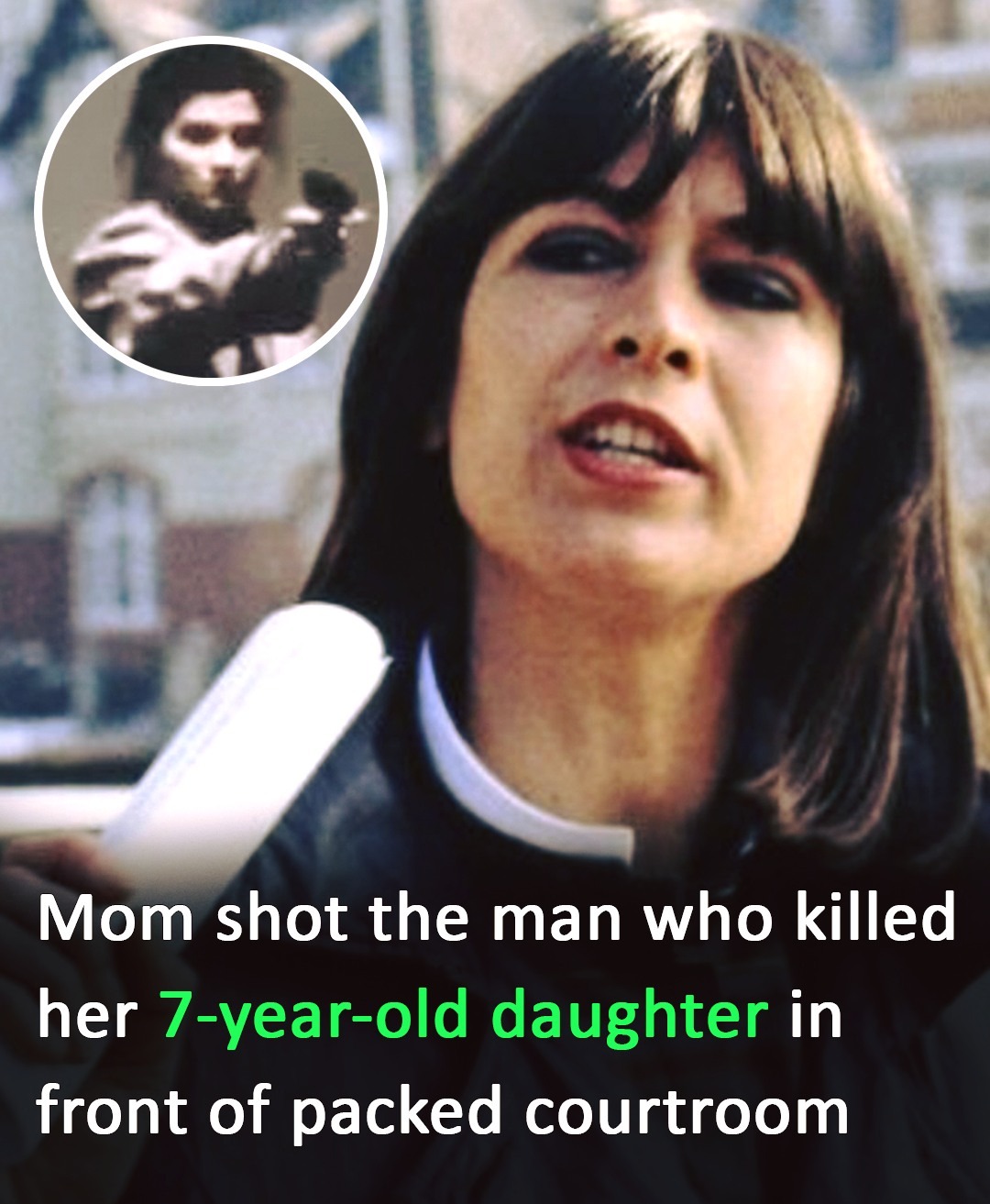
“Revenge mom” shot her child’s murder in the middle of his trial
The loss of a child is widely recognized as the ultimate tragedy—the singular, devastating experience that represents a parent’s worst nightmare. For Marianne Bachmeier, a struggling single mother running a pub in Lübeck, Northern Germany, this nightmare became a permanent reality on May 5, 1980.
A Life Defined by Trauma
Marianne’s path to that fateful day was paved with hardship. Her upbringing was marred by the dark shadow of her father’s past as a member of the Waffen-SS, and her own youth was punctuated by a series of horrific sexual assaults. These early traumas shaped a difficult adolescence; at 16, she became pregnant and, unable to provide for the infant, gave the child up for adoption. Two years later, history repeated itself, and she surrendered a second baby to an adoption agency.
It wasn’t until 1973 that Marianne gave birth to her third child, Anna. This time, Marianne chose to raise her daughter alone. By all accounts, Anna grew into a “happy, open-minded child.” But the stability they had built was destined to be shattered.
The Disappearance of Anna
In May 1980, following a routine mother-daughter argument, seven-year-old Anna skipped school to head to a friend’s house. She never arrived. She was intercepted by Klaus Grabowski, a 35-year-old local butcher with a dark history.
Grabowski held Anna captive in his apartment for hours, subjecting her to abuse before finally strangling her to death. In a cold attempt to hide his crime, he packed her small body into a box and stashed it near a canal bank. He was arrested that evening at his favorite pub after his own fiancée, suspicious of his actions, alerted the authorities.
The revelation of Grabowski’s past ignited public fury. He was a convicted sex offender who had previously served time for assaulting two young girls. During a 1976 prison stint, he had undergone voluntary castration, only to begin hormone treatments two years later to reverse the procedure so he could pursue a relationship with his fiancée.
The Trial That Broke a Mother
While Grabowski confessed to the murder, he adamantly denied sexual abuse. Instead, he employed a defense that many found repulsive: he claimed the seven-year-old had attempted to seduce and blackmail him, demanding money under the threat of telling her mother he had touched her.
While the court remained skeptical of his claims, the smear campaign against her deceased daughter pushed Marianne into a state of powerless rage. On March 6, 1981—the third day of the trial—she decided the legal system would not be the final word.
Bypassing security and armed guards, Marianne smuggled a Beretta M1934 into the courtroom. Shortly after entering, she drew the weapon from her handbag and emptied the magazine. Seven of the eight bullets struck Grabowski in the back, killing him instantly.
“He killed my daughter… I wanted to shoot him in the face, but I shot him in the back … I hope he’s dead,” Marianne reportedly stated as she dropped the gun.
From “Saint” to “Vigilante”
The world watched as the “Revenge Mom” was arrested and charged with murder. Initially, the media canonized her as a grieving saint. However, as journalists delved into her past—uncovering the two previous adoptions and her lifestyle as a pub owner—the public narrative shifted. The “perfect mother” image began to crack under the weight of tabloid scrutiny.
In 1983, the court convicted her of premeditated manslaughter and unlawful firearm possession. She was sentenced to six years, ultimately serving only three. The verdict polarized the nation; an Allensbach Institute survey revealed a country deeply divided, with nearly equal thirds viewing the sentence as either appropriate, too light, or too harsh.
A Final Chapter in Lübeck
Following her release, Marianne sought a fresh start. she moved to Nigeria, married, and later relocated to Sicily after a divorce in 1990. However, a diagnosis of pancreatic cancer eventually brought her back to her roots in Lübeck.
In her final years, Marianne remained defiant. In a 1995 interview, she admitted the shooting was a calculated act intended to stop Grabowski from further desecrating Anna’s memory with lies.
Marianne Bachmeier passed away in a Lübeck hospital on September 17, 1996. In accordance with her wishes, she was buried next to Anna. Decades later, her case remains the definitive debate on vigilante justice: Was she a criminal who subverted the law, or a mother providing the only “fair” punishment for an unrepentant predator?