“’90s Teen Icon Now Lives Quiet Life as a Psychologist”
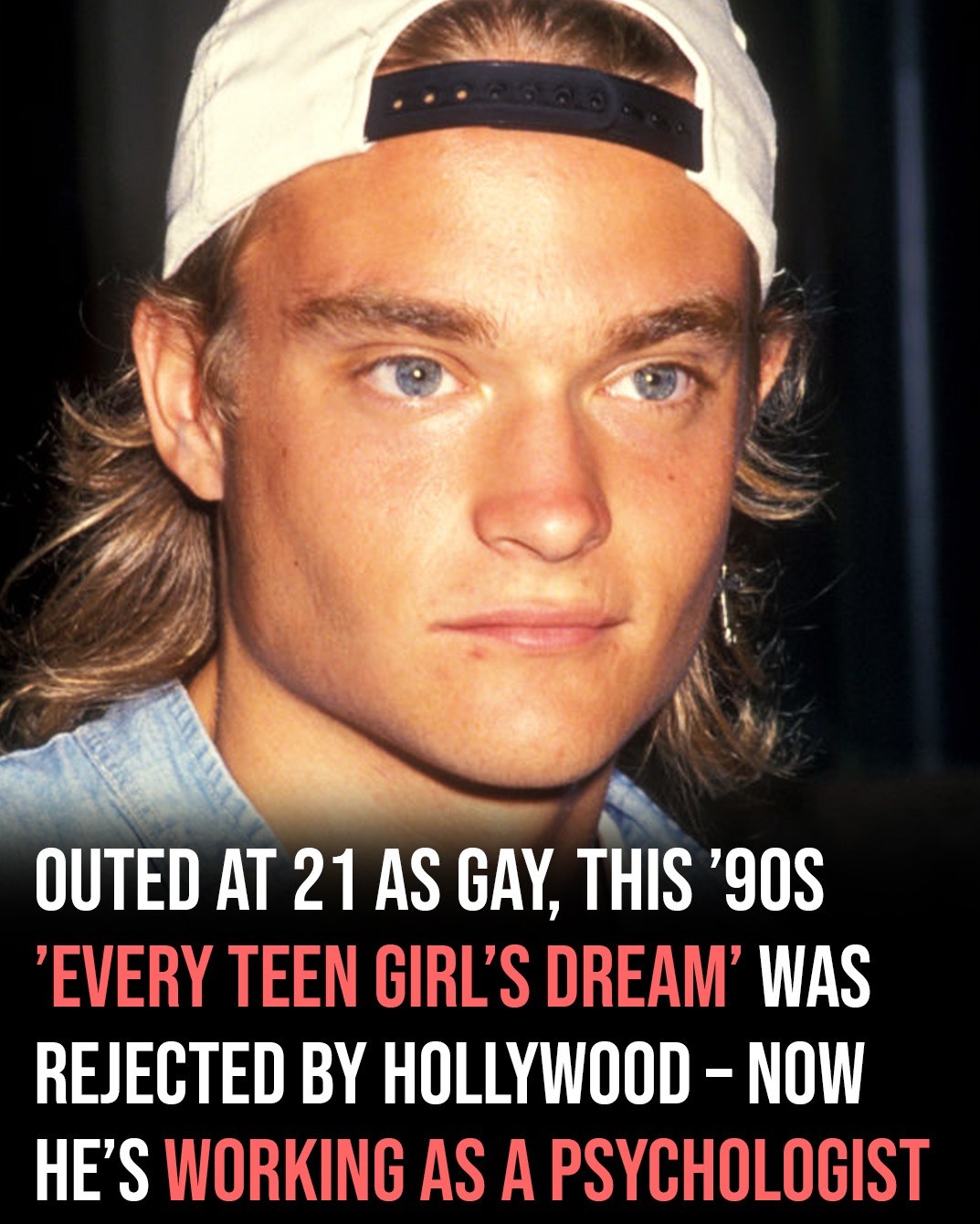
In the neon-soaked landscape of the 1980s, one face was inescapable. With a radiant, effortless smile that seemed to capture the very essence of American innocence, Chad Allen was the boy every magazine editor fought to put on their cover. From the soft-focus glow of morning talk shows to the high-stakes arena of prime-time interviews, his image became a curated shorthand for the idealized American childhood. But behind the glossy veneer of the teen idol was a young man quietly drowning. Away from the cameras, Allen was grappling with profound questions of identity and purpose, all while being crushed by the unrelenting weight of the public gaze.
The Prodigy in the Patterns
Born in 1974, Allen entered the professional world at an age when most children are still learning to tie their shoes. His breakthrough came in 1982, at just eight years old, when he joined the cast of the prestigious medical drama St. Elsewhere. Playing an autistic boy was a sophisticated undertaking for a child, yet Allen approached it with a depth that transcended his years.
His mother had explained that children with autism often inhabit worlds entirely their own. It was a lesson Chad internalized instantly. “And I understood that,” he reflected years later. “I would sit there and have this whole world going on in my head. I’d be following the patterns on the wall, and in my head, there was an imaginary war going on between the shapes.”
This preternatural ability to vanish into a role earned him an early Airwolf guest appearance and a nomination for “Best Young Actor.” Soon, he was a fixture of the family television era, moving seamlessly through hits like Our House and My Two Dads. While his peers were navigating the simple politics of the playground, Allen was navigating scripts, union rules, and the heavy expectations of an industry that saw him as a blue-chip commodity.
The Cost of Playing Pretend
“I played pretend, and I was good at playing pretend… and all of a sudden people were making a lot of money, and I didn’t want to do it anymore,” Allen recalled. The joy of performance had been eclipsed by the machinery of Hollywood. School dances and adolescent milestones were traded for lighting cues and press junkets.
By his teens, the line between Chad Allen the human and “Chad Allen” the brand had all but dissolved. Publicists worked around the clock to maintain the squeaky-clean image of the quintessential heartthrob. To the public, he was the confident boy next door; to himself, he was a stranger. “He was very well put together, and I wanted to get to know him,” he said of his public persona—a heartbreaking admission of the chasm between his internal reality and his external fame.
At sixteen, in a move that baffled the industry, Allen walked away. He re-enrolled in high school, searching for the “normalcy” Hollywood had stolen. Ironically, he found his sanctuary in the drama club—not because of the spotlight, but because it was a refuge for the “rejects”: the gay, the introverted, and the marginalized. “I discovered that I liked the world of the theater, which was so different from the world of the teen star,” he explained. It was here, in the shadows of the stage, that he began to find his real voice.
The Spiral into Isolation
Despite a foundation of devout Catholic faith and a disciplined upbringing, the collision of suppressed identity and public pressure ignited a firestorm of internal turbulence. As Allen entered early adulthood, loneliness became a constant companion. He turned to alcohol to quiet the rising tide of anxiety and self-doubt.
“At the end of the day, I was alone, and I couldn’t stop drinking,” Allen admitted. The descent was harrowing. The once-golden boy found himself isolated in a Malibu condo, teetering on the edge of death as addiction took the wheel. The concern of colleagues like actress Heather Tom, who eventually had to distance herself for her own well-being, served as a brutal wake-up call. It was the moment Allen realized that recovery required more than sobriety; it required a total reconstruction of his soul.
Outed by the Tabloids
By his early twenties, while starring in the massive hit Dr. Quinn, Medicine Woman, Allen was living a double life. In 1996, that life was shattered. A U.S. tabloid published photos of him kissing another man in a hot tub, allegedly sold by a “friend” and accompanied by a flurry of fabricated rumors.
“So I was scared. Just scared,” Allen admitted. At a time when coming out was often a career death sentence, he was being handled by a committee of lawyers and managers debating how to “sanitize” his truth. Allen refused to lie. While the Dr. Quinn cast stood by him, the industry at large was less forgiving. When the series ended, the auditions stopped.
The personal fallout was equally devastating. “My dad couldn’t look me in the eye. And that hurt. Because a boy always wants his dad’s acceptance,” Allen revealed. Even his mother, initially blinded by her own traditional assumptions, had to navigate a painful journey toward understanding.
From Idol to Advocate
In the wreckage of his public outing, Allen found an unexpected lifeline: the mail. Letters from young gay men across the country began to arrive, thanking him for his visibility. For the first time, Allen wrote back, forging a human connection that the studio lights had always blocked.
“It just meant so much to know I wasn’t going through it alone either,” he said. “After all, what is [loving men]? There’s so much attached to it, but at the end of the day, it’s love. I’ll take it.”
Despite a 2008 interview where he noted he “couldn’t get an audition for a pilot” after coming out, Allen refused to see himself as a victim. He chose authenticity over applause.
The Final Act: A Doctorate in Healing
In 2015, Chad Allen made his final exit from Hollywood. It wasn’t a retreat; it was an evolution. Driven by his own experiences with trauma, fame, and addiction, he turned toward the field of Clinical Psychology.
He didn’t just attend classes; he committed to a Doctorate. His academic pursuit was fueled by a unique synthesis of theoretical rigor and the “lived experience” of someone who had survived the highest highs and lowest lows of the human condition. Today, the man who once played an autistic boy on screen spends his life helping real people navigate the complexities of the human mind.
Chad Allen’s journey is a powerful testament to the fact that the most important role one can ever play is themselves. By trading the curated image for a clinical degree, he transitioned from being a face America loved to a man who helps America heal.
For decades, Chad Allen was a prisoner of the frame—first as the child prodigy of St. Elsewhere and later as the meticulously curated heartthrob of teen magazines. But in the years since he turned his back on the Hollywood klieg lights, Allen has undergone a transformation that is far more than skin-deep.
While completing his doctorate, Allen traded scripts for clinical journals, immersing himself in the study of trauma recovery, identity exploration, and resilience. He didn’t just skim the surface; he dove into the complexities of cognitive-behavioral therapy, psychoanalytic theory, and humanistic psychology. His goal was clear: to provide a holistic sanctuary for those navigating the same psychological minefields he had once walked alone.
His doctoral dissertation served as a bridge between his two lives. It focused on the intricate interplay between identity formation and social perception—a topic that, for a man whose every adolescent pimple was documented by the paparazzi, was as personal as it was academic.
Where the Rivers Meet: Confluence Psychotherapy
With his credentials earned, Dr. Allen established his private practice, Confluence Psychotherapy. The name is a deliberate metaphor—a “confluence” represents the merging of two rivers. In Allen’s world, it is the meeting point of a traumatic past and a purposeful future, where self-understanding and professional guidance finally flow together.
In the quiet of his consulting room, Allen works with a diverse range of clients, specializing in those grappling with trauma, addiction recovery, and the unique hurdles of the LGBTQ+ community. His clinical approach is sharpened by a rare duality: the rigorous training of a psychologist and the visceral scars of a man who lived through public shaming and chemical dependency.
He recognized early on that the wounds of LGBTQ+ individuals are rarely just personal; they are systemic. By blending evidence-based techniques with a deep, compassionate mentorship, he created a space where healing isn’t just about “fixing” a problem, but about discovering an authentic self that the world may have spent years trying to suppress.
A New Architecture of Advocacy
Allen’s transition to the clinical world did not mean a retreat into silence. Instead, he repurposed his visibility. As a vocal advocate for LGBTQ+ rights, he lent his credibility to the fight for civil rights, publicly applauding figures like Gavin Newsom for their efforts in the marriage equality movement.
But his most impactful work often happens away from the podium. As a mentor, he guides young people through the harrowing gauntlets of bullying and familial rejection. Having been outed by a tabloid in 1996 and seeing his acting career dry up as a result, Allen speaks with a credibility that few can match. For him, visibility is a tool for survival. He frequently reminds his clients and the public alike that the challenges faced by marginalized communities are often exacerbated by cultural norms and workplace discrimination, making mental health a political issue as much as a personal one.
A Life Grounded in the Real
Today, the man who was once at the mercy of a studio schedule lives a life defined by intentionality. His routine is grounded in the restorative power of the “everyday”: walking his dog, meditating, and finding solace in the outdoors. These aren’t just hobbies; they are the pillars of his own resilience.
Allen’s spirituality has also evolved. Raised in a devout Catholic home, he has kept the core of his faith but stripped away the dogma of judgment. “My greatest hope is that when we die, we get to experience God and let go of all judgments and preconceived notions,” he has remarked. “Anything that comes with fear or judgment, it can’t be of God.”
The Legacy of a Truth-Seeker
The paradox of Chad Allen’s life is that when he seemed to have everything—the wealth, the fame, the adoration—he felt the most invisible. He was a boy trapped in a cycle of public expectation.
“The boy who was on every magazine cover,” he once mused, “grew into the man who realized meaning is far more important than applause, and truth is far more valuable than image.”
His legacy is no longer found in the reruns of 80s sitcoms or the archives of teen tabloids. Instead, it is found in the lives of the patients he helps to reclaim their own narratives. His journey from a child star to a respected clinician is a quintessential American story of reinvention. It serves as a roadmap for anyone navigating the transition from what the world expects them to be to who they actually are.
In the end, Chad Allen’s story proves that the human spirit is remarkably resilient. Hollywood may have provided the prologue, but Allen himself is the author of the chapters that truly matter. He has chosen truth over image, and in doing so, he has found a fulfillment that fame could never provide.