Inside the troubled past of a Hollywood legend
In the gilded landscape of Hollywood, we often mistake a famous lineage for a charmed life. For Ashley Judd, growing up with one of the most recognizable faces in American music wasn’t a golden ticket; it was the backdrop to a childhood defined by instability, deprivation, and dark secrets that would take decades to fully emerge. While the 1990s saw her ascent to the A-list, the woman behind the screen was grappling with a history far more harrowing than any script she ever performed. Today, she is known as much for her fierce activism as her filmography, but to understand the advocate, one must first look at the survivor who emerged from the rural isolation of Kentucky.

A Childhood Without a Safety Net
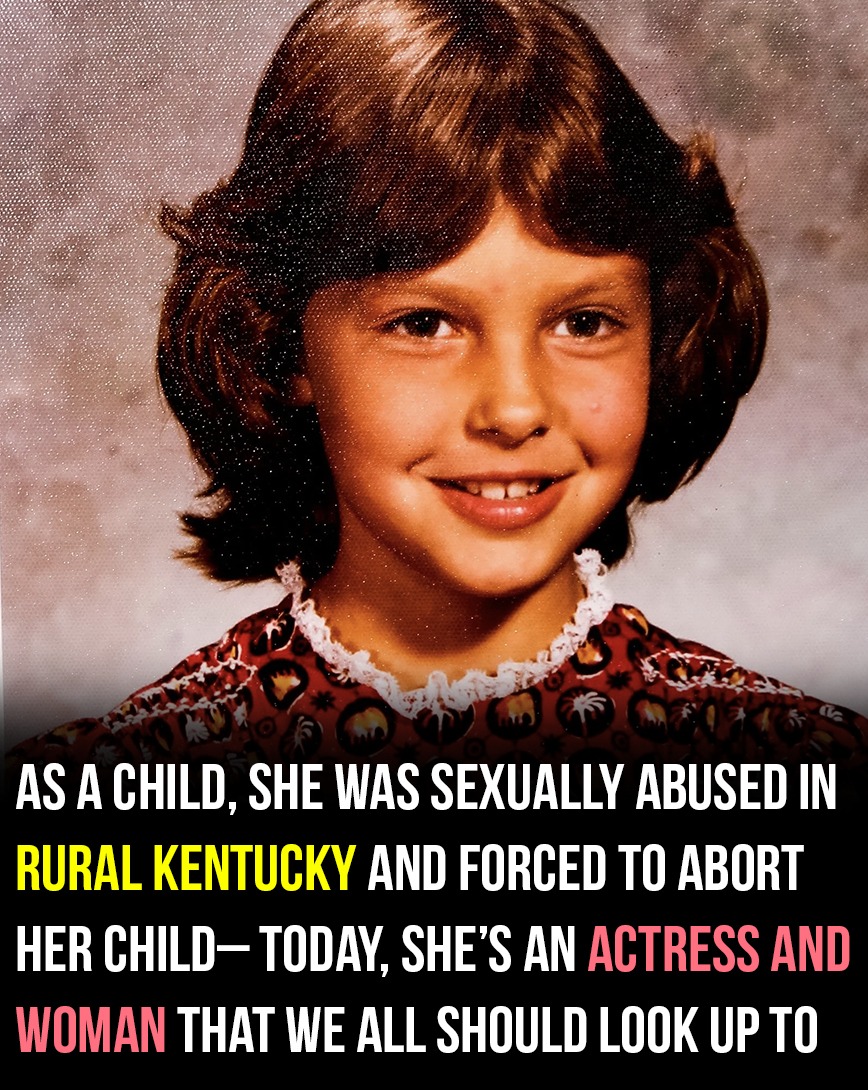
The public image of the Judd family—sparkling dresses and country harmonies—could not have been further from Ashley’s early reality. Born in Los Angeles in 1968 to a marketing analyst and a then-homemaker mother, Judd’s world fractured at the age of four when her parents divorced.
What followed was a nomadic, often impoverished existence. Relocated to Kentucky by her mother, Naomi, Ashley grew up in a world where “making do” was a necessity. In the rural pockets of the Bluegrass State, money was a ghost. The sisters wore second-hand clothes and lived in homes that, at times, lacked the most basic modern necessities: electricity and indoor plumbing. If the family didn’t grow it or make it, they went without.
It was a life of profound isolation. As Naomi’s country music career eventually began to simmer and then boil over into superstardom, Ashley became a “lonely child,” a self-described outsider watching her mother chase a dream that often left her behind. By the time she turned 19, Judd had attended 13 different schools, shuffled between an inattentive mother, elderly grandparents, and a father struggling with substance abuse.

“I loved my mother, but at the same time, I dreaded the mayhem and uncertainty that followed her everywhere,” Judd wrote in her 2011 memoir, All That Is Bitter & Sweet.
The Shadows in the House
The instability was only the surface. In her memoir and subsequent public testimonies, Judd peeled back the layers of a much darker reality. She revealed she was first molested at the age of seven by a family member. The trauma didn’t end there; at 14, she survived two separate rapes.
One of those assaults resulted in a pregnancy. With the characteristic bluntness that has defined her later years, Judd has been vocal about her decision to seek an abortion—a choice she credits with saving her from a life tethered to her attacker.
“I’m a three-time rape survivor,” she told the World Congress Against Sexual Exploitation of Women and Girls. “One of the times that I was raped there was conception… I would’ve had to co-parent with my rapist.”
The dysfunction extended to her domestic environment, where she describes “covert sexual abuse”—being forced to witness “wildly sexually inappropriate” behavior by her mother and stepfather, Larry Strickland, behind the thin walls of their family home.
From $250 to Leading Lady
Judd’s rise to stardom was a feat of pure will. She arrived in Hollywood with no industry connections, no formal training, and exactly $250. While working as a hostess at the famed Ivy restaurant and living in a Malibu rental, she obsessively studied the craft of acting.
Her breakthrough came in 1993 with the indie darling Ruby in Paradise. Playing a woman fleeing an abusive relationship, Judd channeled her own history into a performance that was raw, authentic, and undeniable. It earned her an Independent Spirit Award and signaled the arrival of a new kind of leading lady: one defined by intelligence and an unwavering backbone.
Through the late ’90s, she became the face of the thinking man’s thriller. In Kiss the Girls and Double Jeopardy, she portrayed women who refused to be victims—roles that mirrored her internal journey toward reclamation.

The Price of Truth
However, the cost of suppressed trauma eventually came due. In 2005, at the height of her fame, Judd checked into treatment—not for the typical Hollywood vices, but for depression and unresolved childhood wounds. “I was in so much pain,” she told Glamour.
Healing redirected her life’s work. She pivoted toward global humanitarian efforts, traveling to war zones in the Congo and refugee camps in Rwanda. She didn’t go for the photo op; she went to sit on dirt floors and hold the hands of women who had survived the same brands of violence she had.
Her personal choices also reflected her global perspective. During her marriage to racing driver Dario Franchitti (2001–2013), she chose not to have biological children, famously stating it was “unconscionable to breed” while so many children worldwide lived in starvation.
Facing the Goliaths
In 2017, Ashley Judd became a primary architect of a cultural earthquake. She was among the first to go on the record against Harvey Weinstein, detailing a 1997 encounter where he attempted to coerce her into watching him shower.
She knew the risks. Weinstein had already successfully blacklisted her, a fact later confirmed by director Peter Jackson. But Judd wasn’t seeking a career resurgence; she was seeking a reckoning. Her courage provided the “patient zero” moment for the #MeToo movement, emboldening hundreds of others to speak.
The harassment, she revealed, had been a constant. From being asked to remove her shirt at her very first audition—to which she famously replied, “Hell no”—to dealing with “reviled” industry bosses, Judd had spent her career fighting a system designed to diminish her.

Resilience in the Rainforest
Even a near-fatal accident couldn’t slow her down. In 2021, while researching bonobos in the Congolese rainforest, Judd suffered a catastrophic leg fracture after tripping over a fallen tree. She spent 55 hours in a grueling rescue mission, carried by locals on a makeshift stretcher through miles of dense wilderness.
She survived. She walked again. She hiked again.
Today, while Judd still appears on screen—most recently in 2024—her true stage is the world at large. She remains a testament to the idea that pain does not have to make a person smaller; in her case, it stretched her until she was large enough to carry the stories of those who cannot yet speak for themselves.