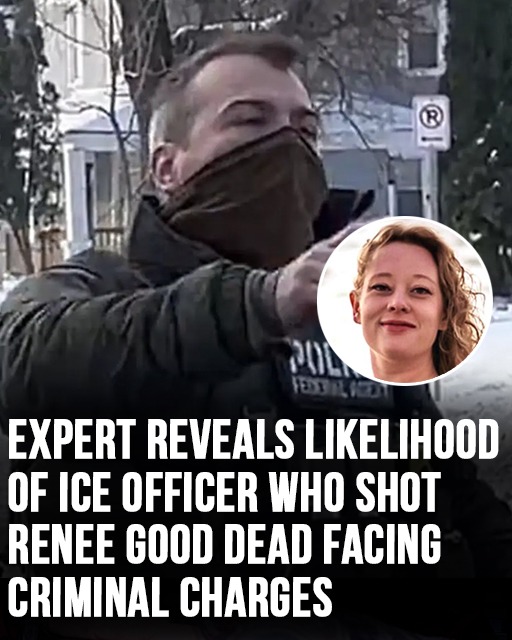
Expert reveals likelihood of ICE officer who shot Renee Good dead facing criminal charges
Seven days have elapsed since the fatal shooting of Renee Good by ICE Agent Jonathan Ross in Minneapolis, yet the gravity of the incident shows no signs of receding from the global spotlight. Instead, the tragedy has catalyzed a fierce international dialogue, becoming a central flashpoint in an increasingly polarized American landscape. As expected, the political fallout remains intense. Across the digital sphere, a relentless cycle of speculation and rumor continues to churn, while the public remains locked in a heated debate over the moral and legal dimensions of the encounter.

The Conflict of Narrative
The facts of the case center on Good, a 37-year-old mother and U.S. citizen, who was struck by three rounds fired at point-blank range while behind the wheel of her vehicle. In the immediate aftermath, the Department of Homeland Security—backed by President Donald Trump and senior administration officials—asserted that Good had “weaponized” her car in a deliberate attempt to strike the agents on the scene.
This narrative has seen the administration repeatedly brand Good a “domestic terrorist.” However, that characterization is being challenged by a growing body of video evidence. Multiple clips circulating online appear to bolster the argument that Good was attempting to flee the confrontation rather than use her vehicle as a weapon against the agents.
The History of Agent Jonathan Ross
Agent Jonathan Ross, the officer at the center of the controversy, is now facing intense scrutiny regarding his professional history. Reports have surfaced detailing a previous high-stakes altercation involving Ross on June 17, 2025, in Bloomington, Minnesota.
According to court documents from that incident, Ross was allegedly dragged for more than 100 yards during a traffic stop involving Roberto Carlos Munoz, a suspect with an extensive criminal record. When Munoz refused to exit the vehicle, Ross reportedly shattered the rear driver’s side window to unlock the door. As Munoz accelerated to escape, Ross’s arm became trapped between the seat and the car frame. DHS Assistant Secretary Tricia McLaughlin confirmed at the time that Ross sustained “significant injuries to his arm and hand,” an injury that required 33 stitches.
A Dispute Over Self-Defense
During the fatal encounter with Renee Good, Ross opened fire just as she appeared to be steering away from the officers. While the Trump administration was swift to frame Ross’s actions as a clear-cut case of self-defense, local officials have pushed back with significant force.
Minneapolis Mayor Jacob Frey, who has reviewed the footage of the shooting, offered a scathing rebuttal to the federal narrative. “They’re already trying to spin this as an action of self-defense,” Frey stated. “Having seen the video myself, I want to tell everybody directly—that is bulls**t.”
The Legal Road Ahead
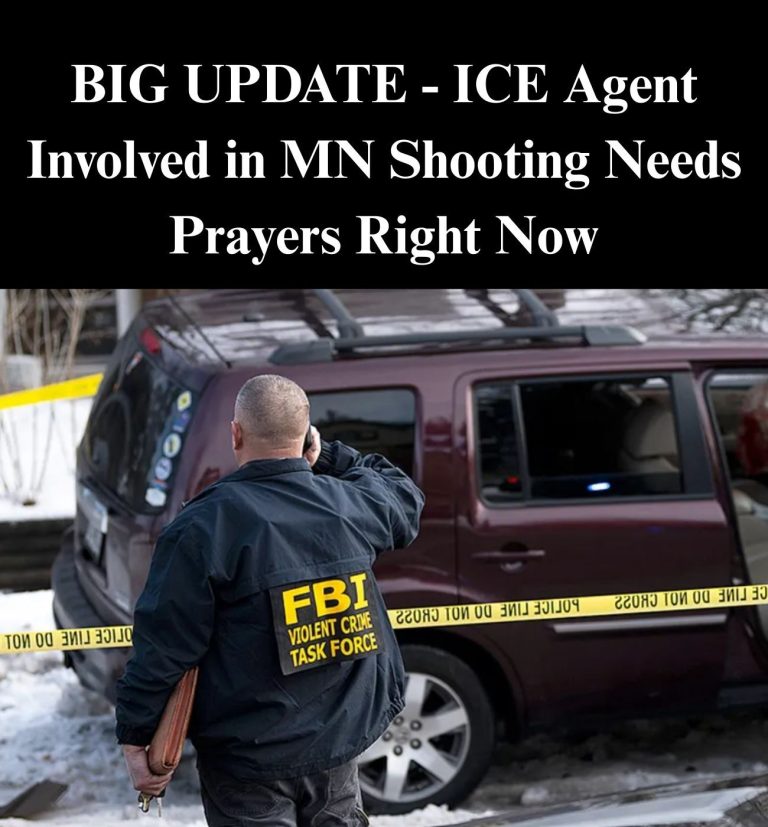
With the FBI now spearheading a formal investigation, the central question is whether Ross will face criminal prosecution. Writing for National Review, legal analyst Andrew McCarthy outlined the narrow legal tightrope of the case.
McCarthy posits that the outcome hinges on a single determination: intent. If investigators conclude that Good was merely attempting to flee the scene, she should be classified as a victim of excessive force. Conversely, if her driving is judged to have been reckless or intentionally dangerous toward the agents, Ross’s use of force may be legally justified.
McCarthy noted that the law often grants broad latitude to officers who believe they are facing an imminent, significant threat—particularly in scenarios involving moving vehicles. Given these legal complexities, McCarthy predicted that Ross is unlikely to face formal charges.