Couple with Dwarfism Beat the Odds to Start a Family
For most married couples, inquiries regarding the expansion of their family are a standard, if occasionally tiresome, social expectation. Friends, relatives, and even acquaintances frequently pose the inevitable question: “When are you going to have kids?” However, for Sydney residents Charli Worgan and her husband Cullen Adams, the social script was fundamentally different—and far more confrontational. Rather than being asked when they would start a family, the couple was often pressed on why they should. Both Charli and Cullen live with different forms of dwarfism. While their lives together are defined by joy, activity, and professional success, their relationship and reproductive choices have been subjected to an intensity of public scrutiny rarely seen in private life.
This scrutiny reached a fever pitch when Charli became pregnant with their first child. What is traditionally a period of celebration and anticipation was, for the Worgans, a time shadowed by judgment, public misunderstanding, and deeply personal medical hurdles. Instead of retreating, the couple chose a path of radical transparency and resilience—eventually transforming their private narrative into a global phenomenon that has resonated with hundreds of thousands.

From Criticism to Classroom: The Digital Shift
Following the birth of their first daughter, Charli made a decision that would reshape her future. She began documenting the nuances of her family life on social media. Her goal was not celebrity, but education—a deliberate attempt to demystify dwarfism and the realities of parenting while navigating misunderstood genetic conditions.
At the time, she could not have predicted the scale of her impact. Today, Charli’s Instagram platform reaches over 300,000 followers. Her feed serves as a powerful bridge, using photos and reflections to demonstrate that the rhythms of their daily life—the exhaustion of new parenthood, the laughter, the universal parental anxieties—mirror those of any other family.
Yet, beneath the surface of this normalcy lies a biological complexity that few families could ever imagine.

A Genetic Matrix: The Four Outcomes
The medical reality of the Worgan-Adams family is dictated by a specific genetic intersection. Charli has achondroplasia, the most prevalent form of dwarfism. Cullen lives with geleophysic dysplasia, an exceptionally rare condition. Because the couple carries different genetic variations, every pregnancy presents a statistical matrix with four distinct possibilities:
-
The child could be of average height.
-
The child could inherit Charli’s achondroplasia.
-
The child could inherit Cullen’s geleophysic dysplasia.
-
The child could inherit both conditions—a state known as double dominant dwarfism, which is medically fatal at or shortly after birth.
This “double dominant” possibility transforms pregnancy from a standard emotional journey into a high-stakes medical gauntlet. Every term requires exhaustive monitoring, frequent consultations with specialists, and genetic testing that carries significant emotional and physical weight.
The Bittersweet Milestone
When Charli recently announced she was 14 weeks pregnant with her third child, the news was greeted with a mixture of joy and profound sobriety. Unlike the typical expectant mother who looks to the 12-week mark as a safe harbor for public celebration, Charli’s experience is anchored in caution.
For the Worgans, these milestones are not just markers of growth, but of survival and genetic confirmation. Their story remains a poignant reminder that for some, the journey to parenthood is not just a leap of faith, but a courageous navigation of science and social perception.
At the 12-week mark of her third pregnancy, Charli Worgan was not preparing for a typical gender reveal or nursery planning. Instead, she was bracing for Chorionic Villus Sampling (CVS)—a high-stakes genetic test that involves extracting placental tissue via a needle through the abdomen to analyze a fetus’s DNA.
For Charli, the procedure was fraught with tension. Beyond the physical invasiveness, CVS carries an approximate 2% risk of miscarriage. For many, that statistic is a daunting hurdle; for Charli, it was the gateway to a result that would determine whether her pregnancy could even reach full term. She navigated this period with a raw, public honesty, noting the painful contrast of watching other expectant parents celebrate milestones while she lined up for a procedure that carried the weight of life or death.

Waiting for Answers No Parent Wants to Face
The stakes of the test results were absolute: they would reveal if the child had inherited a fatal combination of genes. In a poignant dispatch to her followers, Charli articulated the gravity of the wait. She was not simply curious about the baby’s health; she was waiting to learn if she would be welcoming a child in March 2021 or if her baby’s journey would end before it had truly begun.
Few parents are ever forced to stand at such a precipice. The ensuing waiting period was an exercise in emotional endurance. Charli’s decision to share this vulnerability was a calculated act of advocacy—designed not to elicit sympathy, but to illuminate the profound complexity behind her family-planning decisions.
The Gavel of Public Opinion
Transparency, however, often invites a double-edged sword. By documenting her journey, Charli opened a window to a global audience, some of whom responded with sharp criticism. Detractors questioned her right to conceive given the genetic risks, often offering unsolicited—and uninformed—judgments on what “responsible” parenthood should look like.
Charli met this criticism with a composure that has become her trademark. While acknowledging the right to an opinion, she countered that bringing a child into the world under these specific circumstances is never a casual or reckless act. Her advocacy remains rooted in a simple, vital plea: kindness. She reminds her audience that behind every announcement lies a hidden architecture of fear, resilience, and hope that outsiders can rarely fully comprehend.
A Growing Household: The Arrival of Rip
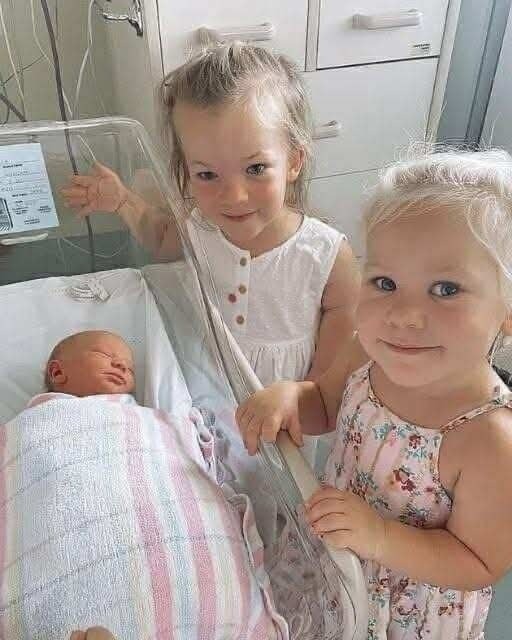
The Worgan-Adams family was already a house full of life before the third pregnancy. Their first two daughters—four-year-old Tilba and two-year-old Tully—each inherited one of their parents’ distinct forms of dwarfism. Both are thriving in an environment where physical difference is not merely accepted, but celebrated as a standard fact of life.
When the results of the third pregnancy finally arrived, the family received the news they had spent weeks praying for: the baby did not carry the fatal genetic combination. In late February, the couple welcomed their third child, a son named Rip.

Redefining the “Parenting Standard”
Following Rip’s arrival, Charli’s messaging shifted to the universal frontline of motherhood. She wrote candidly about the bone-deep exhaustion and the overwhelming gratitude familiar to parents everywhere. Her central thesis remains clear: there is no single “correct” template for motherhood, and certainly no “wrong” one.
By dismantling the assumptions surrounding disability and parenting, Charli has proven that dwarfism does not diminish one’s capability or capacity for love. Her household is defined by the same beautiful chaos found in any home—the sleepless nights, the celebrated milestones, and the constant learning curve of raising humans.

A Legacy of Transparency
Ultimately, Charli Worgan’s story is a masterclass in empathy. Her transparency has fostered a community that prioritizes understanding over snap judgments. She has successfully educated thousands on the realities of genetic testing and the emotional fortitude required to build a family against the odds.
Today, Charli, Cullen, and their three children continue to document their lives with authenticity. Their narrative is not a search for perfection; it is a testament to resilience. It serves as a powerful reminder that parenthood is not defined by height, genetics, or the court of public opinion—it is defined by an unwavering commitment to care and a love that stands tall regardless of stature.