New twist emerges in ICE killing of Renee Nicole Good
The fatal shooting of Renee Nicole Good by a federal agent has transcended the boundaries of a local use-of-force investigation, erupting into a national crisis that pits the power of the federal government against state sovereignty and First Amendment protections. What began as a chaotic encounter on a Minneapolis street on Jan. 7 has evolved into a high-stakes legal battle, reshaped by a “wild new twist”: federal investigators are now reportedly probing the political affiliations of the deceased and her grieving widow.
“Drive, Baby, Drive”: Seconds That Sparked a National Debate
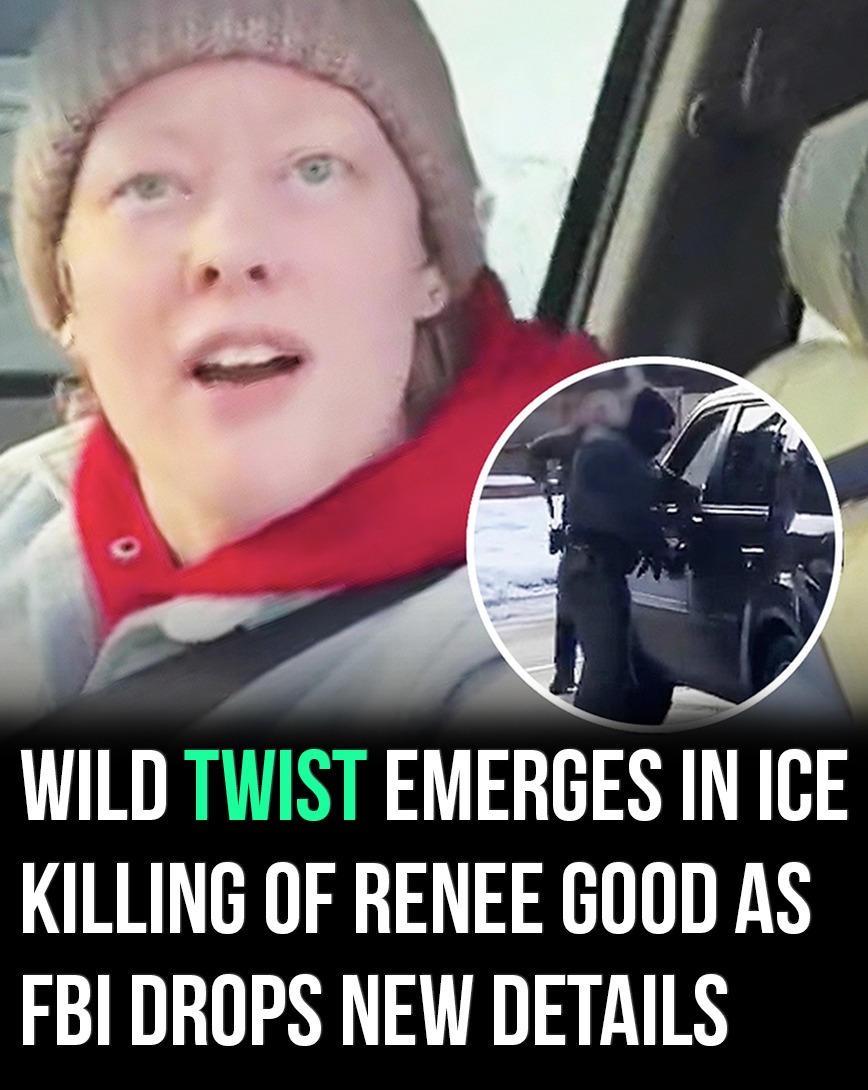
The facts of the encounter remain under intense microscopic review. Renee Good, 37, was behind the wheel of her SUV, accompanied by her wife, Becca, and their dog. According to video footage captured from multiple vantage points, Immigration and Customs Enforcement (ICE) officer Jonathan Ross opened fire as Good turned her steering wheel while he stood near the front left of the vehicle.
Three shots were fired in rapid succession—one through the windshield and two through the side window. Good was struck and later pronounced dead at a local hospital. The harrowing audio from the scene includes Becca Good’s voice, desperate and pleading, urging her wife to escape the confrontation: ”Drive, baby, drive — drive!”
The political response was instantaneous and divided. President Donald Trump, Vice President JD Vance, and Homeland Security Secretary Kristi Noem quickly moved to frame the shooting as a justified act of self-defense. Federal officials alleged that Good had “viciously run over” the agent, with the administration labeling her a “rioter.”
Minneapolis Mayor Jacob Frey, however, offered a blistering rebuttal after reviewing the footage. ”They are already trying to spin this as an action of self-defense,” Frey stated. ”Having seen the video myself, I want to tell everybody directly, that is bull****.”
The Federal Pivot: Investigating the Victim
As public outrage grows, the federal investigation has taken a controversial turn. According to NBC News, authorities are now scrutinizing Becca Good to determine if she impeded the officer. More notably, investigators are exploring potential ties between the couple and activist networks critical of the Trump administration’s immigration policies.
“The investigation is looking at potential links to activist networks, including groups that may have provided guidance on protest activity,” a source familiar with the probe told NBC News.
While federal sources suggest a broader conspiracy of organized dissent, Becca Good’s attorney, Antonio Romanucci, maintains there has been no formal notification. “There has been no contact from the FBI or federal officials indicating Becca Good is the subject of an investigation,” Romanucci stated.
A Conflict of Jurisdictions
The fallout has extended to the highest levels of state government. Sources indicate the Department of Justice is examining whether Governor Tim Walz and Mayor Jacob Frey interfered with federal agents through their public condemnations of the shooting.
Despite the scrutiny on local officials, the DOJ has signaled it will not be looking inward. Deputy Attorney General Todd Blanche confirmed that the Civil Rights Division has closed the door on a probe into Officer Ross.
“We investigate when it’s appropriate… and that is not the case here,” Blanche said, adding that the administration would not “bow to pressure” from politicians or the media.
This stance has drawn sharp criticism from constitutional scholars. Michael J.Z. Mannheimer of Northern Kentucky University dismissed the notion of total federal immunity: “The idea that a federal agent has absolute immunity for crimes they commit on the job is absolutely ridiculous.”
“A Dangerous Assault on the First Amendment”
The New York Times reports that the federal inquiry into Renee Good’s potential links to anti-administration protest groups is a primary focus of the probe. This has alarmed civil liberties advocates who argue that a victim’s political history is irrelevant to the legality of a shooting.
“That person’s past… is really not relevant,” warned Teresa Nelson, legal director for the ACLU in Minnesota. “There’s a long history of the United States government suppressing speech in times of turmoil.”
Courtney Hostetler, legal director for Free Speech for People, went further, describing the focus on activism as “an incredibly dangerous assault on our First Amendment.”
The State’s Path Forward
While federal activity intensifies, Minnesota Attorney General Keith Ellison and Hennepin County Prosecutor Mary Moriarty are conducting their own independent evidence collection. Moriarty has launched an online portal for eyewitnesses and private video submissions to bypass potential federal suppression.
“We want community members to feel as though there is documentation and perhaps accountability,” Moriarty said.
The case of Renee Nicole Good has exposed deep, jagged fissures in the American justice system. As federal and state authorities remain locked in a standoff over the limits of power and the sanctity of civil rights, a grieving city—and a watching nation—continue to wait for a resolution.
The implications of this case for free speech and police accountability are profound. Do you believe a victim’s political activism should be admissible in a use-of-force investigation? Share your thoughts below.