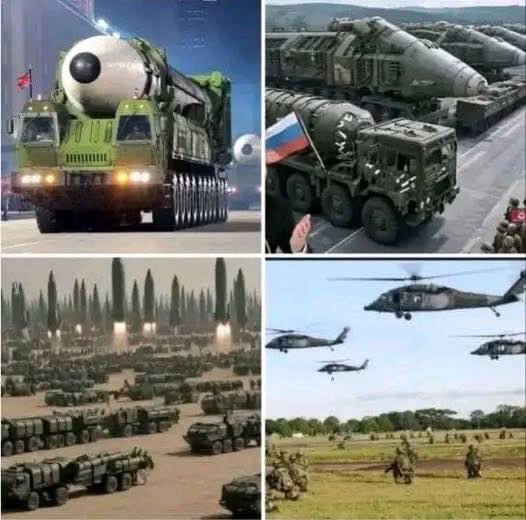
Breaking New! 13 Countries Join Forces To Attack – See More!
The geopolitical landscape of Europe is undergoing a seismic shift as the European Union confronts a reality that remained a distant theoretical concern for nearly eight decades: the tangible possibility of large-scale continental warfare. Following Russia’s full-scale invasion of Ukraine, the traditional pillars of European stability—diplomacy, economic interdependence, and an unwavering reliance on the American security umbrella—are being reassessed. In Brussels, the atmosphere has shifted from administrative governance to strategic mobilization, as military leaders and policymakers race against a tightening clock to shore up the continent’s defense readiness. The era of the “peace dividend” has officially concluded, replaced by an urgent drive to fortify military, industrial, and social foundations against an increasingly assertive and unpredictable eastern neighbor.
The catalysts for this sudden transformation are multifaceted. The ongoing war in Ukraine has served as a brutal wake-up call, shattering the illusion that high-intensity conventional warfare was a relic of the 20th century. Simultaneously, the political climate in Washington has signaled a pivot toward “America First” isolationism, with U.S. national security strategies explicitly demanding that Europe assume the primary burden of its own conventional defense. Caught between the immediate threat of Russian escalation and the potential withdrawal of unconditional U.S. support, European leaders are moving with unprecedented speed. This is evidenced by a landmark €90 billion loan package for Ukraine and a series of defense initiatives championed by European Commission President Ursula von der Leyen, designed to transform the EU’s deterrence capacity by the turn of the decade.
The rhetoric emerging from both sides of the conflict underscores the gravity of the situation. In December 2025, Vladimir Putin issued a chilling warning that Russia was prepared for total conflict, suggesting a point of no return in negotiations. This was met with a blunt assessment from NATO Secretary General Mark Rutte, who identified Russia’s long-term sights as being set on NATO territory, with an estimated window of five to ten years for potential escalation. Perhaps most sobering was the statement from German Defense Minister Boris Pistorius, who suggested that the continent might have already experienced its “last summer of peace.” These are not merely political soundbites; they are the guiding principles behind a massive reallocation of European resources and a fundamental redesign of civil life in frontline states.
While the political and military establishment is in a state of high alert, the general public exhibits a striking psychological divide. A Euronews poll involving nearly 10,000 respondents across the EU revealed a significant gap between government planning and civilian sentiment: 75% of those surveyed stated they would not be willing to fight for the EU’s borders. Only 19% expressed a readiness to take up arms, highlighting a potential crisis in mobilization should a conflict occur. However, this sentiment varies wildly by geography. In countries sharing borders or proximity with Russia, the perception of threat is far more acute. In Poland, 51% of citizens view Russian military pressure as a primary threat; this figure rises to 57% in Lithuania and peaks at 62% in Denmark. In these nations, “armed conflict” has eclipsed economic instability and energy security as the top public concern, leading to a proactive approach to national resilience.
Eastern Europe and Scandinavia are currently serving as the laboratory for this new era of civilian defense. Lithuania is spearheading the development of “drone walls” along its borders and collaborating with Latvia to re-engineer natural wetlands into defensive barriers designed to impede heavy machinery. National awareness campaigns have moved beyond theory; in Lithuania, the Interior Ministry has distributed shelter maps and emergency hotlines to every citizen. Latvia has integrated mandatory national defense education into its school curricula, and Poland has expanded security programs to include firearm safety instruction for teenagers. In 2025, Sweden took the extraordinary step of mailing “If Crisis or War Comes” brochures to every household, reviving Cold War-era practices to prepare the public for power outages, evacuations, and systemic disruption. Digital trends mirror this anxiety, with search volume for “nearest fallout shelter” and “evacuation packing list” surging throughout 2025.