Opened a Can of Spam and Found Clear Jelly? Here’s What It Really Means (And When to Worry)
How to Tell If It’s Safe: The 3 Point Check
While jelly in Spam is completely normal, it is still smart to inspect any canned meat before eating it. Canned foods are designed to last a long time, but damage, age, or improper storage can compromise safety. A quick inspection takes only a moment and gives you peace of mind. Use these three simple checks every time you open a can.
1.  Check the Can
Start with the outside. The condition of the can tells you a lot about what is happening inside.
Safe signs include a firm can with smooth sides, no dents, no rust, and a flat top and bottom. When you open it, there should be no spray, foam, or pressure release.
Danger signs include bulging ends, deep dents especially along seams, visible rust that flakes, leaking liquid, or a hissing sound when opened. These can indicate bacterial activity, including the risk of botulism. If you see any of these warning signs, do not taste the food. Dispose of the entire can safely.
2.  Check the Jelly and the Meat
Once opened, look closely before touching or smelling.
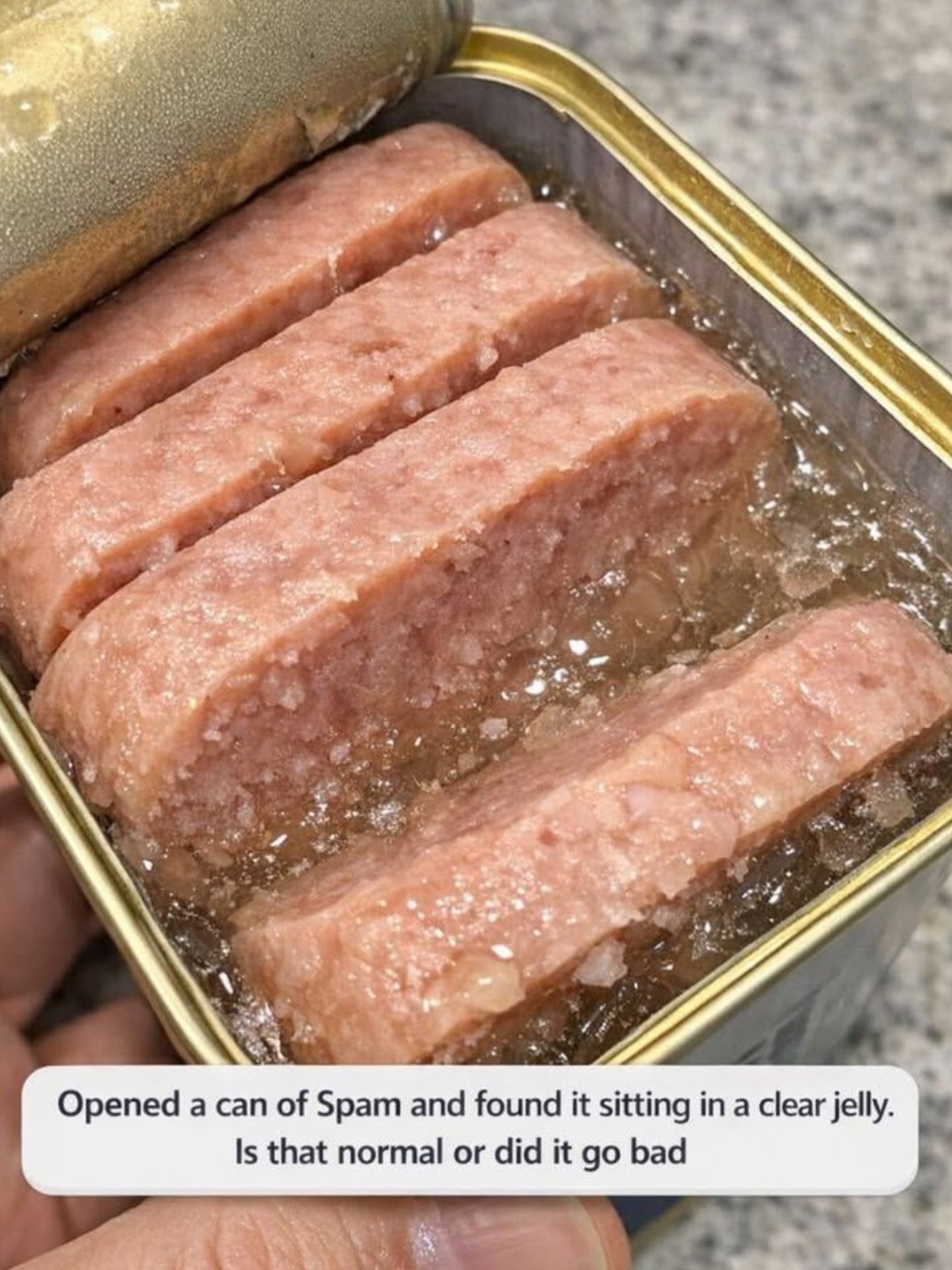
Normal appearance includes jelly that is clear or pale amber, smooth, and gelatinous. The meat itself should be uniformly pink and firm, with clean edges when sliced.
Spoilage indicators include jelly that is cloudy, greenish, dark brown, or slimy in a stringy way. Meat that appears gray, green, brown, or has slimy patches or unusual spots should not be eaten. Any separation that looks foamy or bubbly is also a red flag.
Remember that texture matters as much as color. Spam should feel solid, not mushy or sticky.
3.  Do the Smell Test
Your nose is one of the best safety tools you have.
Normal Spam has a mild aroma that is slightly salty and meaty. It should smell neutral or faintly savory.
Spoiled Spam smells unmistakably wrong. Sour, rancid, rotten, or sharp odors mean it is time to throw it away. If your instinct says something is off, trust it. Never taste canned meat to test safety, especially if something already seems suspicious.
 If you suspect spoilage at any stage, stop immediately. Tasting is not safe with canned meats.
Frequently Asked Questions
Q: Can I cook the jelly away?
Yes. When you fry, bake, or grill Spam, the gelatin melts. It either absorbs back into the meat or renders out into the pan. After cooking, it is usually unnoticeable and often improves texture and flavor.
Q: Does all Spam have jelly?
Most varieties do, especially the classic version. Spam naturally releases gelatin as it cools after processing. Versions with less fat or added ingredients may produce less jelly, but its presence is completely normal.
Q: Is the jelly edible?
Absolutely. The jelly is simply gelatin made from proteins released during cooking, similar to what you see when homemade broth cools. It is safe, edible, and flavor neutral.
Q: What if the jelly looks watery?
That is fine. Temperature changes during storage can cause gelatin to loosen or liquefy. As long as the color and smell are normal, watery jelly is not a problem.
The Bottom Line
That clear jelly is not a flaw. It is evidence that your Spam was properly cooked, sealed, and preserved. If the can is intact, the meat is pink and firm, and the smell is mild, it is safe to eat.
So go ahead. Slice it, fry it, toss it into fried rice, or stack it on a sandwich. That little bit of jelly is just part of the charm of a pantry staple that has fed families for nearly a century.
Sometimes the things that look strange are simply signs of honest food doing its job.
Have you ever been surprised by the jelly in Spam? Share your experience below. We are all learning together.