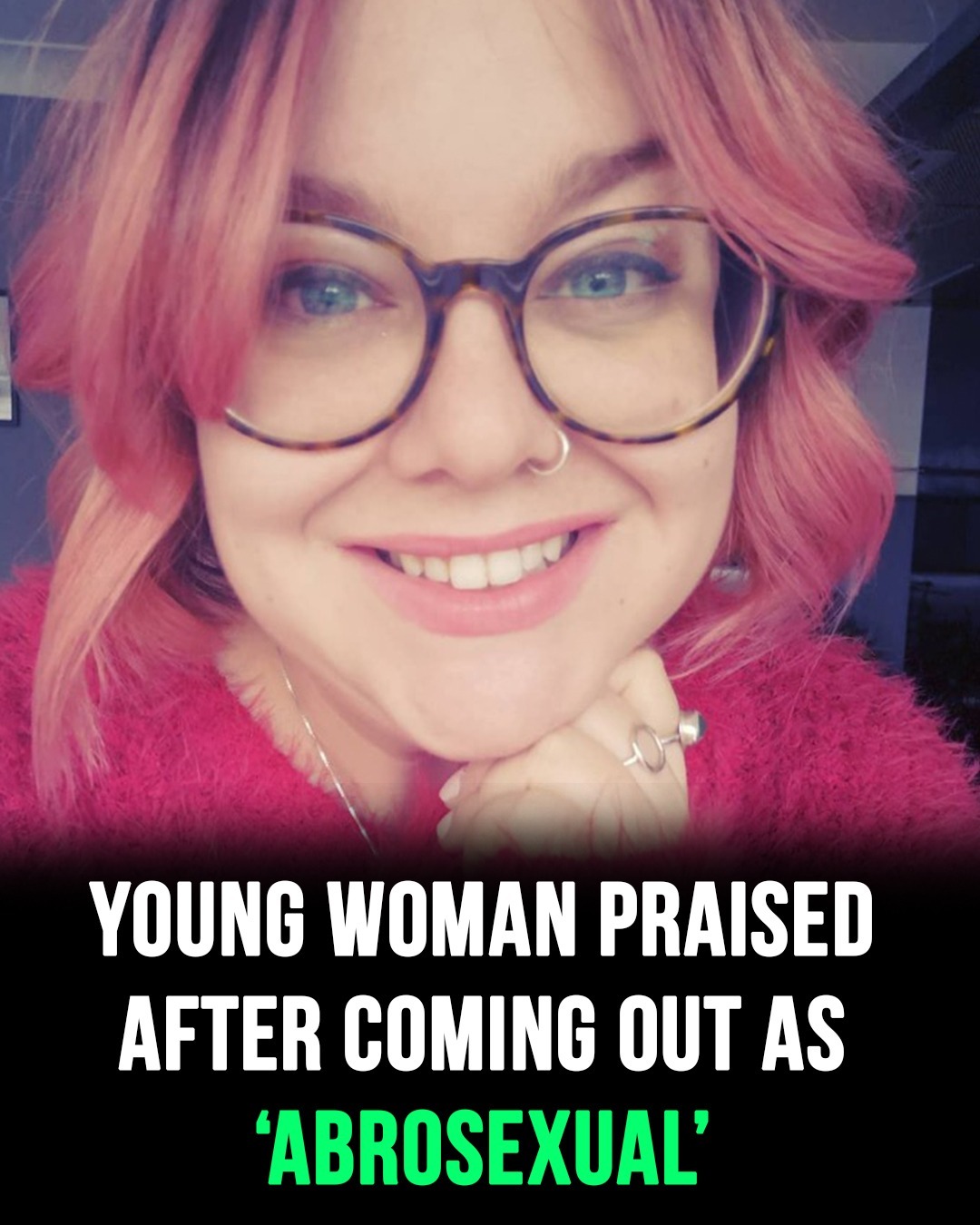
Woman comes out as abrosexual after 30-year journey!
The human experience of attraction is often portrayed as a fixed compass point, a settled identity that once discovered, remains static throughout a person’s life. However, for many individuals, the landscape of desire is not a permanent map but a shifting tide. This phenomenon of evolving attraction is more common than societal narratives often suggest, and it has a specific name: abrosexuality. While the term may be new to some, for those who live it, the label represents a vital lifeline of understanding after years of confusion.
The power of finding the right language is perhaps best illustrated by the journey of writer Emma Flint. In a deeply personal narrative shared with the public, Flint detailed a thirty-year odyssey of self-discovery that culminated in the realization that she was abrosexual. For decades, Flint navigated a world that demanded a singular “lane” of attraction, leaving her feeling perpetually adrift. At thirty-two, she reflected on a youth spent trying on various identities like ill-fitting clothes, wondering why none of them seemed to stay comfortable for long.
For a significant portion of her life, Flint identified as a lesbian, a label that seemed to fit until the internal weather changed. There were periods when she felt exclusively drawn to women, followed by unexpected intervals where she found herself attracted to men. At other times, her sexual desire would vanish entirely, leaving her in a state of asexuality, only for the cycle to begin anew weeks or months later. This constant flux created a sense of internal instability. Flint described feeling like a fraud, as if she were constantly changing her mind or failing to “commit” to an identity, rather than simply experiencing a natural internal shift.
“I felt lost, as if out at sea,” Flint explained, describing the psychological toll of being unable to pin down her own nature. The frustration didn’t stem from an inability to choose, but from the fact that her identity was inherently fluid. On any given day, she might wake up feeling entirely aligned with one sexual orientation, only to have that alignment drift toward another shortly after. It was only when she encountered the term “abrosexual” in an online forum that the decades of uncertainty finally resolved into a coherent picture. For the first time, she wasn’t “confused” or “inconsistent”; she was simply abrosexual.
Abrosexuality is a distinct identity within the LGBTQ+ spectrum that refers specifically to sexual fluidity. Unlike terms such as bisexuality or pansexuality, which describe the genders of the people one is attracted to, abrosexuality describes the nature of the attraction itself. It is a label that denotes change. An abrosexual person finds that their orientation fluctuates over time. They may move through phases that resemble homosexuality, heterosexuality, bisexuality, or asexuality, but the defining characteristic is the movement between these states.

