A License Plate That Is Making Everyone Look Twice!
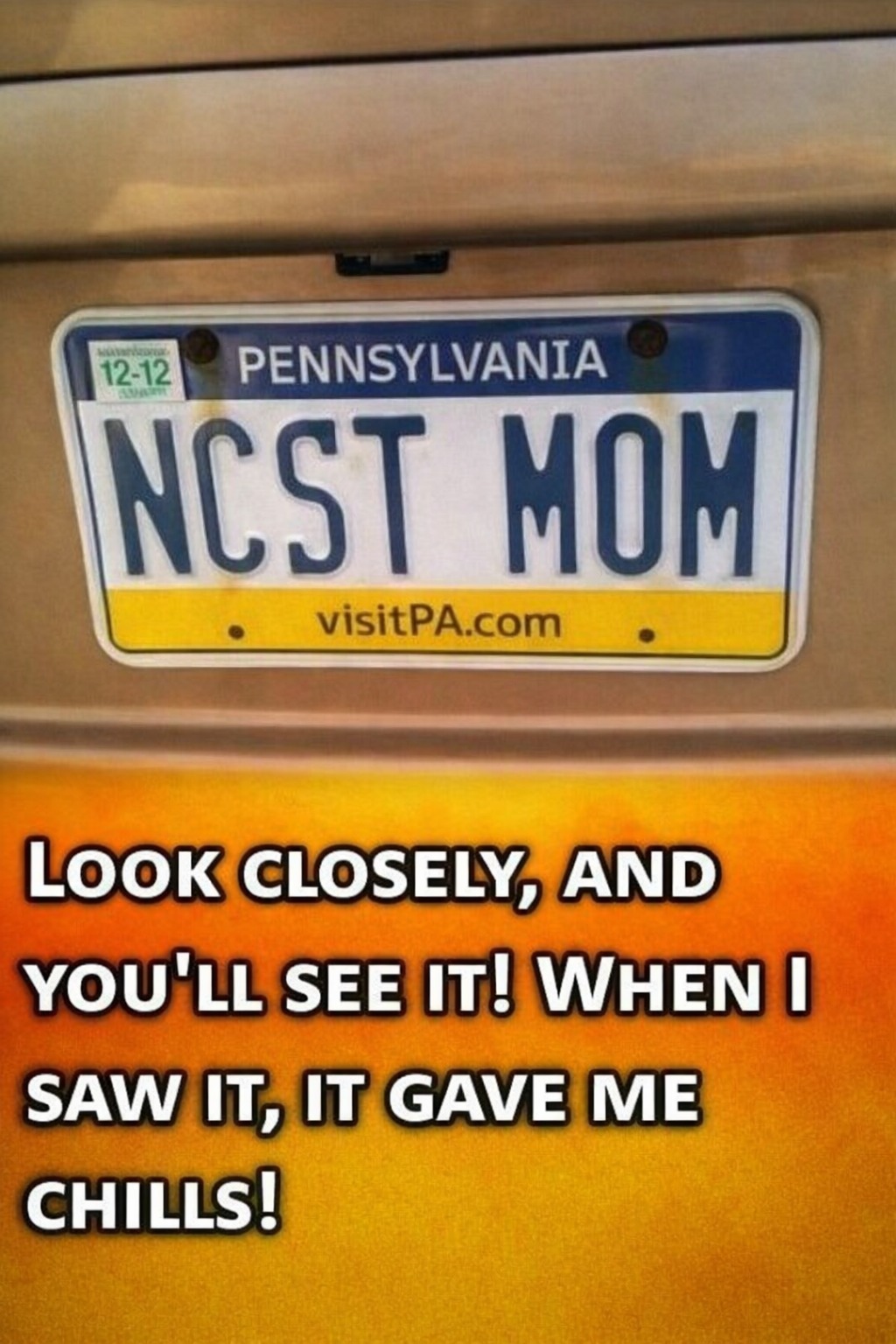
In a world of constant digital noise and complex viral trends, it is often the simplest instances of human wit that resonate most deeply. We are frequently told that creativity requires grand stages or sophisticated technology, yet a quiet parking lot in Perth, Western Australia, recently proved that all one truly needs is a bit of spatial awareness and a sense of mischief. The star of this localized sensation was not a luxury supercar or a high-tech prototype, but a standard Kia Sportage that had been outfitted with a personalized license plate. At first glance, the alphanumeric string “370HSSV” appeared to be nothing more than a mundane, random designation—the kind of unremarkable detail that fades into the background of urban life.
However, the beauty of this particular joke lay in its hidden perspective. For most passersby, the plate was a collection of meaningless characters. It was only when an observant pedestrian took a photograph and viewed the image from a different angle—specifically, upside down—that the punchline was revealed. When inverted, the “370HSSV” transforms into a cheeky, recognizable word that has long been a staple of lighthearted schoolyard humor. The realization is instantaneous, triggering that specific type of delight that comes from solving a visual puzzle. It was a clever subversion of a rigid, government-regulated space, turning a piece of mandatory identification into a secret handshake for the observant.
The transition from a suburban curiosity to a global conversation began when a user named Jeffrey shared the discovery on the popular Facebook page, “The Bell Tower Times 2.0.” This digital hub, known for documenting the eccentricities of Western Australian life, provided the perfect platform for the joke to reach a wider audience. Within hours, the post moved beyond the local community, amassing thousands of likes, shares, and comments. The internet, often a place of division, found a rare moment of unified amusement. Users from across the globe tagged friends and family, inviting them to flip their phones and join in on the discovery. The viral nature of the post underscored a fundamental truth about human connection: we are intrinsically drawn to cleverness that feels personal and unscripted.
The secondary fascination of the story involves the bureaucratic hurdle the plate had to clear before ever hitting the streets. In Western Australia, as in many jurisdictions, the process for obtaining personalized license plates is far from a free-for-all. The Department of Transport employs a rigorous screening process, rejecting nearly a thousand applications annually. Their criteria are stringent, designed to filter out offensive language, sexual references, drug-related slang, or any combination of characters that could incite public outrage. Authorities are tasked with a difficult balancing act, maintaining a standard of public decency while allowing citizens a degree of self-expression.
What made “370HSSV” a masterpiece of suburban rebellion was its technical innocence. On any official form or computer screen, the plate is entirely harmless. It contains no prohibited words or slurs in the traditional sense. It only becomes “inappropriate” through the physical act of the viewer changing their orientation to the object. This clever navigation of the rules felt, to many observers, like a small victory for the underdog. It was a demonstration of how creativity can thrive within a regulated system, using the system’s own constraints to hide a joke in plain sight. Many commenters praised the owner for their ingenuity, noting that it takes a specific kind of mind to look at a standard font and see the potential for an inverted double meaning.
Furthermore, the story serves as a poignant commentary on the power of the internet to amplify the ordinary. A car parked at a shopping center is a quintessentially dull setting. Yet, the digital age allows these microscopic moments of levity to be exported to millions of people in an instant. It humanizes the often-sterile environment of public roads and parking structures. The global reaction suggests that people are hungry for this kind of “low-stakes” humor—jokes that are clever and slightly rebellious without being malicious or harmful. It sparked a broader discussion about other famous license plates and the various ways people have tried to sneak humor past the watchful eyes of government censors over the decades.
Beyond the immediate laughter, there is a lesson here about perspective. The “370HSSV” plate is a literal manifestation of the idea that a change in viewpoint can completely transform one’s understanding of a situation. What was once meaningless becomes hilarious; what was once a random set of numbers becomes a deliberate act of wit. In a time when public discourse can feel increasingly rigid and polarized, the sight of a government-issued plate making people laugh through a simple visual trick is a reminder that there is still plenty of room for playfulness in the world. It suggests that if we are willing to look at things from a slightly different angle, we might find something worth smiling about in even the most regulated corners of our lives.
The driver of the Kia Sportage remains, for the most part, an anonymous architect of joy. They didn’t need a viral video or a provocative statement to get people talking; they simply needed eight characters and a bit of foresight. As the image continues to circulate, it stands as a testament to the enduring power of the “hidden gem.” It encourages us to pay more attention to our surroundings, to look for the small rewards hidden in the mundane, and to appreciate the efforts of those who go out of their way to make the world a slightly funnier place. In the grand scheme of things, a license plate is a tiny detail, but the “370HSSV” phenomenon proves that even the smallest ideas can take on a life of their own when they are clever enough to turn our expectations upside down.
Ultimately, this story is about the resilience of human humor. No matter how many regulations are put in place or how many applications are rejected, people will always find a way to express their personality and share a laugh with their neighbors. It is a win for the subtle over the loud, the clever over the obvious. As we navigate our increasingly digital and structured lives, these brief flashes of organic, analog humor are essential. They remind us that creativity isn’t always about the big picture—sometimes, it’s about the small, inverted one. By finding a way to make people look twice at a piece of metal, the owner of that Kia reminded us all that a little bit of wit goes a long way, especially when it’s hidden in plain sight on a Tuesday afternoon.