My Aunt Kicked Me Out of My Childhood Home After My Parents Died – Just as I Left Crying, a Black Limo Pulled Up
I lost my parents in a single night. No warning. No slow goodbye. Just a phone vibrating on my nightstand, a voicemail I didn’t understand, two police officers standing too far apart, and a hospital corridor that smelled like disinfectant and finality. One moment I was nineteen, worrying about tuition and summer plans. The next, I was alone in the world, clutching a paper cup of burnt coffee at three in the morning, trying to understand how everything could disappear so quickly.
Grief didn’t arrive in one dramatic wave. It came in fragments. My mother’s coat still hanging by the door. My father’s mug in the sink. The house felt hollow after the funeral, like it was holding its breath. I kept expecting to hear my mom humming while she cooked or my dad’s footsteps in the garage, but the silence swallowed everything. It was just me and the cat, pacing rooms that suddenly felt too big.
I told myself the house was the one constant I still had. The place where I’d grown up. The walls that knew my childhood better than anyone else. That illusion shattered at the will reading.
I sat in a stiff chair at the lawyer’s office, wearing my mother’s old blazer because it still smelled faintly like her. My hands shook so badly I had to clasp them together. Across from me sat my aunt Dina—my father’s sister—someone who had barely bothered to acknowledge us when my parents were alive. She looked polished and pleased, dressed like she was headed to a party, not a room full of grief.
The lawyer cleared his throat and read the words that changed everything.
“The house is bequeathed to Ms. Dina.”
I stared at him, convinced I’d misheard. My ears rang. My stomach dropped.
“That can’t be right,” I whispered. “They would never do that.”
Dina smiled, slow and sharp. “Looks like they did.”
The lawyer wouldn’t meet my eyes. He said the will appeared valid. And just like that, the home I’d grown up in no longer belonged to me.
Two days later, Dina showed up with a set of keys and a voice dripping with fake sympathy.
“You have twenty-four hours to move out,” she said, lounging on the couch like she’d always owned it. “I want the place clean before I move in.”
I told her I had nowhere to go. She shrugged.
“That’s not my concern,” she said. “Think of it as a learning experience.”
I packed while she watched reality TV, her feet on my parents’ coffee table. I folded clothes with numb hands, pausing every time I found something familiar—a scarf, a photo, a book with my mom’s notes in the margins. I barely slept.
The next morning, I stood on the porch with two suitcases and my mother’s dying peace lily. I didn’t cry. I felt empty. Homeless. Unanchored.
Then I heard the engine.
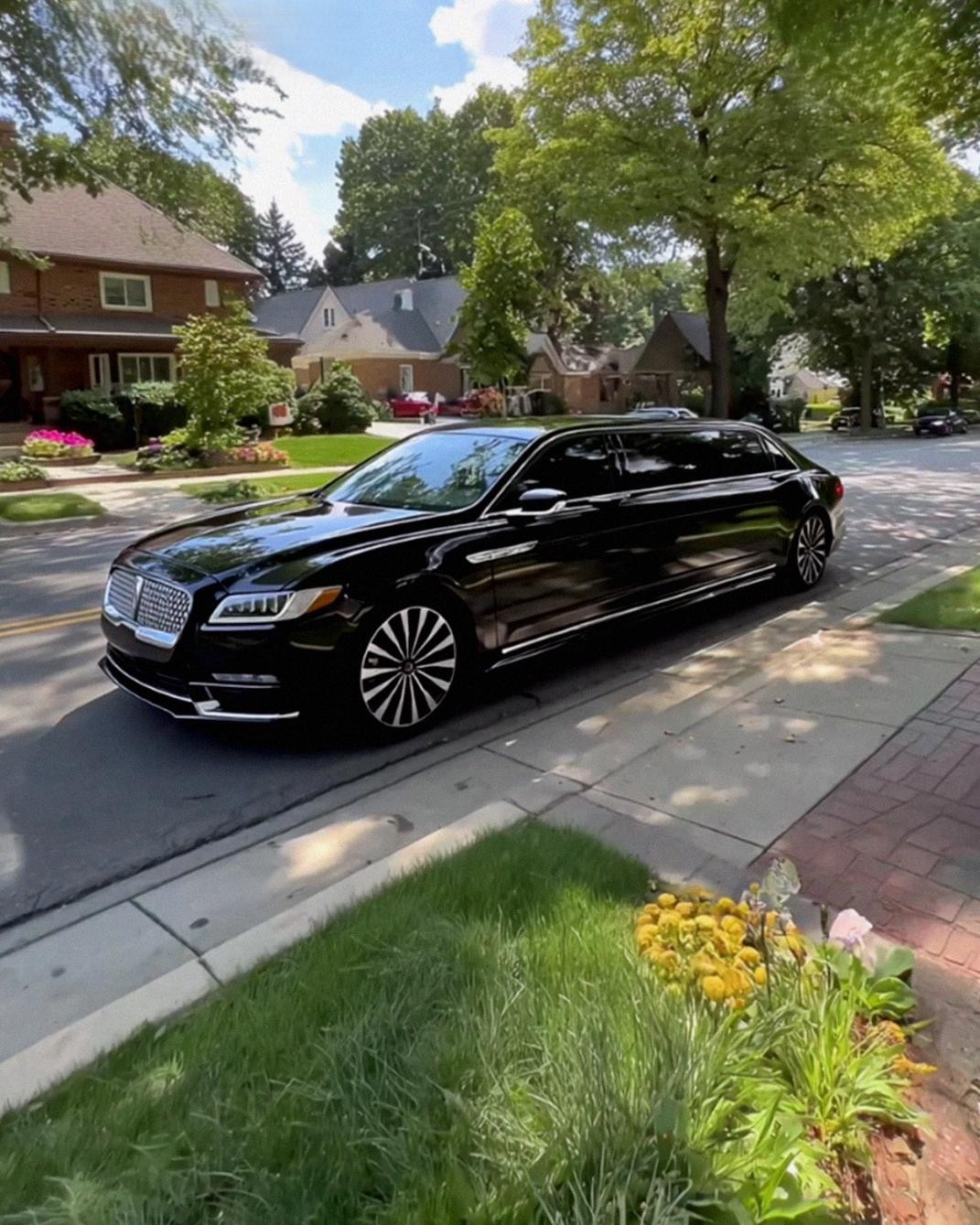
A black limousine rolled slowly down the street and stopped in front of the house. It looked absurd against the familiar cracks in the driveway. The door opened, and a tall man in a gray suit stepped out.
“Rachel?” he asked gently.
I blinked. “Uncle Mike?”
He was my father’s estranged brother, someone I hadn’t seen since I was a kid. He looked older, tired, but steady.
“You’ve grown,” he said, offering a small smile.
I barely managed to ask what he was doing there. Instead of answering, he held up his phone. On the screen was a photo my aunt had posted online—herself in front of the house, sunglasses on, champagne in hand. The caption read: New beginnings. Finally taking what was meant for me.
“Your father would’ve been furious,” Mike said. “So I looked into it.”
Before I could ask what that meant, two police cars pulled up behind the limo.
My heart began to pound.
“Stay close,” Mike said quietly. “This won’t take long.”
The officers followed us up the porch steps. Dina answered the door, mimosa in hand, clearly irritated.
“You again?” she snapped. “Rachel, you’re trespassing.”
Mike raised his hand, calm and precise. He opened a thick folder.
“This is evidence that you forged the will,” he said. “The original doesn’t exist. The signature was traced. The lawyer you hired isn’t licensed. We have bank records, witness statements, handwriting analysis. Enough to make this very simple.”
Dina laughed too loudly. “You’re bluffing.”
The officers stepped forward. One of them spoke clearly.
“Ms. Dina, you’re being detained for fraud and forgery.”
Her glass slipped from her fingers and shattered on the porch. She started shouting, then pleading, then threatening. None of it mattered. Minutes later, she was led away in handcuffs, her designer slippers soaked in spilled champagne.
I stood there, stunned, as the woman who tried to erase my life was taken away.
Mike placed a hand on my shoulder. “You don’t have to do this alone anymore.”
Three months later, the court confirmed what should have been obvious from the start. There was no valid will. Everything legally belonged to me. Dina lost the house, the money, and her freedom. The last I heard, she was renting a small apartment above a vape shop, far from the image she’d tried to project.
As for me, I stayed.
I painted the walls again. I fixed the loose step on the back porch. I planted herbs in the kitchen window like my mom used to. The peace lily bloomed, stubborn and defiant.
The house feels alive again—not because the pain is gone, but because it no longer owns me. I learned that family isn’t always who shares your blood, and that justice doesn’t always arrive quietly.
Sometimes it pulls up in a black limousine and reminds you that even after loss, after betrayal, after being pushed out into the cold, there are still people willing to fight for what’s right.
And sometimes, that’s enough to bring you home.