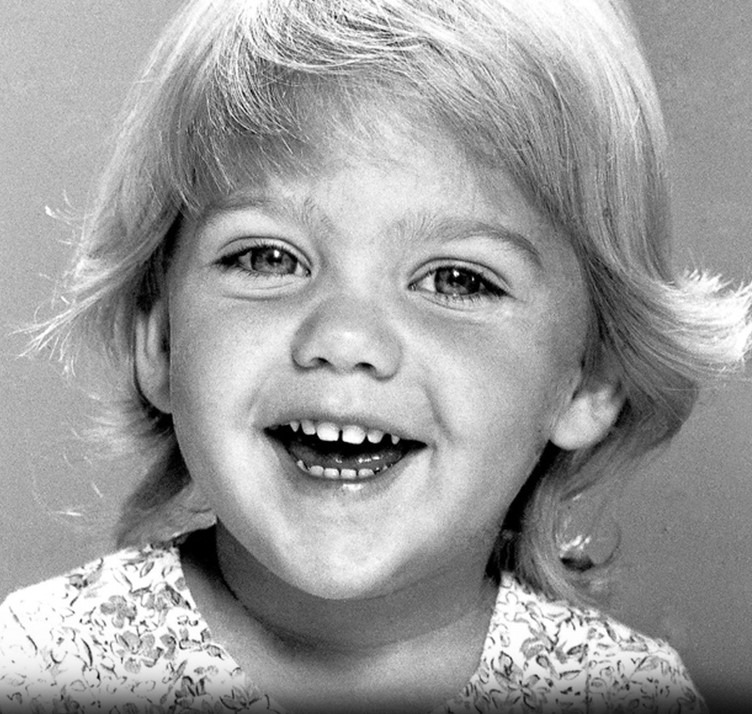
She grew up with a violent father, started drinking alcohol at just 9 years old, and then she was institutionalized!
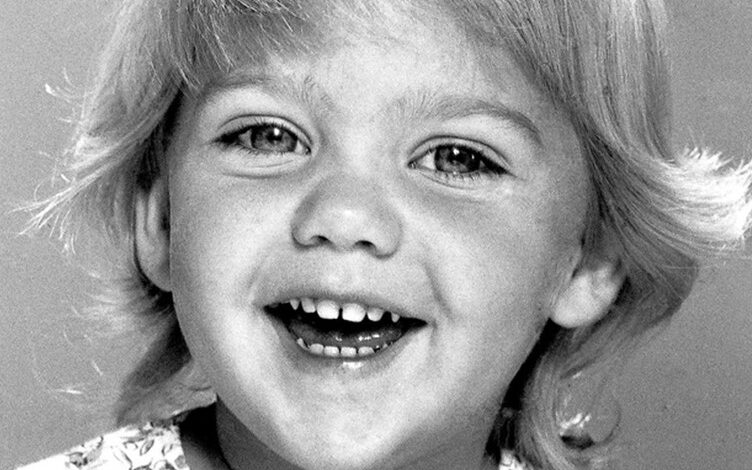
The story of Drew Barrymore is one of the most harrowing and ultimately triumphant arcs in the history of American cinema. To the world, she was the golden child of a legendary Hollywood dynasty, the wide-eyed girl who captured the heart of the planet in E.T. the Extra-Terrestrial. But behind the precocious smile and the cinematic magic lay a reality so fractured and dark that it seemed destined to end in a familiar Hollywood tragedy. Her journey from the brink of self-destruction to becoming one of the most admired and joyful figures in entertainment is a testament to the resilience of the human spirit.
Born into the storied Barrymore family, Drew carried the weight of a theatrical lineage that stretched back generations. However, that legacy came with a heavy price. Her father, John Drew Barrymore, was a man plagued by violence and substance abuse, providing a volatile and unstable foundation for a young child. Her mother, Jaid, found herself ill-equipped for the responsibilities of traditional parenting, instead thrusting her daughter into the adult world of the Los Angeles social scene. By the age of nine, while most children were navigating elementary school playgrounds, Drew was a regular at Studio 54. She was a child navigating an adult playground, surrounded by people who viewed her fame as a pass to ignore her age.
The consequences of this lifestyle were immediate and devastating. Deprived of a protective childhood, Drew began drinking alcohol at nine years old. By the age of twelve, she was addicted to drugs, her life spiraling out of control before she had even reached puberty. The world watched a child star fade, but few saw the profound desperation of the girl behind the headlines. At thirteen, feeling the crushing weight of her circumstances and the absence of any true sanctuary, Drew attempted to end her own life. It was a cry for help that finally forced a reckoning with her reality.
What followed was a period of intense struggle and forced maturation. Drew was institutionalized for a year and a half, enduring a level of discipline and isolation that stood in stark contrast to the lawless freedom of her early years. It was during this time, within the walls of an institution, that she made a decision that would redefine the rest of her life. Realizing that her parents were unable to provide the stability she needed to survive, a fourteen-year-old Drew petitioned for legal emancipation. She chose to become an adult in the eyes of the law long before she was emotionally ready, simply because it was her only path to safety.
The years following her emancipation were defined by a different kind of hardship. Hollywood is often unkind to child stars who fall from grace, and Drew found herself blacklisted and broke. She took anonymous jobs, cleaning toilets and working in cafes, living in a small apartment and learning how to exist in a world that no longer had a camera focused on her. This period of anonymity was, perhaps, her greatest act of rebellion. She was no longer a “Barrymore” or an “E.T. girl”; she was a young woman determined to forge an identity that wasn’t a cautionary tale.
Her return to the screen was not a sudden explosion of fame, but a slow, deliberate rebuilding. She took small roles, often playing against the “America’s Sweetheart” image the industry wanted to impose on her. It was her role in the 1990s that signaled a cultural shift. With a newfound sense of agency, she began producing her own films, creating Flower Films and taking control of her narrative. Hits like The Wedding Singer, Ever After, and Charlie’s Angels didn’t just cement her as a box-office powerhouse; they showcased a woman who had reclaimed her joy. The darkness of her past hadn’t extinguished her light; it had made her radiance feel earned and authentic.
Yet, the true healing occurred away from the red carpets. For Drew, the journey to wholeness required a commitment to sobriety and a radical re-evaluation of what family meant. When she became a mother, she vowed to break the generational cycles of trauma that had nearly claimed her life. She became a fierce advocate for her children’s privacy, ensuring they would never have to experience the “nightclubs at nine” lifestyle that had stolen her own childhood. Her parenting became her greatest production, a quiet, steady act of love that served as the ultimate closure for her own wounds.
Today, Drew Barrymore is a multifaceted mogul, a beloved talk show host, and a cultural icon. But her legacy is not defined by her awards or her business successes. It is defined by her radical honesty. By speaking openly about her suicide attempt, her institutionalization, and her complicated relationship with her parents, she stripped away the shame that so often accompanies addiction and mental health struggles. She transformed her scars into a roadmap for others, proving that a shattered start does not dictate a broken finish.
Her life stands as a powerful rejection of the Hollywood tragedy trope. She refused to become a statistic, and she refused to let her past harden her into a cynic. Instead, she chose to build a life on the pillars of boundaries, hard-won sobriety, and a genuine, infectious enthusiasm for the world. To watch Drew Barrymore today is to witness a woman who has walked through the fire and decided to use the heat to keep her heart warm. She is a reminder that even when the world fails to protect the child, the adult can still find the strength to save themselves and build a life that is, quite literally, a dream come true.