Back to the 80s! The Haunting Legacy of Evil Town
The 1980s represent a golden era for the horror genre, a decade defined by a unique fusion of experimental storytelling, practical special effects, and a palpable sense of atmospheric dread. While the era gave birth to massive franchises and household names, it also fostered a vibrant underbelly of cult cinema—films that, while perhaps overlooked by the mainstream at the time of their release, managed to capture a specific, haunting lightning in a bottle. One such contribution to this nostalgic tapestry is “Evil Town,” a film that serves as a fascinating specimen of 1980s genre filmmaking, blending the era’s bright, bold aesthetic with a plot rooted in deep-seated primal fears.
To understand the enduring appeal of “Evil Town,” one must first look at the narrative foundation upon which it was built. The story is a quintessential example of the “quiet town with a dark secret” trope, a cornerstone of psychological and folk horror. The film introduces us to a community that, on the surface, appears to be the very embodiment of idyllic, peaceful living. However, beneath this polished veneer of civility and calm lies a chilling and parasitic reality. The elderly residents of this secluded enclave have unlocked the secret to unnatural longevity, but the price of their immortality is paid in the blood and vitality of the young.
The central conflict revolves around a life-extending serum, a scientific or perhaps occult concoction created by harvesting cells and vital essences from unsuspecting travelers. These young visitors, often passing through the town with the optimism of youth, find themselves trapped in a predatory web. They are kidnapped and subjected to a process that drains them of their physical vitality, leaving behind nothing but lifeless, hollow shells. This premise taps into a profound generational anxiety—the idea of the established elite literally consuming the future of the youth to sustain their own fading power. It is a theme that resonates just as strongly today as it did during the Reagan-era anxieties of the mid-80s.
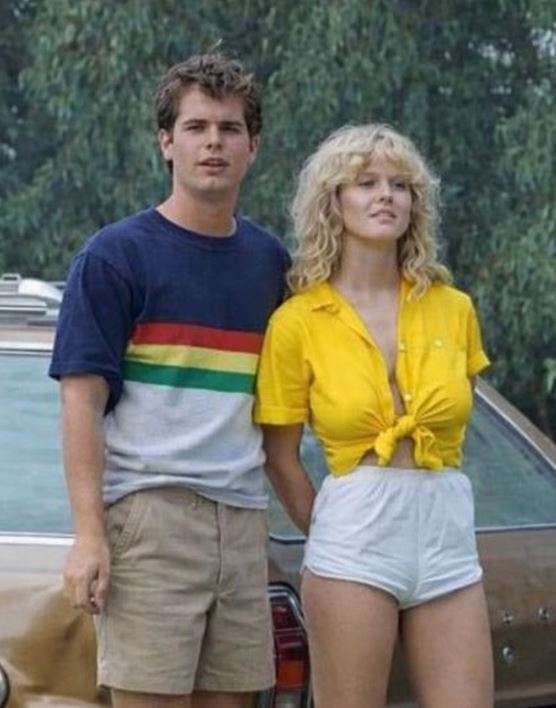
What truly elevates “Evil Town” from a standard B-movie into the realm of cult status is its unmistakable visual identity. The film is a time capsule of 1980s culture, capturing the decade’s fashion and lifestyle with a vividness that feels both charming and eerie. One of the most iconic images associated with the film features lead actress Lynda Wiesmeier, a figure who embodied the “girl next door” archetype that was so frequently put at risk in films of this period. In promotional stills and key scenes, the costume design perfectly reflects the bold, geometric trends of the day. Her co-star often appears in the quintessential oversized gray sweatshirt adorned with abstract, colorful shapes—a staple of mid-80s leisurewear—paired with dark, athletic shorts.
Wiesmeier herself is often remembered in her striking bright red shirt, tied at the waist in a style that defined the summer fashion of the era, coupled with high-waisted white shorts. These sartorial choices do more than just date the film; they ground the characters in a specific reality, making the subsequent horror of their situation feel more personal and immediate. By presenting the protagonists as stylish, relatable figures of their time, the filmmakers heightened the tension for the audience, who saw in them a reflection of their own peers or themselves.
The setting of the film further enhances its nostalgic power. Much of the action unfolds against a backdrop of sun-dappled rural roads and dense, ancient forests. A recurring visual motif involves the classic brown station wagon, the ultimate symbol of American domesticity and family travel during that period. Seeing this vehicle parked alongside towering, shadowy trees creates a juxtaposition that is core to the film’s effectiveness: the familiar, safe symbols of suburban life clashing with the untamed and dangerous secrets of the natural and hidden world. It evokes the feeling of a road trip gone terribly wrong, a fear that many who grew up in the era of paper maps and isolated gas stations can still recall with a shiver of recognition.
Structurally, “Evil Town” is a product of its time in the way it handles pacing and tension. The 1980s was a period of transition for horror, moving away from the slow-burn suspense of the 70s toward the more graphic, high-concept thrills of the slasher era. “Evil Town” sits comfortably in the middle, utilizing long takes and atmospheric build-ups to establish a sense of unease before plunging into the more visceral elements of its cell-harvesting plot. The experimental nature of the storytelling—often jumping between the perspectives of the victims and the conspiratorial elders—adds a layer of fractured reality to the experience, keeping the viewer off-balance.
The film also benefits from the specific technical limitations and strengths of the 1980s. The use of practical effects to depict the serum’s effects and the aging process of the residents provides a tangible, tactile quality that modern CGI often struggles to replicate. There is a “wetness” and a physical presence to the horror in “Evil Town” that makes the harvesting scenes particularly effective. This craftsmanship, combined with a synth-heavy musical score that alternates between melodic pop sensibilities and discordant, rhythmic dread, creates a sensory experience that is quintessentially “eighties.”
In the decades since its release, “Evil Town” has benefitted from the cyclical nature of pop culture. Modern audiences, fueled by a craving for the aesthetic of shows like “Stranger Things” or the neon-soaked revivals of synthwave music, have returned to films like this with a new appreciation. It is seen not just as a horror movie, but as a piece of cultural history that captures the mood, the character, and the experimental spirit of a decade that refused to play by the rules. It invites fans to embark on a journey that is simultaneously a haunting nightmare and a warm, nostalgic trip down memory lane.
Ultimately, the legacy of “Evil Town” lies in its ability to remind us that horror is often most effective when it is dressed in the familiar. By taking the bright colors, the iconic fashion, and the domestic symbols of the 1980s and subverting them with a tale of predatory immortality, the film secured its place in the annals of cult cinema. It stands as a testament to a time when filmmakers were willing to take strange, dark risks, ensuring that the peaceful surface of the American small town would never look quite the same again. For those who relish the “odd charm” of the decade, “Evil Town” remains a vital, unsettling, and beautifully crafted artifact of a bygone age.