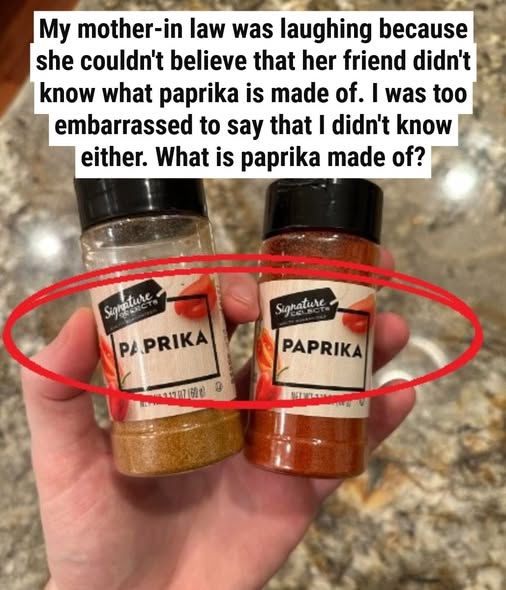
Paprikas ingredients left people on social media stunned!
Paprika sits in nearly every kitchen cabinet in the world — a vibrant red powder we shake over deviled eggs, roasted potatoes, and stews without giving it a second thought. It’s such a pantry staple that most people never question what it actually is. But recently, social media had a collective meltdown after thousands of users realized something embarrassingly simple: paprika isn’t some exotic spice from a rare plant. It’s just dried and ground red pepper. That’s it. No paprika tree, no paprika fruit, no mystical paprika bush. Just peppers.
The whole thing blew up after an Australian food influencer, Nutra Organic, posted a short video confessing her disbelief. “Learning that paprika is just dried and crushed red capsicum was really shocking,” she said. “I don’t know why I thought there was a paprika tree somewhere.” She wasn’t alone. The comment section exploded with people admitting they had spent their entire lives imagining paprika growing on special trees in far-off countries. Some even said they pictured paprika pods, like nutmeg or cloves. Others swore they thought it came from a root, or a spice bark, or something harvested at dawn by monks with woven baskets.
It turns out a huge chunk of the world never thought to ask what paprika actually is. We all just bought the little tin, sprinkled it over whatever needed a pop of color, and moved on with our lives. But once the truth went viral, the internet dove into a spiral of jokes, memes, disbelief, and dramatic self-reflection. One user commented, “My whole life was a lie.” Another wrote, “I really thought paprika was its own plant. Not a single brain cell asked follow-up questions.”
But the truth is wonderfully simple: paprika is made from red peppers — specifically sweet red capsicum. In most cases, it’s just the same kind of pepper you’d slice into a salad or roast for dinner. In paprika-producing countries like Hungary and Spain, they use special varieties bred for flavor, sweetness, or heat, but the foundation is still the same. There is no magical paprika species. No mythical origin story. Just peppers that stayed on the plant long enough to fully ripen into that deep, intense red.
Once harvested, the process of making paprika is almost laughably straightforward. First, the peppers are allowed to turn fully red — the point where the flavor is sweetest and the color richest. Then they’re dried. Depending on the region, that could mean hanging them outside under the sun, using drying racks, dehydrators, or for smoked paprika, drying them over slow-burning wood. When the peppers are completely dry — brittle, wrinkled, and deep in color — they’re ground into the fine, vivid powder we all recognize. That’s paprika. Nothing more mysterious than that.
The simplicity of it is exactly why the internet reacted the way it did. People tend to assume spices come from faraway places and complicated processes. Cinnamon comes from tree bark. Vanilla comes from orchids. Saffron is harvested from tiny flowers by hand. Pepper comes from berries. Many spices really do have exotic or ancient roots. So when people discovered that paprika is basically a ground bell pepper, it felt oddly disappointing, like finding out a secret door just leads to the broom closet.
Still, the revelation didn’t dull paprika’s appeal. If anything, it renewed appreciation for how flexible and humble this spice really is. It’s not trying to be mystical. It doesn’t need a dramatic backstory. It’s a workhorse spice — warm, earthy, slightly sweet, and able to blend into almost any dish without overpowering it. Hungarian goulash depends on it. Spanish chorizo gets its signature color from it. Barbecue rubs lean on it for a smoky, sweet foundation. And deviled eggs? They simply look naked without it.
After the online uproar calmed down, home cooks started experimenting. Some even decided to make their own paprika for the first time. It’s surprisingly easy: slice ripe red peppers thin, dry them completely, then grind them. That’s all it takes. Homemade paprika won’t taste exactly like the smoked or specialty blends you find in stores unless you smoke the peppers yourself, but the freshness is unbeatable. And once you make a batch, you earn lifelong bragging rights — because most people will never try it.
What makes the story funny is how universal the confusion was. Almost everyone who reacted said the same thing in different words: “I never questioned it.” And honestly, that’s how it is with a lot of everyday foods. We consume them, but we don’t think about their origins unless someone points it out. Many people don’t know where saffron threads come from, how gelatin is made, or what exactly turns milk into cheese. Food is full of hidden stories, and the paprika revelation is just one of the least exotic and most entertaining ones.
The emotional reaction — the shock, the confusion, the outrage — wasn’t really about paprika itself. It was about the moment people realized how easily assumptions become “facts” in their minds. It’s the same surprise people feel when they learn that pickles are just cucumbers, or that raisins are grapes, or that baby carrots aren’t baby anything — just shaved full-sized carrots in disguise. Paprika joins that list of mundane truths we overlook but feel oddly betrayed by when someone points them out.
In the end, discovering what paprika is doesn’t change its purpose. It’s still a vibrant spice that brings warmth, color, and a subtle sweetness to dozens of dishes. The world didn’t lose a paprika tree. It just gained a little clarity. The spice aisle didn’t lose magic. It just lost a myth people didn’t realize they were carrying.
So the next time you dust paprika over breakfast potatoes or whisk it into a marinade, you’ll know exactly what you’re using: a humble red pepper transformed into something versatile and flavorful. No mystery. No imaginary forest. Just a simple ingredient doing its job with confidence and a burst of color.
And the funniest part? Even knowing the truth, plenty of people will probably continue imagining a paprika tree anyway — because somehow, it still feels like it should exist.