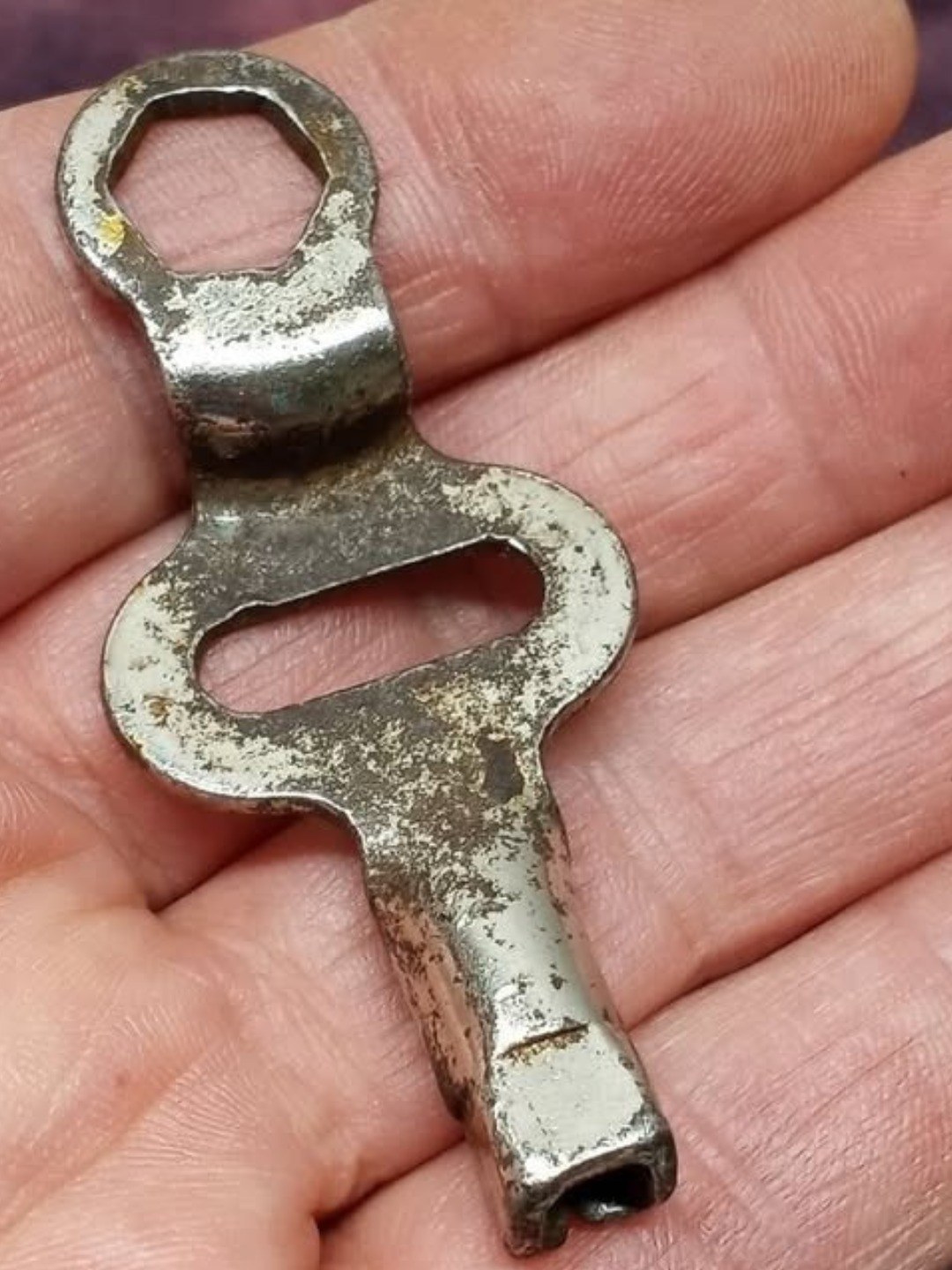
The Tiny Key That Unlocked Endless Adventures
In the quiet, forgotten corners of our lives—tucked away in velvet-lined jewelry boxes, rusted tool drawers, or the dusty attics of childhood homes—lie objects that seem entirely ordinary at first glance. They appear as small, worn bits of metal or plastic, easily mistaken for discarded hardware or the inconsequential debris of a bygone project. Yet, for those who once felt their cold weight in a palm, these artifacts are instantly recognizable. They carry the profound gravity of memory, play, and personal growth. Chief among these is the roller skate key: a tiny, unassuming tool that, despite its size, served as the master key to whole chapters of the 20th-century childhood.

The Mechanics of Independence
Before the era of lightweight molded plastics, synthetic Velcro straps, and modern “instant-adjust” mechanisms, the world of roller skating was a rigorous domain of metal and leather. Whether it was the high-topped leather boots designed for the polished rink or the classic steel-wheeled “clamshell” skates that clamped directly onto a child’s everyday shoes, the hardware required a precise mechanical intervention.
Feet grow, and ankles wobble. Without a proper fit, even the most enthusiastic skater faced a painful struggle to remain upright. This is where the roller skate key earned its keep. Usually a simple piece of stamped steel, smooth from years of friction, the tool featured a precisely machined end designed to engage the clamps and bolts that secured the wheels and straps.
Its function was purely mechanical, yet entirely essential; without it, the skates were effectively useless, and the child was grounded.
A Talisman of the Open Road
For children of several generations, the key was far more than a tool—it was a talisman of autonomy. It was a common sight to see children wearing their keys on loops of yarn, thin chains, or frayed strings around their necks.
The rhythmic jingle of metal against chest was a tiny, metallic heartbeat that signaled possibility. It was a sound of promise and reassurance. With that key in hand, the mundane geography of a suburban upbringing was transformed: the front yard became a high-stakes racetrack, the cracked neighborhood sidewalks a treacherous obstacle course, and the driveway a stage for a child’s very first solo spins.
This small object represented a ticket to mobility that required no batteries, no parental permission for a “ride,” and no complex instructions—only the owner’s own skill and courage.
The Ritual of the Prep
The act of adjusting one’s skates became a ritualized lesson in patience and problem-solving. A child would kneel on a kitchen floor or spread a towel across a porch, meticulously inserting the key into the tight metal clamps.
This process demanded attention and a developing sense of precision:
-
Testing Tension: Twisting the key to ensure a snug fit without pinching the foot.
-
Alignment: Checking the wheel rotation to ensure no hardware had loosened during the previous day’s adventures.
-
Responsibility: Learning to listen to the click and resistance of the metal to anticipate the physical strain on unsteady ankles.
In these quiet moments of preparation, there was no “ready” button. The physical act of maintenance was the first step of the adventure itself—a rehearsal for the larger challenges of balance and coordination that awaited them on the unforgiving concrete or the neon-lit rink floors.
Lessons in Resilience
Once the skates were locked and the key was safely stowed, the world opened up. The first tentative glides across uneven pavement were a masterclass in risk and reward. Wobbly rides taught children how to navigate pebbles and sidewalk cracks, while the intoxicating rhythm of the roller rink provided a dizzying joy.
These experiences instilled lessons that lasted a lifetime:
-
Patience: The time required to get the fit just right.
-
Perseverance: The necessity of getting back up after a fall on asphalt.
-
Resilience: Learning to maintain momentum despite obstacles.
The loss of a skate key was more than a minor inconvenience; it was a temporary halting of one’s journey. To lose the key was to have one’s imagination grounded. Conversely, keeping it close was a badge of capability—a sign that the exploration could continue at a moment’s notice.

A Rite of Passage
The roller skate key also functioned as a social and developmental milestone. It was often a prized bargaining chip in neighborhood competitions or an heirloom passed between siblings.
For many, the first time they successfully adjusted their own skates without the intervention of a parent or an older brother marked a significant leap toward self-reliance. The tiny rotations of that metal tool were exercises in dexterity and focus, shaping both physical coordination and the cognitive understanding of cause and effect.
In the end, the roller skate key remains a powerful symbol of a simpler era of play. It stands as a reminder that sometimes, the greatest sense of freedom is unlocked not by high-tech gadgets, but by a small, cold piece of steel and the courage to take the first stride.
In the world of material history, few objects possess the evocative power of the vintage roller skate key. To retrieve one from a long-forgotten drawer is to engage in a form of sensory time travel. There is the immediate, cool press of slightly rusted metal against the palm; the faint, lingering scent of aged leather and waxed wood; and that unmistakable, high-pitched jingle as it strikes another surface.
These physical cues act as a neurological trigger. For a certain generation, the touch of that steel immediately conjures the smell of sun-baked asphalt, the taste of a cold drink after a grueling afternoon of movement, and the phantom sting of a scraped knee—the inevitable tuition fee for learning the art of balance. The key, though diminutive, serves as a profound portal to a vivid landscape of freedom, energy, and discovery.
A Neighborhood Transformed: The Social Key
The presence of the skate key didn’t just change the child; it transformed the geography of the neighborhood. Sidewalks, driveways, and quiet cul-de-sacs were suddenly filled with the industrial clatter of metal wheels and the rhythmic tapping of skaters attempting their first spins.
Crucially, the key was a catalyst for social architecture. Children formed informal clubs, creating a primitive but effective peer-to-peer network. They shared skating techniques, helped one another adjust clamps, and traded keys with a level of trust that defined the era. The simple act of tightening a strap became a communal exercise in problem-solving and mentorship. In this context, the key wasn’t merely personal property—it was a social engine that connected peers through shared risk and collective achievement.

Engagement Over Convenience
The roller skate key represents a defiant era that predated the dominance of convenience. Unlike modern skates, defined by snap-fit plastic buckles and instant adjustments, the vintage metal-and-leather models demanded active engagement.
This requirement fostered a mindset of resourcefulness. Children were forced to become their own mechanics—troubleshooting a wobbling wheel or adapting to a loose clamp on the fly. This created a tangible, direct link between effort and reward: the more attentive the child was to the mechanical nuances of their equipment, the smoother the ride. It was an early, tactile lesson in the idea that the quality of one’s adventure was directly proportional to the care one invested in their tools.
The Ceremony of Competence
As a child gained experience, the key transitioned from a tool to a ceremonial object—a personal emblem of competence. In many households, these keys were treated with a level of reverence, stored in soft cloths or dedicated containers between sessions.
Parents of the era recognized the key’s developmental weight. They understood that by ensuring the key was functional, they weren’t just letting a child play; they were enabling a process of confidence-building and exploration. To hold the key was to declare oneself capable, ready, and independent.
The Modern Time Capsule
Today, discovering a roller skate key feels akin to unearthing a miniature time capsule. For the adults who once wore them on strings around their necks like a badge of office, the object prompts a reflection on a period when fun required patience and practice rather than a screen or a battery.
Collectors and nostalgists value these keys because they represent a “holistic” childhood. They are artifacts of an age where joy and mastery were earned through physical action.
-
Accountability: Losing a key meant an immediate halt to the adventure, teaching a sharp lesson in stewardship.
-
Experimentation: Each twist of the metal was a small-scale experiment in cause and effect—a lesson in how subtle mechanical variations could change the physics of a turn.
A Monument to Effort
Ultimately, the roller skate key is far more than a discarded piece of hardware. It is a symbol of a specific philosophy of childhood: one where freedom and adventure are earned, not granted. It embodies the intersection of play and identity, validating a child’s competence and giving them the courage to test their own limits within a controlled, mechanical framework.
Even as the industry evolved toward mass-produced plastic, the symbolic weight of the metal key remained etched in the cultural memory. It represents a generation whose play was tactile, social, and physically demanding.
To rediscover one of these keys today is to hear the echo of wheels on concrete and the distant calls of friends. Its small, utilitarian form belies the enormity of the world it once opened. It stands as a miniature monument to the joys of childhood imagination—a tiny object carrying the immense weight of a thousand first victories.