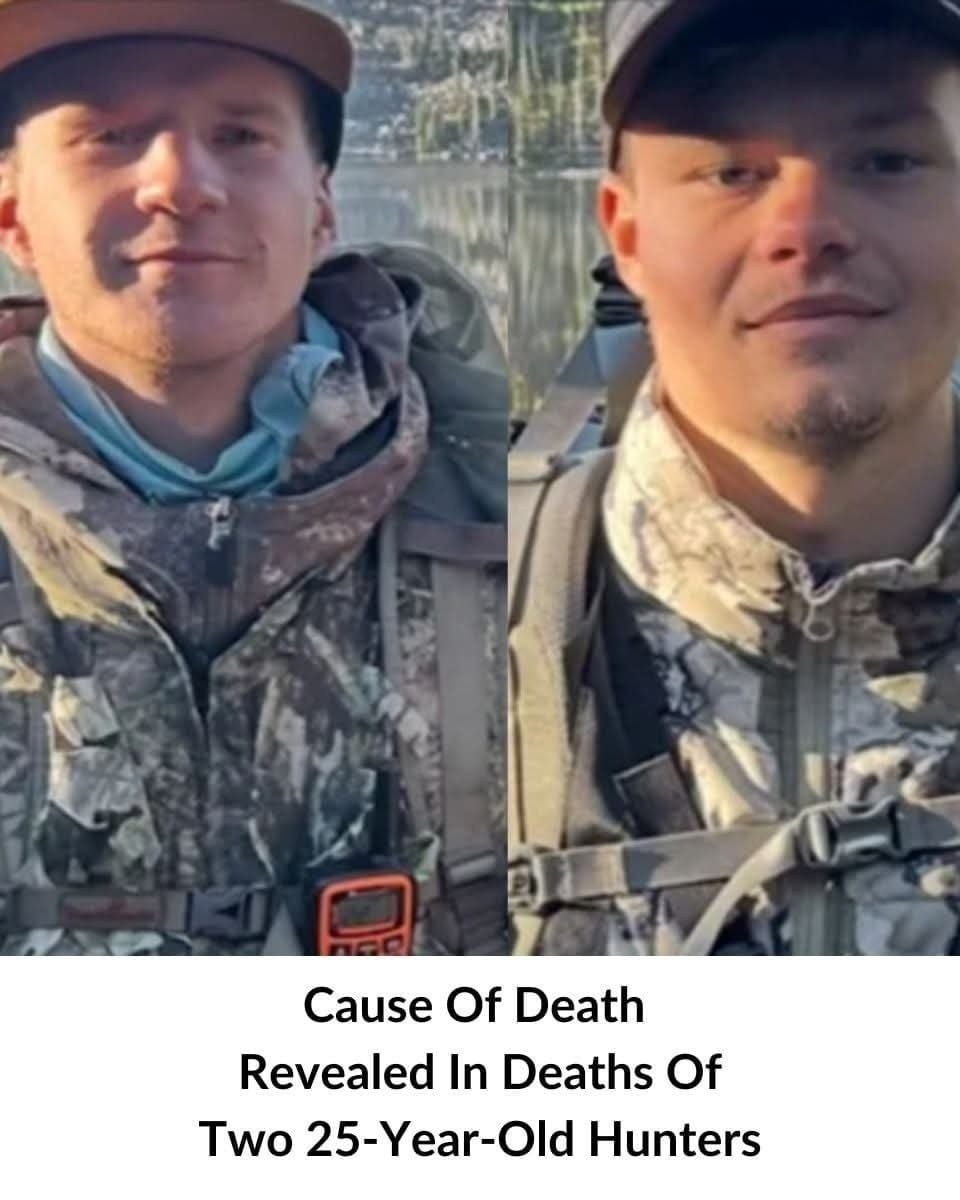
Authorities Release Details About the Deaths of Two Colorado 25-Year-Old Hunters
In the vast, high-altitude silence of the Rio Grande National Forest, nature remains the ultimate arbiter of life and death. Stretching across 1.8 million acres of rugged peaks and deep canyons, the forest is a sanctuary for those seeking the profound solitude of the Colorado wilderness. But for two lifelong friends and seasoned outdoorsmen, it became the site of a rare and violent natural phenomenon that even a lifetime of preparation could not avert. Andrew Porter and Ian Stasko, both 25, were not casual weekend hikers. Known to their families as disciplined and meticulous survivalists, the pair had spent years mastering the nuances of Colorado’s backcountry. When they set out in early September for a routine hunting trip, they carried the full kit of the modern mountain man: GPS devices, topographical maps, first aid kits, and high-tier communication gear. Their objective was the Rio de Los Pinos Trailhead—a familiar gateway to the ridgelines they had tracked countless times.
Yet, on Monday, September 22, Conejos County Coroner Richard Martin delivered the news that every search and rescue team dreads. Porter and Stasko, despite their expertise, had succumbed to a direct lightning strike.

A Sudden Surge of High-Voltage Trauma
The mountains of southern Colorado are notorious for “elevation-induced convection currents”—storms that manifest with lethal speed in the late afternoon. While the men were reportedly found with only minor external markings—described by Coroner Martin as small burns resembling the touch of a dying match—the internal reality was catastrophic.
“They exhibited a couple of little marks,” Martin noted, confirming the injuries were consistent with a high-intensity electrical jolt. In lightning fatalities, the external damage is often misleadingly slight; the true cause of death is typically the immediate disruption of the heart’s electrical rhythm or catastrophic damage to the nervous system. While full autopsy results are pending, the preliminary findings suggest the men died instantly where they stood.
The Search: Tenacity in the Backcountry
The disappearance of the two men triggered an expansive multi-day search operation led by the Conejos County Sheriff’s Office. The recovery effort was a grueling test of both human endurance and modern technology:
-
Aerial Reconnaissance: Drones were deployed to scan steep canyons and hidden valleys that were inaccessible to ground teams.
-
Ground Sweeps: Volunteer searchers and professional units navigated miles of dense pine forest and rocky outcroppings.
-
The Discovery: On Thursday, September 18, at approximately 11 a.m., search teams located the bodies near each other.
The fact that Porter and Stasko were found together underscored their camaraderie. Even in their final moments, the men appeared to be adhering to the fundamental rule of the wilderness: never separate.

Nature’s Hidden Threat: The Science of High Elevation
While statistically rare, lightning remains one of the most unpredictable hazards for hunters and hikers. The National Weather Service records approximately 25 million strikes annually in the U.S., but mountainous regions are high-risk “lightning attractors” due to their proximity to storm cloud bases.
| Factor | Impact on Risk |
| High Elevation | Decreases the distance between the earth and the cloud base. |
| Exposed Ridges | Acts as a natural lightning rod for electrical discharge. |
| Conductive Gear | Rifles, bows, and metal backpack frames can channel current. |
| Moisture | Rain-soaked clothing increases the body’s conductivity. |

A Teaching Moment Born of Grief
The deaths of Porter and Stasko have sent a shockwave through the regional hunting community. Tributes on social media have focused not on their “recklessness,” but on the sobering reality that even the best-prepared can fall victim to nature’s indiscriminate power.
“They loved the mountains. They respected every aspect of being outdoors,” a relative stated, reflecting the pride the families feel despite the tragedy. The incident serves as a stark reminder for all outdoorsmen: when storm clouds gather, the only true safety is immediate descent and evacuation.
Andrew Porter and Ian Stasko lived fully in the wilderness they adored. Their legacy remains a testament to the adventurous spirit—and a somber warning that in the high country, the environment is never truly under our control.
In the close-knit circles of Colorado’s hunting and mountaineering communities, the names Andrew Porter and Ian Stasko have become synonymous with a specific brand of wilderness excellence. Since the tragic lightning strike that claimed their lives in the Rio Grande National Forest, those who knew them have gathered not just to mourn, but to curate the stories of two men who were, in every sense, “heroes of the mountains.”
At trailside memorials and local community gatherings, the narrative is consistent: Porter and Stasko were defined by a rare blend of humor, technical mastery, and an unshakeable bond of camaraderie. Their friendship wasn’t just a social connection; it was a partnership of survival and mentorship that left a profound mark on everyone from veteran outdoorsmen to the novice hunters they often guided.

Mentorship and the Ethics of the Woods
Porter and Stasko were known for more than their personal accomplishments; they were respected as educators. For many young hunters in the region, the pair served as the gold standard for environmental stewardship and ethical hunting. They taught a generation that the wilderness is not a place to be conquered, but a complex ecosystem to be respected.
-
Preparation: They preached that a hunt begins weeks before the first step on the trail.
-
Ethics: They emphasized the importance of clean takes and deep respect for the game.
-
Teamwork: Their final moments—found side-by-side—served as a heartbreaking but powerful testament to their own rule: in the mountains, your partner is your lifeline.
The Dual Reality of the Rio Grande
As autumn deepens in the Rio Grande National Forest, painting the ridges in shades of gold and crimson, the landscape remains a beautiful but sober reminder of the thin line between adventure and catastrophe. The story of Porter and Stasko has become a permanent part of the forest’s lore—a cautionary tale that even at 11,000 feet, where the air is crisp and the views are majestic, danger is an inherent part of the beauty.
For the friends and family who still navigate these trails, the favorite hunting spots of the two men have transformed into living memorials. Every rustle of the pines and every vista across the jagged ridgelines now carries a dual weight: the joy of the memory and the reverence for the risk.
A Community Forged in Crisis
The search and rescue operation that followed their disappearance has reinforced the vital importance of community in the backcountry. The collaboration between local authorities, high-tech drone units, and tireless volunteers provided more than just a recovery; it provided the community with closure.
Today, Porter and Stasko’s story is a staple in wilderness safety training across the state. It is cited as the definitive example that even expert-level preparation cannot fully insulate a human being from the indiscriminate forces of nature.

A Final, Sobering Reflection
Lightning remains one of nature’s most potent and unpredictable equalizers. It does not pause to check a hiker’s resume or a hunter’s gear list. The tragedy of Andrew Porter and Ian Stasko underscores a fundamental, if difficult, truth: no matter how adept we become, we remain guests in an environment governed by forces far beyond our control.
Yet, there is inspiration to be found in the heartbreak. The trust and courage the two men displayed—choosing to stay together in the face of a violent storm—illustrates the very best of the human spirit. Their lives, though cut short by a freak atmospheric event, have left an indelible impression on the broader outdoor community.
For those who continue to hike the trails of southern Colorado, the mountains are no longer just geological features; they are a testament to the lives of two men who lived fully, loved the wild, and respected the unpredictable majesty of the world they called home.