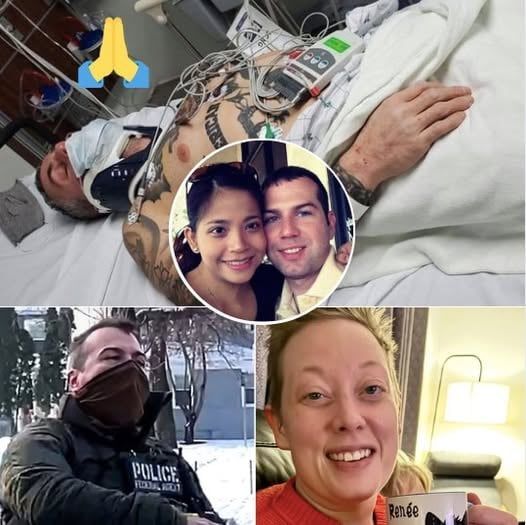
Sources familiar with Ross’s condition, including statements echoed in federal briefings and media reports, confirm that the cumulative physical toll—aggravated by the recent confrontation—has resulted in permanent disabilities. These include chronic internal injuries, mobility limitations, and nerve damage that make returning to active field duty impossible. Ross, a 43-year-old veteran with more than 10 years at ICE (following prior service that included time linked to military experience), has been medically retired from the agency.
His wife, in a private update shared with supporters and referenced in fundraising efforts, described the heartbreak of watching her husband, once a robust enforcement officer and firearms trainer, now facing lifelong limitations. “He fought to survive before, and he’s fighting again—but this time, it’s not just for his life, but for any semblance of normalcy,” she reportedly conveyed, leaving many in the law enforcement community reeling.
This revelation stands in stark contrast to the national outpouring for Good. Vigils, protests, and memorials have highlighted her as a victim of aggressive federal tactics, with her family hiring prominent legal representation to demand accountability. State leaders, including Minnesota Attorney General Keith Ellison, have pursued legal action against the Department of Homeland Security to curb such operations. Protesters have called for charges against Ross, though federal immunity claims and an ongoing FBI investigation complicate prospects.
Yet Ross’s story underscores a broader, often-overlooked human dimension in these polarized encounters. Law enforcement officers in immigration roles face heightened risks, as evidenced by Ross’s prior dragging incident involving a suspect who was later convicted. Vice President JD Vance referenced this history without initially naming Ross, noting the officer “nearly had his life ended” months earlier and suggesting sensitivity to vehicle threats. While critics question whether Ross’s positioning and use of force aligned with training and policy, supporters argue the cumulative trauma from repeated assaults justifies defensive actions.
Ross’s permanent disability and forced departure from ICE highlight the physical and psychological toll on agents amid intensified deportation efforts. Fundraising pages for his family have emerged, some controversially framed, aiming to cover medical costs, rehabilitation, and lost income. One effort targeting significant funds described the broader context of threats to officers, though it drew criticism for inflammatory language.
The nation grieves for Renee Good—a life cut short, a family shattered, and questions of justice unresolved. At the same time, Jonathan Ross’s irreversible injuries serve as a sobering reminder that these confrontations leave no side unscathed. His wife’s update, revealing a future defined by chronic pain and career loss rather than death, adds a layer of tragedy often sidelined in heated debates over policy, accountability, and rights.
As investigations continue—FBI reviews of the use of force, potential state-level inquiries, and civil lawsuits—these intertwined stories challenge simplistic narratives. They force reflection on how enforcement operations, resistance efforts, and individual actions collide, leaving lasting scars on all involved.