Expert issues severe warning for ‘once-in-a-lifetime’ storm set to hit US with life-threatening conditions
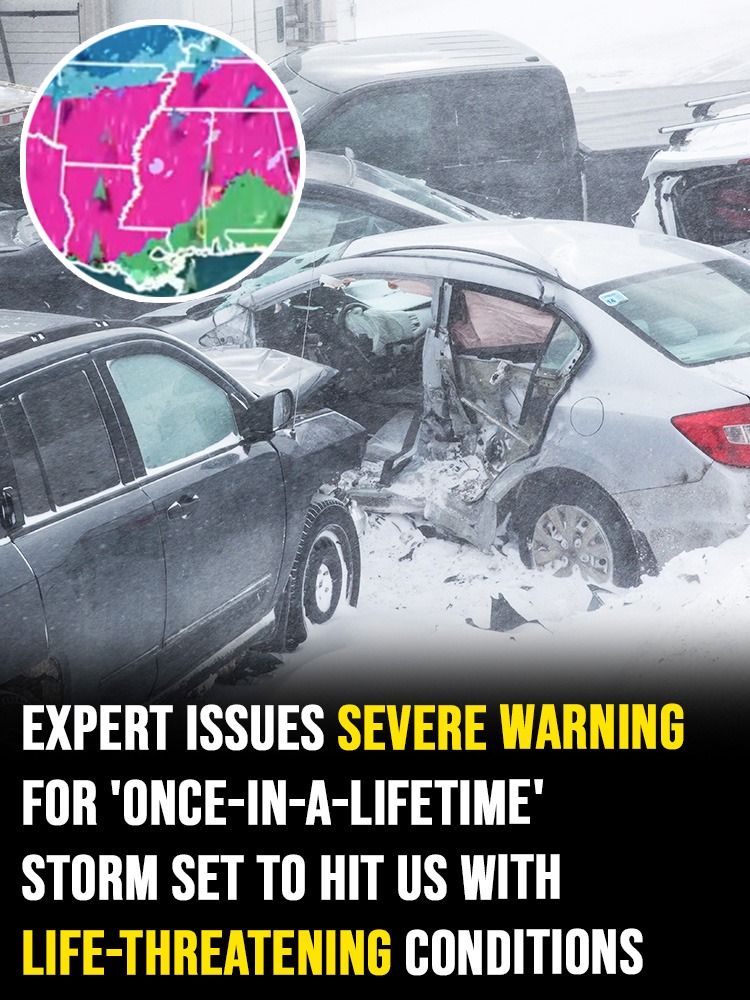
Emergency officials and meteorologists are sounding a frantic alarm this morning as a winter storm of historic proportions prepares to lay siege to the United States. Spanning a massive 2,000-mile trajectory, the system is forecast to impact more than 35 states, bringing with it the threat of “destructive and potentially catastrophic” ice accumulation. As the weekend approaches, the sheer scale of the storm has prompted state leaders to brace for a rare high-impact event that could cripple infrastructure from the Deep South to the Atlantic coast. Major metropolitan hubs—including New York City, Washington, D.C., Boston, Charlotte, and Louisville—are currently sitting directly in the crosshairs of the advancing front.

“Worse Than 1994”: Experts Predict Decades-High Impact
Meteorologists are not mincing words regarding the severity of the forecasted icing. Dylan Federico, a prominent voice in the field, warned on X (formerly Twitter) that the impending freeze could be the most significant of its kind in over thirty years.
“Widespread ice will cripple travel, cause major power outages, and down trees,” Federico stated. “This is a rare high-impact event—potentially the worst in decades since the Great Ice Storm of February 1994.”
The sentiment is echoed by Ryan Maue, a private meteorologist and former chief scientist for the National Oceanic and Atmospheric Administration (NOAA), who believes the public may be caught off guard. “I think people are underestimating just how bad it’s going to be,” Maue warned, characterizing the system as a “once-in-a-lifetime” event.
Southern States on High Alert
While New England is accustomed to winter weather, the threat to the South is particularly acute. Communities in Texas, Oklahoma, and Alabama—areas often lacking the specialized equipment to handle heavy icing—could find themselves paralyzed.
The National Weather Service (NWS) has issued a chilling forecast, noting that record-low temperatures combined with high winds could result in frostbite on exposed skin within mere minutes.
“With the extreme cold temperatures, expect prolonged snow and ice impacts which may include hazardous travel conditions, power outages, tree damages, snow-covered roads, and reduced visibility,” the NWS cautioned in its latest advisory.
States of Emergency Declared
In a preemptive strike against the storm’s “catastrophic” potential, the governors of Texas, South Carolina, and North Carolina have officially declared states of emergency. These declarations authorize the mobilization of the National Guard and streamline the deployment of emergency resources to vulnerable communities.
Texas Governor Greg Abbott, whose state remains scarred by the devastating power grid failure of 2021, emphasized the need for early action. “The State of Texas is acting to ensure Texans have the resources they need before severe winter weather impacts communities,” Abbott said in a formal statement.

Threats to the Power Grid and Infrastructure
A primary concern for officials is the weight of ice accumulation on power lines and trees. Zack Taylor, an NWS meteorologist, told ABC News that the regions east of the Rockies are facing a “bitterly cold” stretch that will persist well into next week.
“We’re looking at the potential for impactful ice accumulation,” Taylor explained. “The kind of ice accumulation that could cause significant or widespread power outages or potentially significant tree damage.”
Beyond the grid, the prolonged deep freeze carries the risk of infrastructure failure inside homes, as officials warn of the high probability of frozen or bursting pipes. As the mercury continues to plummet, the message from the scientific community is clear: the time for preparation has passed, and the window for safety is closing.