This TV chef is still haunted by ‘soul crushing’ childhood
To the millions of viewers who tuned into the Food Network in the early 2000s, she was the quintessential blonde hostess with a knack for “Semi-Homemade” hacks and a vibrant, aspirational charm. But behind the coordinated “tablescapes” and the televised smiles lay a backstory so harrowing it reads more like a Dickensian struggle than a Hollywood dream. The woman who would become a household name, an Emmy winner, and a multi-hyphenate mogul didn’t just climb the ladder of success; she clawed her way out of a childhood defined by abandonment, addiction, and systemic poverty.

A Childhood Interrupted
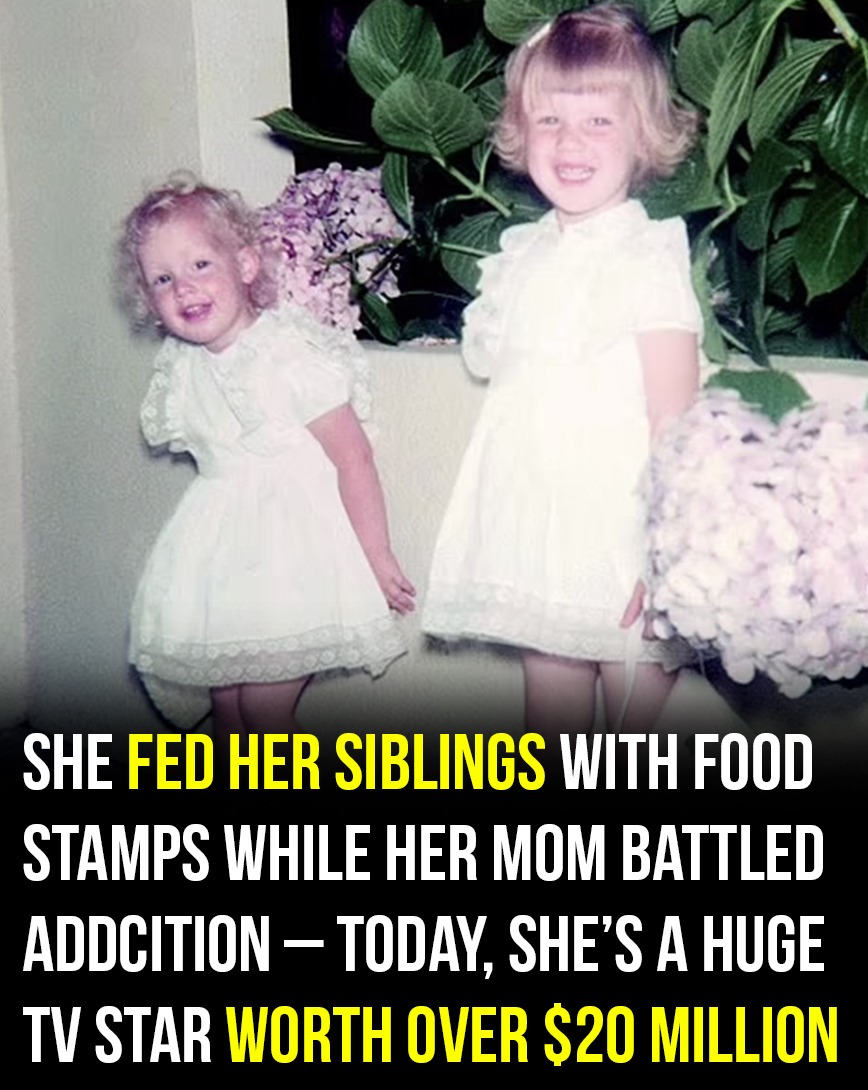
Born in 1961 in Santa Monica, the woman we now know as Sandra Lee began life in a fractured home. Her high school sweetheart parents struggled early on, and by the age of two, Sandra and her sisters were sent to live with their paternal grandmother. For four years, life was stable and scented with the aroma of freshly baked goods—a period Sandra credits with sparking her lifelong passion for the culinary arts. Her grandmother was a cafeteria worker who used coupons to keep a joyful home, teaching Sandra that care and creativity weren’t dependent on a large bank account.
However, that stability was shattered when her mother, Vicky, reappeared with a new husband and moved the family to Washington. What followed was a spiral into chaos.
The 11-Year-Old Caretaker
By age 11, the future TV icon was forced into a premature adulthood. Her mother, struggling with a severe prescription drug addiction, frequently remained bedridden, leaving Sandra to manage a household of four younger siblings.
Life became a desperate exercise in logistics. Living on welfare and food stamps, Sandra was responsible for the cooking, cleaning, and schoolwork for five children. In her memoir, she recalls the physical and emotional weight of those years, describing the precariousness of riding her bike home with plastic bags of groceries hanging from the handlebars, terrified that a single bump would break the eggs they could barely afford.
The shame of their circumstances was a constant companion. In a candid 2024 interview with the Daily Mail, Lee recalled the “mortifying” experience of standing in the grocery store checkout line.

“I remember standing in line… with the food stamps and it was mortifying for me, because the girl—she was like the popular girl in school—her parents were the rich family and they owned the dairy,” Lee shared.
The Birth of an Entrepreneur
Remarkably, these years of scarcity forged the relentless work ethic that would later define her career. As a teenager, Sandra was already an entrepreneur by necessity—raking leaves, picking berries, and selling handmade potholders for a dollar a pair to bridge the gap between welfare checks.
But the domestic situation grew increasingly dangerous. After Sandra called 911 when her mother overdosed on pills, she was met with a brutal physical retaliation that left her covered in welts. Combined with inappropriate behavior from her stepfather, the environment left deep emotional scars that would take years of professional success to process.

The Rise of “Semi-Homemade”
The world eventually met a different Sandra Lee in 2003, when Semi-Homemade Cooking premiered on the Food Network. The premise was revolutionary in its pragmatism: 70 percent packaged products and 30 percent fresh ingredients. It was a philosophy born directly from her grandmother’s kitchen and her own years of making the most of limited resources.
The show became a cultural phenomenon, running for 15 seasons and broadcasting in over 60 countries. Now 58, Lee has authored 27 books and transitioned from chef to producer and lifestyle expert, earning a Daytime Emmy in 2012. Her “Semi-Homemade” concept wasn’t just a gimmick; it was a tribute to her grandmother’s generosity—the woman who baked wedding and baby shower cakes for her entire church community and refused to take a dime in payment.

A Life Reimagined
Lee’s adult life has been a stark departure from her Washington roots. Her 2001 marriage to philanthropist Bruce Karatz brought her to a Bel Air mansion, world travel, and high-society circles that included the likes of Arianna Huffington and Mary Hart. During this time, she converted to Judaism and navigated a world of season tickets to the Lakers and summer vacations in St. Tropez.
While her later high-profile relationship with former New York Governor Andrew Cuomo and her subsequent public battle with breast cancer would keep her in the headlines, it is the resilience she built as an 11-year-old with a book of food stamps that remains the true foundation of her legacy. Sandra Lee’s story serves as a powerful reminder that while the camera may capture the glamour, the true substance of a person is often cooked up in muc
The end of Lee’s first marriage in 2005 marked the beginning of a chapter that would eventually place her at the center of the New York political machine. Shortly after her divorce, she began a high-profile relationship with Andrew Cuomo, the man who would later rise to become the Governor of the Empire State.
The pair’s introduction was serendipitous—a garden party where Cuomo, described then as fit and charismatic, arrived with his three daughters. It was the sight of Cuomo as a father that first piqued Lee’s interest. Ironically, her initial instinct was to play matchmaker, attempting to set Cuomo up with her friends as he navigated the fallout of a public and painful divorce from Kerry Kennedy.
The spark between them, however, proved impossible to outsource. The two soon realized their own connection was the one worth pursuing, though they opted for a clandestine start. For over a year, the couple dated in total secrecy, successfully shielding their burgeoning romance from both the prying eyes of the public and their own inner circles.
When the burden of secrecy finally became untenable, the couple went public and established a home together in Lee’s residence in Chappaqua, New York. In stark contrast to the opulent, Mercedes-driven lifestyle of her first marriage, Lee painted a picture of their life in Chappaqua as surprisingly grounded.
”We do not have full-time help,” she famously remarked to New York Magazine, pulling back the curtain on their domestic reality. ”We are normal people. Our basement flooded this morning. Two weeks ago, the snow melted and came in between the floors, and we had buckets in the living room.”
From Food Network to the Executive Mansion
In 2011, when Cuomo was inaugurated as the 56th Governor of New York, Lee transitioned into the role of the state’s de facto First Lady. While she spent the better part of his first two terms maintaining a disciplined low profile, a personal health crisis eventually transformed her into one of the state’s most visible public health advocates.
The trajectory of her life shifted in 2015 with a devastating breast cancer diagnosis. While the disease was fortunately detected in its early stages, the road to recovery was grueling and fraught with complications.
In a public battle that underscored the vulnerability behind her “Semi-Homemade” persona, Lee underwent a lumpectomy followed by a double mastectomy. Throughout the ordeal, Governor Cuomo remained a constant fixture at her bedside, notably stepping away from his executive duties to support her through the most harrowing stretches of her treatment and eventual recovery.
The road to recovery for Sandra Lee was far from a linear path. Following her initial procedures, she battled a severe post-operative infection in one breast that necessitated three months of intravenous drug therapy. By the close of 2015, however, she was able to share the news the world had been waiting for: she was officially cancer-free. While her health journey saw another significant chapter in March 2022 when she underwent a successful hysterectomy, Lee has remained a study in resilience.
True to form, she took an experience that was undeniably taxing and weaponized it for the public good. During Andrew Cuomo’s tenure as Governor, Lee leveraged her platform to become a formidable advocate for cancer awareness. Her efforts were instrumental in the passage of New York’s $91 million ”No Excuses” law—a landmark piece of legislation that expanded breast cancer screening access and eliminated insurance co-pays for mammograms.
The End of an Era and the Cuomo Daughters
In 2019, after more than a decade as one of New York’s most prominent power couples, Lee and Cuomo announced their separation. “Over the recent past, we have realized that our lives have gone in different directions and our romantic relationship has turned into a deep friendship,” the pair stated in a joint release.
Despite the split, Lee’s bond with Cuomo’s three daughters from his previous marriage to Kerry Kennedy remained a cornerstone of her life. While she never had children of her own—a deliberate personal choice—Lee has funneled her maternal instincts and substantial resources into her siblings and their offspring. Reports from New York Magazine paint a picture of extraordinary generosity, with Lee gifting relatives everything from cars and houses to college tuition and hockey lessons.
A New Chapter: Netflix and Ben Youcef
At 58, Lee appears to have defied the standard Hollywood aging curve, maintaining a timeless aesthetic that fans frequently note in her recent public appearances. Her personal life also saw a fresh start; since March 2021, she has been linked to Algerian-born actor Abdulwahab Benyoucef, known professionally as Ben Youcef.
Professionally, Lee is currently enjoying a triumphant return to the screen with her Netflix series, Blue Ribbon Baking Championship. The show, which pits elite state fair bakers against one another for a $100,000 grand prize, was a passion project decades in the making.
”I presented the Blue Ribbon Baking Championship to Food Network all those years ago and they didn’t buy it,” she candidly told the Daily Mail. “I was like, ‘Are you kidding me?’ I was the hottest thing on that network at the time, and I just couldn’t believe it!”
The “Age of Possibility” and the Cher Philosophy
Beyond the kitchen, Lee is heavily invested in QVC’s Age of Possibility platform, an initiative designed to empower women over 50. It is a cause she views through a lens of pragmatic self-awareness.
“I think what happens when you turn 50 is that you realize—if you’re lucky—you’re halfway through, if not more,” she noted. “Your body is changing, and you have to pay attention to all those things.”
When questioned about the unrelenting pressure to maintain appearances in the spotlight, Lee offered a refreshing, no-nonsense take. ”There’s a reason why we all wash our face and put lotion on and put makeup on. I don’t think any of us are going down without a fight. I’m in the Cher camp—whatever makes you feel hot, do it!”
Looking back at the tapestry of Sandra Lee’s life, the narrative is one of undeniable grit. From a childhood sustained by food stamps to the corridors of political power and a life-altering battle with cancer, she has consistently redefined herself. Today, as a culinary icon and a champion for women over 50, she continues to embody a spirit of empowerment that resonates far beyond the screen.