My Wife Vanished and Left Me with Our Twins – Her Note Said to Ask My Mom
The rhythmic pulse of a home is something a husband and father learns to feel rather than hear. On a typical Tuesday, that rhythm usually consists of the high-pitched chatter of six-year-old twins, the clatter of pans, and the familiar scent of laundry and home-cooked meals. But the evening I arrived fifteen minutes late was defined by a terrifying, hollow stillness. In our house, fifteen minutes was the difference between an orderly bedtime and a chaotic evening; however, as I pulled into the driveway, I realized fifteen minutes had been long enough for my entire life to evaporate.
The cues of abandonment were subtle at first. There were no backpacks abandoned on the porch, no chalk drawings on the pavement, and most notably, the porch light remained dark. Inside, the house felt like a museum of a life interrupted. A pot of macaroni and cheese sat cold on the stove, half-stirred. I called out for Jyll, my wife, but the only response was the heavy thrum of the refrigerator.
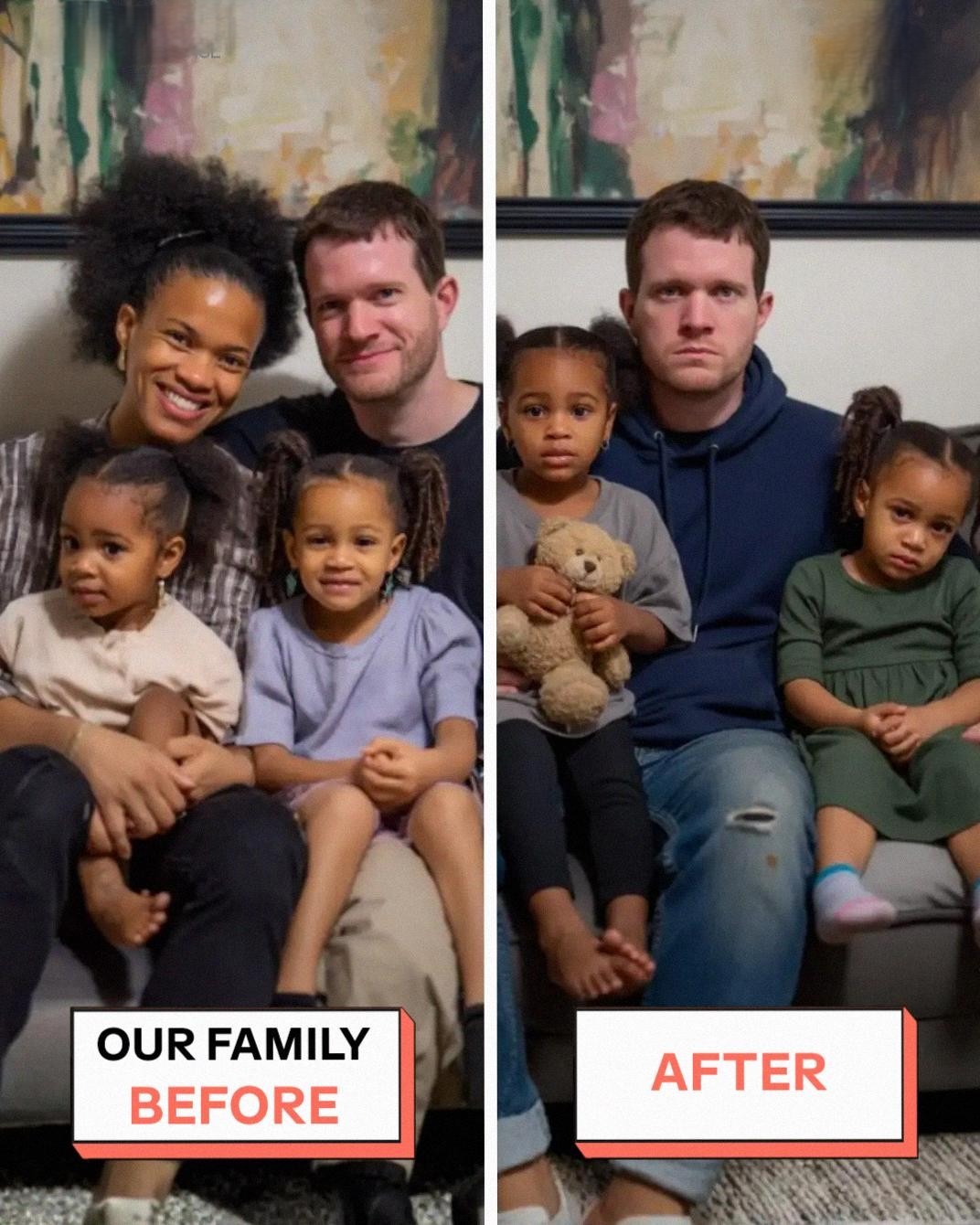
In the living room, I found Mikayla, our occasional babysitter, standing awkwardly by the armchair. She looked as though she were presiding over a funeral. Curled up on the sofa were my daughters, Emma and Lily, their faces pale and their eyes wide with a confusion they didn’t yet have the vocabulary to express. Mikayla explained that Jyll had called her at four o’clock, claiming she had an urgent errand. When Mikayla arrived, Jyll was already walking out the door with suitcases in hand.
I knelt before my daughters, my heart hammering against my ribs. Emma blinked slowly and whispered that Mommy had said goodbye forever. She told me Jyll had hugged them for a long time, crying, and told them that I would be the one to explain everything. But as I walked into our bedroom and saw Jyll’s side of the closet stripped bare—her blue sweater gone, her laptop missing, even the framed photo of our beach vacation vanished—I realized I was the last person on earth capable of explaining anything.
The “why” was waiting for me on the kitchen counter, scrawled on a folded piece of paper. Jyll’s note was brief, heartbreakingly polite, and pointed like a dagger at a singular target. “If you want answers,” she wrote, “I think it’s best you ask your mom.”
For years, I had viewed the friction between my wife and my mother, Carol, as a standard, if unpleasant, personality clash. My mother was a woman of “structure” and “standards,” a woman who viewed Jyll’s return to work after the twins were born as a personal affront. I had played the role of the neutral mediator, constantly telling Jyll to “just ignore her” or “don’t take it personally.” I thought I was protecting the peace. In reality, I was standing by while my mother systematically dismantled my wife’s sense of self-worth.
The trail of breadcrumbs led me straight to Carol’s house that night. When she opened the door, her expression wasn’t one of shock, but of a grim, self-satisfied expectation. I pushed past her, the twins trailing behind me, and demanded to know what had happened. Carol sighed, smoothing her robe with the practiced grace of a martyr. She spoke of Jyll being “fragile” and “unstable,” claiming she had only stepped in to provide the “guidance” Jyll lacked.
The truth exploded when I discovered a manila folder in Carol’s desk drawer titled “Emergency Custody Protocol.” Inside were notarized pages and a contingency plan for guardianship in the event of Jyll’s “emotional instability.” Most devastating of all was my own signature at the bottom of the documents—a forgery so precise it made my stomach turn. My mother hadn’t just been hovering; she had been drafting a legal coup. She had threatened Jyll with the loss of her children, using my perceived silence as a weapon to convince Jyll that I was on Carol’s side.