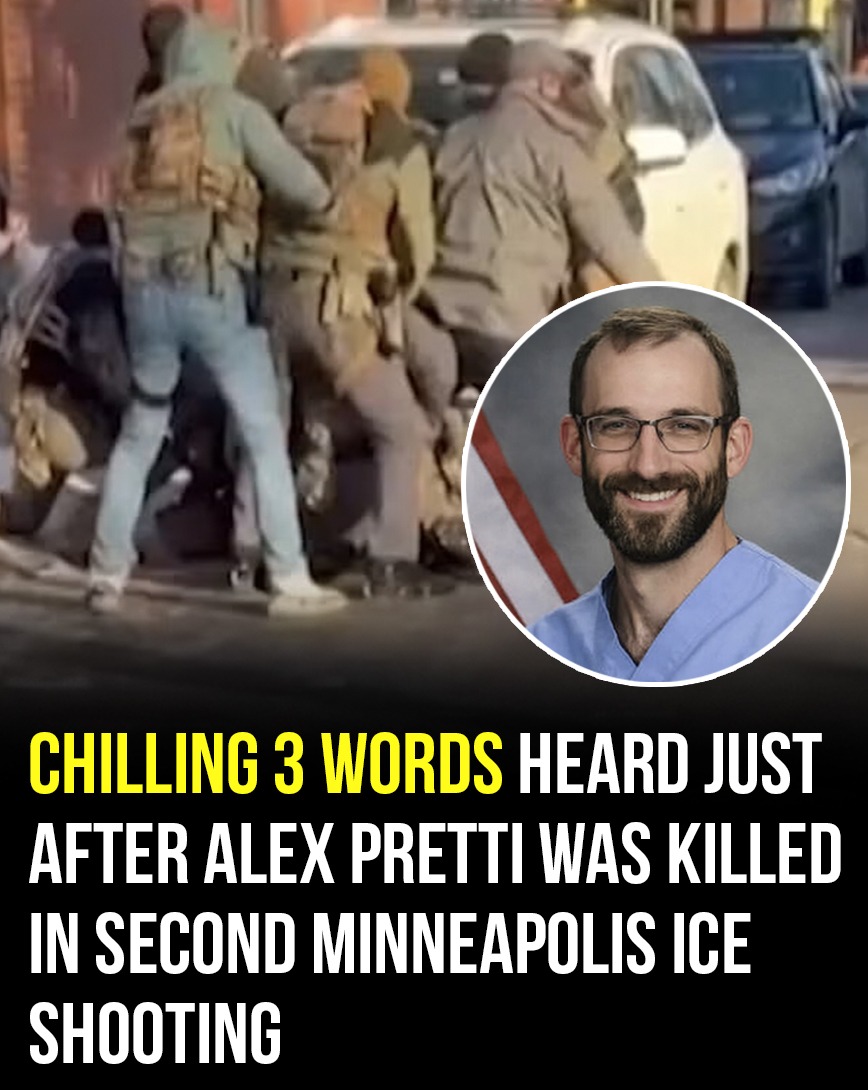
Chilling 3 words captured after Alex Pretti was killed in second Minneapolis ICE shooting
In the gray, high-tension atmosphere of south Minneapolis, a single encounter on January 24 has reignited a national firestorm. Newly reviewed video footage is now casting a long, cold shadow over the official narrative regarding the death of Alex Jeffrey Pretti, a 37-year-old ICU nurse and U.S. citizen. Shot and killed by federal agents during an immigration enforcement operation, Pretti’s death has not only paralyzed his local community with grief but has sparked a wave of massive protests across Minneapolis and several major American cities. The stakes could not be higher for federal law enforcement. Pretti marks the second Minneapolis resident to be killed by federal agents in a single month—a statistic that has placed the city at the center of a burgeoning crisis over federal oversight and the use of lethal force.
A Family in Mourning
As the news broke, reporters from the Minnesota Star Tribune reached out to Pretti’s immediate family. The shock was visceral; his sister was reportedly unable to speak through her tears before the call was cut short.
In a statement delivered to CNN late Saturday night, Michael and Susan Pretti, Alex’s parents, painted a portrait of a man whose life was dedicated to the preservation of others. They described their son as a “kindhearted soul” and a devoted caregiver who served as an ICU nurse, specifically noting his compassion for American veterans.
“Alex wanted to make a difference in this world,” they wrote. “Unfortunately, he will not be with us to see his impact.”
The Official Narrative vs. The Digital Witness
The Department of Homeland Security (DHS) was quick to offer a justification. According to federal officials, Border Patrol agents were assisting in an enforcement action when they encountered an armed individual who posed a direct threat.
“During the encounter, the individual produced a firearm and resisted officers’ attempts to gain control of it,” the DHS statement read. “An agent fired defensive shots, fearing for the safety of the officers on scene.”
However, the “omniscient” eye of modern technology is complicating that account. Multiple videos captured by both bystanders and officer-worn cameras are now under the microscope. The footage appears to show Pretti not with a weapon, but with a cellphone, recording the agents as they closed in on him. To the naked eye, no firearm is visible in his hands prior to the volley of gunfire.
A critical sequence in the footage shows a brief struggle where an officer reaches toward Pretti’s waist, pulling away with an object that appears consistent with a handgun. Almost immediately after, the shots were fired.

“Where’s the Gun?”: The Audio Evidence
Perhaps most damaging to the initial federal account is the audio captured while Pretti lay dying on the pavement. When the audio is isolated and slowed, a specific exchange becomes audible. One officer is heard asking a short, frantic question: “Where’s the gun?” Another officer responds, indicating he has the item in question.
This exchange has become the pivot point for investigators and civil rights advocates alike. It raises the harrowing question: Was the firearm secured before the lethal shots were fired? If the weapon was already in an officer’s possession, the justification for “defensive shots” enters a legal and ethical gray zone.

A City Under Scrutiny
The Pretti family has been unwavering in their condemnation, labeling the government’s claims of immediate danger as “false” and “contradicted by video evidence.”
“Our son was not threatening anyone,” the family stated. “He was holding his phone and filming. The video shows this clearly.” They are now demanding the full, unredacted release of all body-worn camera footage and tactical communications from the operation.
DHS maintains that it stands by its initial report while the internal review is conducted, stating that “any use of force by federal officers is subject to review.”
This incident cannot be viewed in a vacuum. On January 7, 37-year-old Renee Good was also shot dead by federal immigration officers in a separate encounter in the same city. The back-to-back fatalities have fractured the relationship between federal agencies and local leaders. While federal officials argue their agents are simply performing their duties, local leaders contend that the expanded federal footprint has brought nothing but fear, violence, and instability to the streets of Minneapolis.