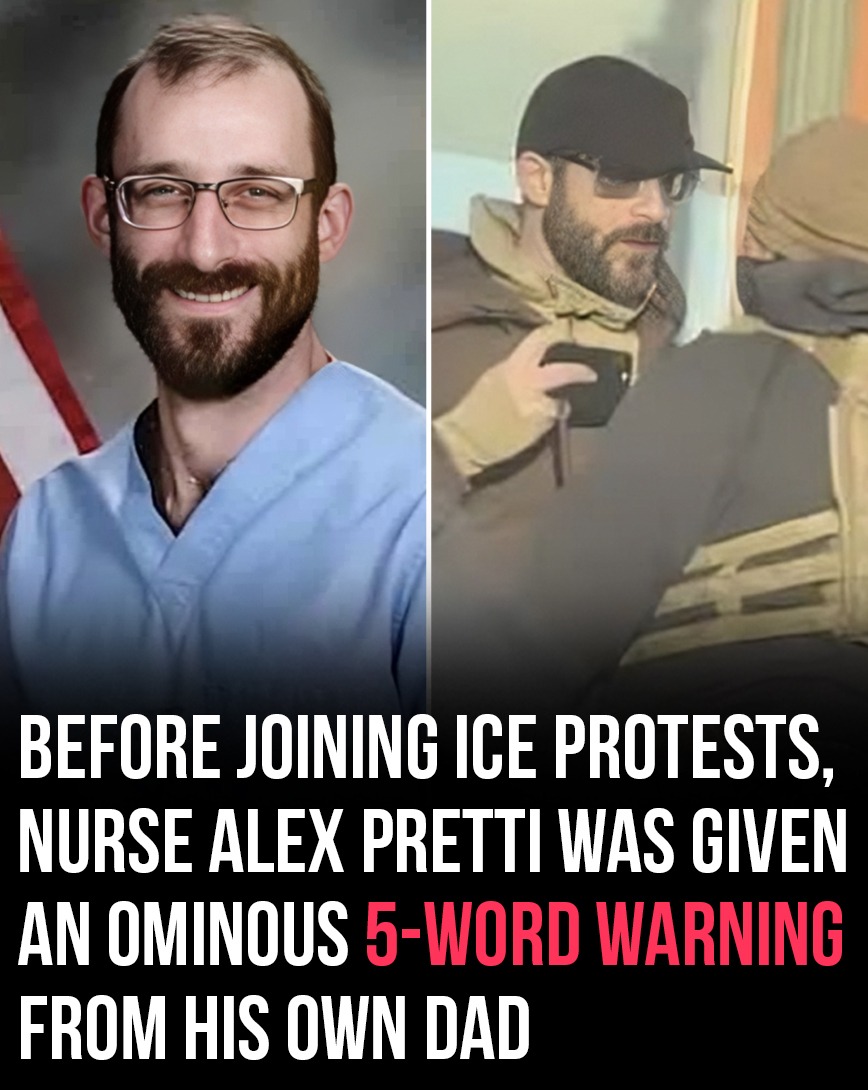
Before joining protests, Alex Pretti was given a five‑word warning from his own dad
Two weeks ago, Michael Pretti sat his son down for a talk that many American parents are having in 2026, though few expected it to end in a morgue. He told his son, Alex, a 37-year-old ICU nurse, to be careful. He told him to protest if he felt he must, but to stay back—to never “do anything stupid.”
“He said he knows that,” Michael recalls now, his voice heavy with the weight of a conversation that has become a haunting prologue. “He knew that.”
On January 24, at the intersection of 26th Street West and Nicollet Avenue, those words of caution met a violent end. Alex Jeffrey Pretti, a U.S. citizen dedicated to saving lives at the Minneapolis VA hospital, was shot and killed by a U.S. Border Patrol agent during a federal enforcement operation. Today, his death has transformed from a local tragedy into a national flashpoint, pitting the state of Minnesota against the federal government in a raw dispute over sovereignty, safety, and the truth.

“The Most Harmless Man”
To those who worked alongside him in the high-stakes environment of the Intensive Care Unit, Pretti was the antithesis of a threat. Dr. Dimitri Drekonja, chief of infectious diseases at the VA, described himself as “stunned” by the loss of a colleague he called a “super nice, super helpful guy” who lived to serve veterans.
Dr. Aasma Shaukat, who first hired Pretti as a research assistant over a decade ago, struggled to reconcile the federal narrative with the man she knew. She described him as “the kindest, sweetest human”—someone who acted not out of a desire for conflict, but out of a profound “civic sense.”
“He wasn’t looking for trouble. He wasn’t instigating anything,” Shaukat said. “I truly think he was doing it out of his duty of citizenship.”
Pretti was a man of simple, sturdy passions: the outdoors, his dog, and a deep-seated love for his country. But his father notes that Alex was also deeply “upset” by the escalating presence of ICE and federal agents in Minneapolis—a sentiment shared by millions of his fellow citizens.

Contradicting Narratives
The Department of Homeland Security (DHS) maintains that Pretti approached officers while brandishing a firearm. While his family confirms Alex legally owned a handgun, they are adamant that he did not carry it in public.
Eyewitness accounts and video footage tell a different story. The footage shows Pretti holding a phone, recording the agents. According to Michael Pretti, his son’s final act was one of protection: attempting to shield a woman who had been shoved to the ground by agents during the chaos.
The federal operation, led by Border Patrol commander Gregory Bovino, was reportedly aimed at detaining Jose Huerta‑Chuma. While officials painted the operation as a high-stakes pursuit of a target, Minnesota Department of Corrections records reveal a different reality: Huerta-Chuma had no significant criminal history in the state.
A State at Odds with the Capitol
The political fallout was instantaneous and vitriolic. Minnesota Governor Tim Walz, visibly shaken, condemned the raid as “sickening” and took the extraordinary step of barring federal investigators from leading the probe.
“Minnesota’s justice system will have the last word on this,” Walz declared, citing a total breakdown of trust with the White House. “The state will handle it. Period.”
Minneapolis Mayor Jacob Frey echoed this defiance, describing “heavily armed, masked agents” roaming city streets with a “sense of impunity.” Frey has since called for the total withdrawal of ICE from the city and reaffirmed that city property is off-limits for federal enforcement.
From Washington, the response was a digital broadside. President Donald Trump defended the agents on social media, posting an image of a firearm he claimed belonged to Pretti. In a series of posts, the President accused Minnesota’s leadership of a “COVER UP” and labeled the Governor and Mayor’s rhetoric as “inciting Insurrection.”
“Enough is Enough”
As the political titans clash, the streets of Minneapolis have frozen over with grief and rage. Thousands of demonstrators gathered at the Hennepin County Government Plaza, braving sub-zero temperatures to honor Pretti and Renee Good, another resident killed by federal agents earlier this month.
The makeshift memorials—piles of flowers and hand-drawn signs—serve as a grim reminder of a city under siege. “Any one of us could have been Renee or Alex,” protester Lauren Berg told KSTP. “Enough is enough.”
For Michael and Susan Pretti, the national debate is secondary to the hole left in their lives. They remain steadfast in their belief that their son died as he lived: as a caregiver.
“His last thought and act was to protect a woman,” they said in a statement. It is a heartbreaking testament to a man who spent his life healing the casualties of war, only to become a casualty of a different kind of conflict on his own home soil.