He Humiliated a Native
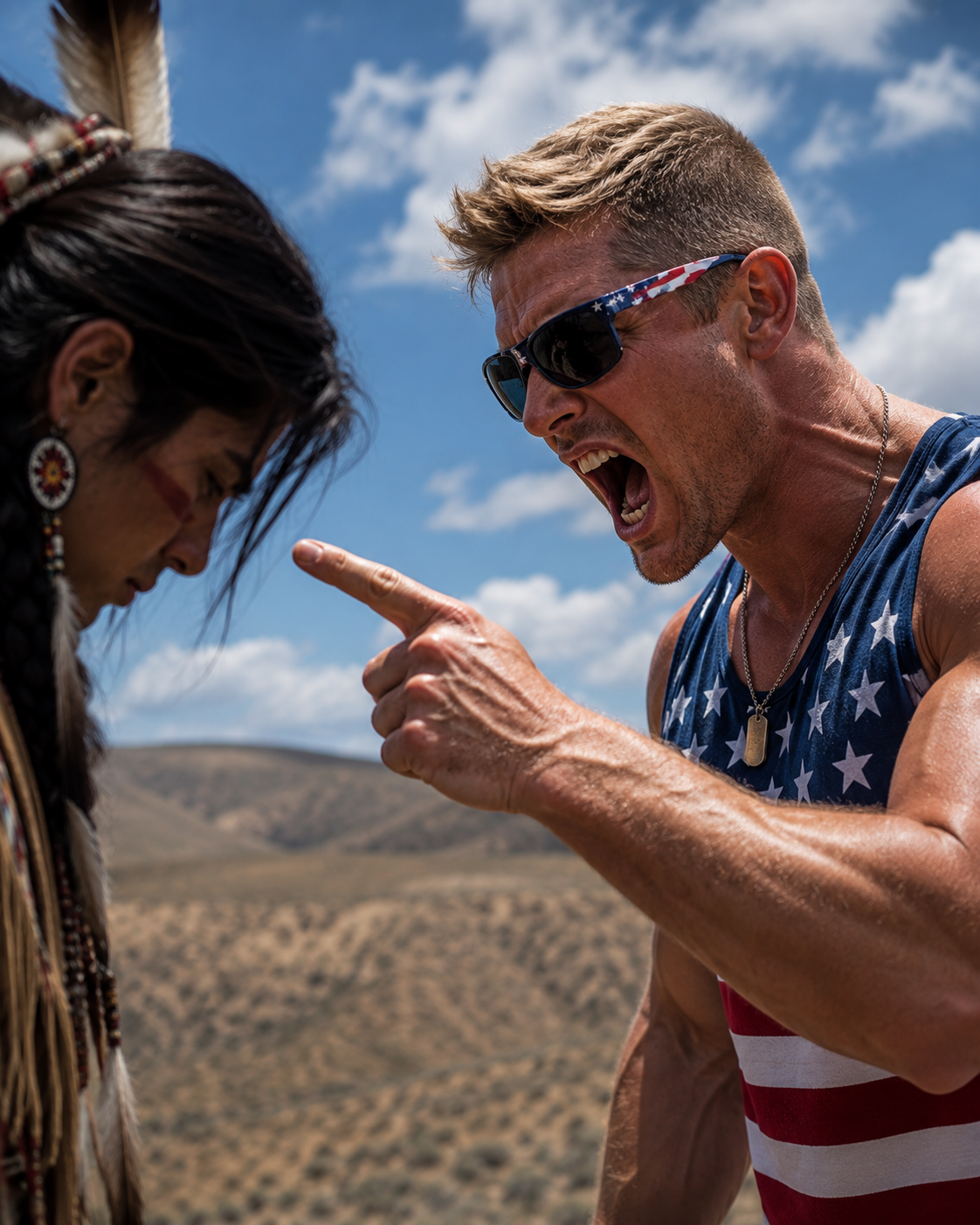
Yesterday, I was walking alone when this American guy stopped me.
At first, I thought he wanted to ask me something.
Maybe directions.
Maybe he was curious about what I was wearing.
So I stopped.
That was my mistake.
He looked at me from head to toe.
He stared at my clothes, my braids, the beadwork around my neck.
Then he laughed.
Not a friendly laugh.
The kind of laugh that makes you immediately understand that you’re the joke.
He pointed at my clothes and said,
“Are you seriously walking around dressed like that?”
I didn’t answer.
I just looked at him.
He stepped closer.
“What are you supposed to be?”
I told him quietly,
“I’m Native.”
He laughed again.
“I can see that.”
Then his face changed.
He looked at me with disgust, like there was something wrong with me simply for standing in front of him.
He asked why people like me were still dressing this way.
He told me the world had moved on.
He said nobody cared about our traditions anymore.
I tried to walk away.
But he moved closer and kept talking.
He pointed directly at my chest.
“You people need to stop acting like you’re special.”
I froze.
I didn’t want an argument.
I didn’t want a fight.
I just wanted to leave.
But he wasn’t finished.
He looked at my braids and laughed.
Then he looked at the clothes I was wearing and said,
“You actually think people respect you dressed like that?”
I could feel my throat tightening.
Those clothes weren’t a costume to me.
They reminded me of my family.
They reminded me of the people who raised me.
They reminded me of the stories I heard growing up.
Things that meant something to me.
But to him, all of it was something to laugh at.
Then he said something I’ll probably remember for the rest of my life.
“Nobody respects people like you anymore.”
I looked down.
And he noticed.
I think that’s what he wanted.
He wanted to see whether his words had reached me.
They had.
He smiled and continued.
“You should be embarrassed.”
I kept staring at the ground.
He didn’t know anything about me.
He didn’t know my name.
He didn’t know my family.
He didn’t know what my grandparents taught me.
He didn’t know how many times I had heard stories about people being ashamed of who they were because someone else convinced them they should be.
And now a complete stranger was standing in front of me trying to do the same thing.
He asked me why I couldn’t just dress “normal.”
That word hurt.
Normal.
As if everything about me was the opposite.
As if my culture was something abnormal.
Something outdated.
Something that needed to disappear so people like him wouldn’t have to look at it.
I wanted to say something back.
I really did.
But nothing came out.
Because sometimes humiliation doesn’t make you angry immediately.
Sometimes it makes you small.
Sometimes your mind goes completely quiet.
You just stand there thinking:
Why is this happening to me?
He kept talking.
He told me America had changed.
He told me nobody wanted to see “this stuff” anymore.
Then he pointed at me again and said,
“Look at yourself.”
So I did.
I looked down at my clothes.
And for one horrible second, I felt ashamed.
That’s the part that hurts me the most to admit.
For one second, I wished I had worn something different.
For one second, I wished my hair looked different.
For one second, I wanted to disappear into the crowd and become somebody nobody would notice.
And then I hated myself for thinking that.
Because these were things I had always been proud of.
Things my family had taught me never to hide.
But this stranger had managed to make me question all of it in only a few minutes.
Before leaving, he looked at me one last time.
He shook his head and laughed.
Then he said,
“People aren’t laughing with you. They’re laughing at you.”
And he walked away.
I stayed there.
I didn’t move.
I didn’t even look up.
I just stared at the ground.
I could hear his words repeating in my head.
Nobody respects you.
You should be embarrassed.
Look at yourself.
Eventually, I started walking home.
And the whole way back, I kept my head down.
Every time someone looked in my direction, I wondered what they were thinking.
Were they looking at my clothes?
My hair?
Were they laughing too?
For the first time in a long time, I wanted to hide everything that made me recognizable.
When I finally got home, I stood in front of the mirror.
I looked at myself for a long time.
And I could still hear his voice.
I reached for one of the pieces around my neck.
Something my family had given me.
And suddenly I remembered being younger.
I remembered watching the older people in my family.
I remembered listening to their stories.
I remembered being taught that these things weren’t decorations.
They carried memories.
They carried family.
They carried people who came before me.
People who lived their entire lives hoping the next generation wouldn’t have to be ashamed of who they were.
And there I was…
Standing in front of a mirror, almost ready to hide it because of one stranger.
That’s when I cried.
Not because he called me names.
Not because he laughed at me.
I cried because, for a few minutes, I had allowed him to make me ashamed of something my family had spent generations teaching me to protect.
I thought about the people before me who probably heard much worse.
People who were told their language was wrong.
Their clothes were wrong.
Their traditions were wrong.
Their names were wrong.
Their entire identity was something they needed to leave behind.
And suddenly his words didn’t feel like they belonged only to yesterday.
They felt much older.
That night, I couldn’t sleep.
I kept asking myself what I should have said.
Maybe I should have defended myself.
Maybe I should have shouted back.
Maybe I should have looked him directly in the eyes and told him exactly what those clothes meant to me.
But I didn’t.
I lowered my head.
And for a while, I hated myself for that.
Then I realized something.
Lowering my head in one painful moment doesn’t mean I’m ashamed of who I am.
Being hurt doesn’t mean he was right.
Being silent doesn’t mean he won.
Because this morning, I put those clothes on again.
I looked in the mirror.
And this time, I didn’t hear his voice.
I thought about my family.
I thought about the people who came before me.
And I told myself:
I will not be the generation that becomes ashamed because somebody laughed.
He wanted me to feel small.
He wanted me to hide.
He wanted me to believe there was something embarrassing about being Native.
Yesterday, for a few minutes, he succeeded.
But today?
I’m still here.
My culture is still here.
My memories are still here.
And if someone looks at me and sees something to laugh at, that’s something they’ll have to carry.
Not me.
Because I finally understand what I wish I had understood while I was standing in front of him:
I was never the one who needed to be ashamed.



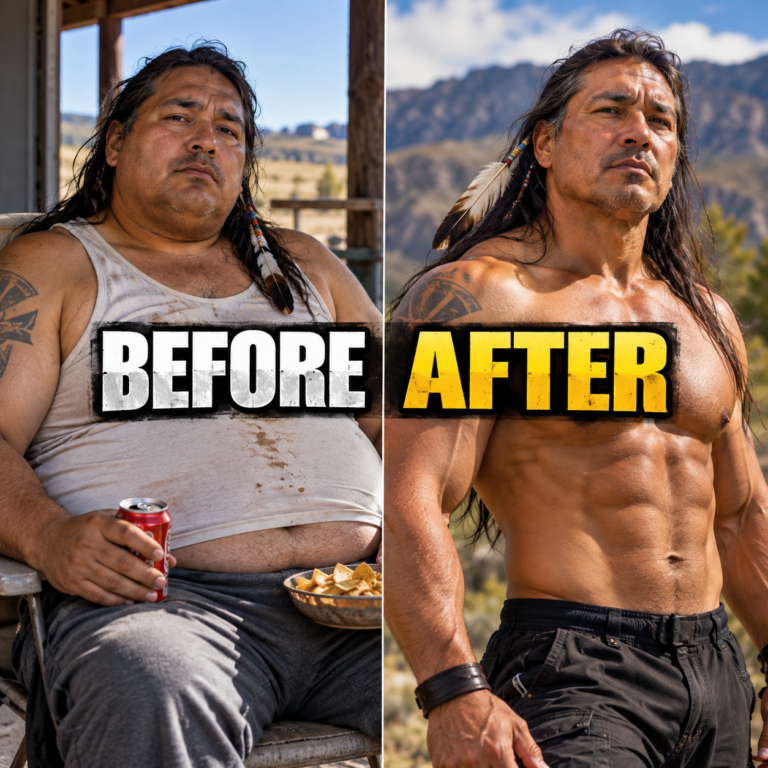

This handsome man is belittled? I find that impossible to believe. Because he’s a native American? Does anybody really think that’s a bad thing? Who????
Ashamed? No, you should never do that! You have the most beautiful clothes and ornaments in the world and I understand that they are like historical messages from your elders who are no longer alive. Your clothes and jewelry tell a very beautiful, but also a very gloomy and often destroyed story by the white man. But be proud of your history. Be proud of your beautiful skin color, be proud of your beautiful black long hair. You Native Americans are incredibly beautiful to look at. Few other groups of the human race can compare to your group when it comes to beauty, ornamentation and history!
Pär Vestberg
Sweden