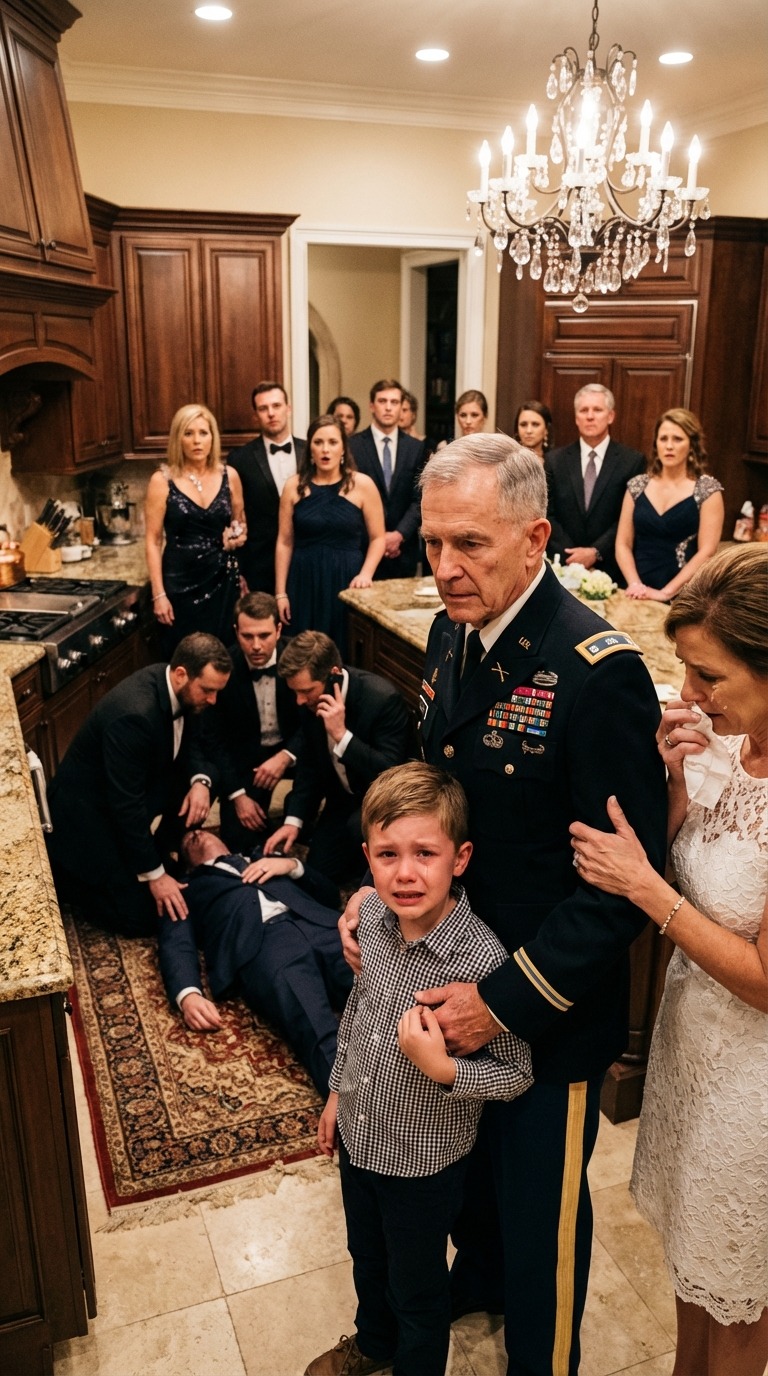
This is Eagle One Code Red Send the extraction team And bring the military police, I have a prisoner
They mistook my silence for submission. They didn’t know that in my world, silence isn’t surrender—it’s target acquisition. And I just locked on.
The garage was a sensory graveyard, smelling of oxidized motor oil, damp concrete, and the sour, persistent stench of cheap lager that seemed to seep from the very pores of the house. To any casual observer, I was merely Frank: the shuffling, semi-invisible old man who lived in the converted apartment above the workspace. I was the relic in the corner, clad in flannel shirts that had seen better decades and jeans softened by a thousand washes. My knuckles were gnarled with arthritis, my gait was a cautious limp, and my gaze was almost always anchored to the floor.
To Mark, my son-in-law, I was a leech. A biological debt he had inherited along with my daughter Sarah’s modest life insurance policy.
“Frank! Are you deaf as well as useless?”
Mark’s voice, shrill and grating, sliced through the humid Sunday afternoon like a dull blade. I was sitting on a rusted folding chair, whittling a piece of pine. It was a meditative act, but primarily, it was a tactical cover for observation. I looked up slowly. Mark stood in the threshold connecting the kitchen to the garage, a half-empty aluminum can gripped in a fleshy hand. He was flushed with the bloated, aggressive heat that comes from mid-day drinking. Behind him, the house was a cacophony of suburban celebration. Balloons bobbed against the ceiling, and the air smelled of buttercream and artificial joy. It was my grandson Leo’s fifth birthday.
“I need ice, Frank,” Mark sneered, flicking his wrist. He tossed the empty can at me.
It was a lazy, disrespectful throw. I saw the trajectory before it even cleared his fingertips. I didn’t flinch. I let it sail past my left ear, listening as it hit the cinderblock wall with a hollow clack, splattering stale foam onto my workbench.
“You missed,” I said quietly. My voice was a low, gravelly rumble, the sound of a tank engine idling in the distance.
Mark let out a wet, ugly laugh. “Don’t embarrass me in front of the neighbors, you old burden. You should be grateful I didn’t toss your wrinkled ass into a state home the moment Sarah’s heart stopped.” He stepped into my personal space, radiating the stench of unwashed ambition. He was a man who bullied service workers and cheated on his taxes—a small tyrant presiding over a very small kingdom. “Get the ice. And stay out of sight. Nobody wants to look at a ghost at a five-year-old’s party.”
I gave him a slow, deliberate nod. “Happy birthday to Leo,” I murmured.
Mark rolled his eyes, muttered an insult under his breath, and slammed the door. I didn’t move immediately. I reached into my breast pocket and checked my battered Timex. 1400 hours. The party was in its terminal phase. Then, my hand drifted to the hidden inner pocket of my jacket. It brushed against something cold, heavy, and decidedly out of place in a suburban garage: an Iridium satellite phone encased in military-grade rubber.
I wasn’t a prisoner. I was a sentry. For three years, I had played the part of the broken grandfather. I had allowed Mark to steal from my social security checks and insult my dignity because of a promise I made to my daughter on her deathbed: Protect Leo. Mark was a hostile element, and I had been gathering intelligence, waiting for the inevitable moment when his sloppy aggression crossed the threshold of no return.
I stood up, my knees popping with a dull, familiar ache that I mentally filed away under ‘irrelevant.’ I walked toward the deep freeze. Through the thin drywall, the music cut out abruptly. The babble of the guests died. A heavy, pregnant silence hung in the air for a heartbeat, and then a sound tore through the garage: a child’s terrified scream. It wasn’t a cry of surprise. It was the primal shriek of a human being in pain.
“Drink!” Mark’s voice roared through the wall. “I said drink it!”
Protocols were activated. The biology of an old man was instantly overridden by the neurology of a specialist. I moved toward the kitchen door. I didn’t run—running is for the panicked. I moved with the silent, predatory stride I had perfected in jungles that don’t appear on civilian maps.