I Thought My Car Insurance Rate Was Normal — Until I Finally Checked
For years, I paid my car insurance without thinking much about it.
The bill arrived every month.
I paid it.
Sometimes the price went up, and I complained about it for a few minutes.
Then I kept paying.
I assumed everyone was dealing with the same thing.
After all, I hadn’t had a major accident. I hadn’t suddenly bought an exotic car. Nothing dramatic had changed.
So I figured the price on my bill was simply what car insurance cost.
Then one day I asked myself a question I should have asked years earlier:
When was the last time I actually compared my rate?
I couldn’t remember.
That bothered me.
Because I compare prices when I buy a television.
I compare prices when I book a hotel.
I’ll drive across town because gasoline is cheaper somewhere else.
Yet I was paying an insurance bill month after month without checking whether another insurer might price the same coverage differently.
So I decided to look.
And that’s when I realized how many different factors can affect what someone pays.
Your Current Rate Isn’t Necessarily the Only Rate Available
Car insurance isn’t priced exactly the same way by every insurer.
Companies use their own rating models within the rules of the state where the policy is issued.
Your age, driving history, location, vehicle, coverage choices, annual mileage and other permitted factors can affect the premium.
That means two people driving similar vehicles can pay very different amounts.
It also means different insurers can quote different prices to the same driver.
That’s why staying with one company for years doesn’t automatically mean you’re getting the lowest available rate.
Loyalty can be convenient.
But convenience and price aren’t the same thing.
So I Started Comparing
I gathered my existing policy first.
That part was important.
I wanted to know exactly what I was already paying for.
Liability limits.
Collision coverage.
Comprehensive coverage.
Deductibles.
Uninsured or underinsured motorist coverage where applicable.
And any additional options included in my policy.
Then I started comparing quotes using similar coverage.
That’s where people can make a major mistake.
Imagine your current policy costs $180 a month.
Another quote comes back at $125.
At first glance, saving $55 every month sounds fantastic.
But what if the cheaper policy has much lower liability limits?
What if the deductible is dramatically higher?
What if important optional coverage has been removed?
Then you aren’t necessarily comparing the same product.
So instead of asking only:
“Which company gave me the cheapest number?”
I started asking:
“What am I actually getting for that number?”
That made the comparison much more useful.
Then I Looked at My Deductible
This was another area worth understanding.
Generally, choosing a higher deductible for collision or comprehensive coverage can reduce the premium, but it also means potentially paying more yourself after a covered loss before that coverage pays.
So simply pushing the deductible as high as possible isn’t automatically smart.
The real question is:
Could I comfortably afford that deductible if something happened tomorrow?
Saving money every month doesn’t help much if an accident leaves you unable to cover your share of the repair.
I wanted a balance.
A premium I was comfortable paying and a deductible I could realistically handle.
I Also Checked for Discounts
This is where things got interesting.
Insurers may offer various discounts, but availability and requirements differ.
Depending on the company and state, possibilities can include discounts related to bundling policies, multiple vehicles, certain driving records, vehicle equipment, payment methods, mileage, defensive-driving programs or telematics programs.
Not everyone qualifies.
And not every discount makes sense for every driver.
But if you’re already eligible for something, there’s little reason not to ask about it.
I realized I’d spent more time negotiating tiny monthly subscriptions than reviewing a bill that could represent thousands of dollars each year.
What If You’re an Older Driver?
This was particularly interesting to me.
A lot of advertising makes it sound as though reaching a certain age automatically unlocks some enormous “senior car insurance benefit.”
That’s too simplistic.
There isn’t one universal nationwide insurance price for everyone over 65.
Rates and discounts depend on the insurer, state and individual driver.
Some states or insurers may have provisions or discounts connected to approved mature-driver or defensive-driving courses.
But the exact rules matter.
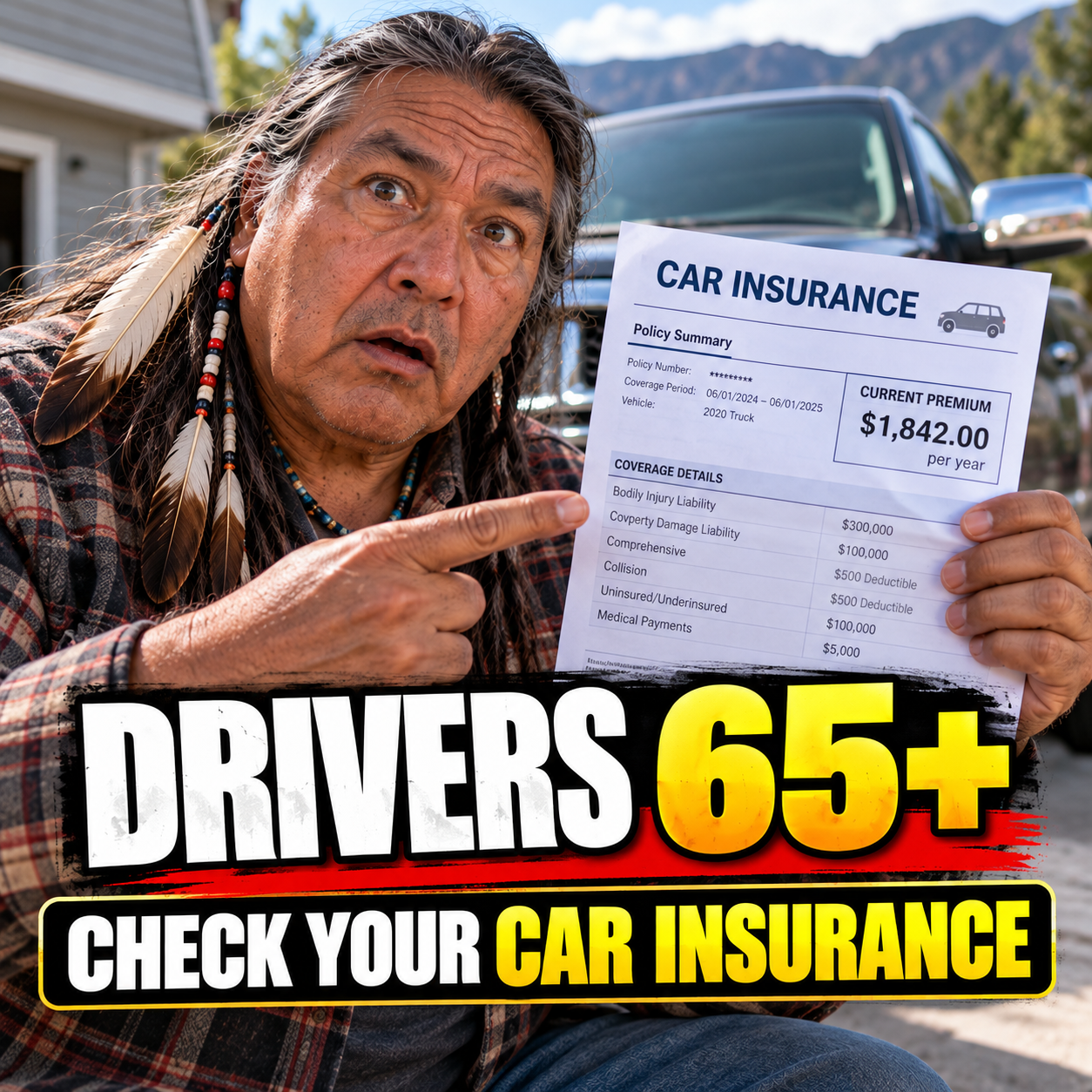
So if you’re 65, 70 or older, don’t assume you’re automatically getting every discount available to you.
Ask.
And compare.
Driving Less Can Matter Too
Your driving habits can change over time.
Maybe you used to commute to work five days a week.
Now you’re retired.
Maybe you previously drove 15,000 miles each year and now drive considerably less.
If your insurer still has outdated information about your annual mileage or vehicle usage, it’s worth asking whether updating accurate information affects your premium.
Never provide false mileage simply to get a cheaper quote.
But make sure the information your insurer has is actually current.
Don’t Cancel Your Current Policy Too Early
This is critical.
Finding a cheaper quote isn’t the moment to immediately cancel your existing insurance.
First confirm the new coverage.
Review the policy.
Confirm the effective date.
Make sure you’re satisfied with the limits and deductibles.
Only then coordinate cancellation of the old policy so you don’t accidentally create a gap in coverage.
A lapse can create legal and financial problems and may also affect future insurance costs.
Saving a few dollars isn’t worth driving uninsured.
The Simple Check I Wish I’d Done Earlier
Here’s the process:
Take out your current auto-insurance declarations page.
Look at what you’re actually paying.
Write down your coverage limits and deductibles.
Then get several quotes using comparable information.
Don’t change five variables at once just to manufacture a lower number.
Compare similar coverage first.
Then experiment with legitimate options.
Ask what happens if you adjust your deductible.
Ask about discounts you’re genuinely eligible for.
Make sure your annual mileage and vehicle usage are accurate.
If you have homeowners or renters insurance, you can also ask whether bundling changes the total cost—but compare the combined cost, not merely the advertised discount.
Then look at the result.
Maybe You’ll Save. Maybe You Won’t.
That’s the part advertisements don’t like saying.
There is no guarantee that another insurer will offer you a lower price.
Your current insurer could already be competitive.
You could even receive higher quotes elsewhere.
But you won’t know until you compare.
And if you’ve been automatically renewing the same policy for five, ten or fifteen years, spending a few minutes checking the market can at least tell you whether your current rate is still competitive.
One Final Warning
Be careful with advertisements promising things like:
“Drivers over 65 can now get insurance for $29!”
A number in an advertisement isn’t necessarily the price you will receive.
Your actual premium depends on your circumstances, location, vehicle, coverage and the insurer’s underwriting and rating rules.
Instead of chasing an advertised number, compare actual quotes based on your information.
That’s what changed the way I looked at car insurance.
I stopped asking:
“Is my insurance expensive?”
And started asking:
“When was the last time I checked what comparable coverage would cost me somewhere else?”
Because paying the same company for years doesn’t prove you’re overpaying.
But it doesn’t prove you’re getting the best available price either.
The only way to know what offers are available to you is to compare them.